Organic vs. paid social media is one of those debates that never really ends, mostly because both sides are right depending on your goals. If you're trying to figure out where to put your time and budget in 2026, the honest answer is that you probably need both, just not in equal amounts. This guide breaks down what each approach actually does, when to lean on one over the other, and how to build a plan that doesn't waste money.
- Organic reach on most platforms now sits between 2% and 8% of your follower count per post, down significantly from a decade ago.
- Paid social ad spend continues to climb globally, with brands shifting budget toward video-first placements on Instagram, TikTok, and YouTube.
- Organic content builds trust and community; paid content accelerates reach and drives measurable conversions.
- The strongest strategy blends both: organic content proves what resonates, then paid budget amplifies the winners.
- Small businesses typically see better ROI starting with organic and layering in paid once they have proof of what converts.
What is the difference between organic and paid social media?
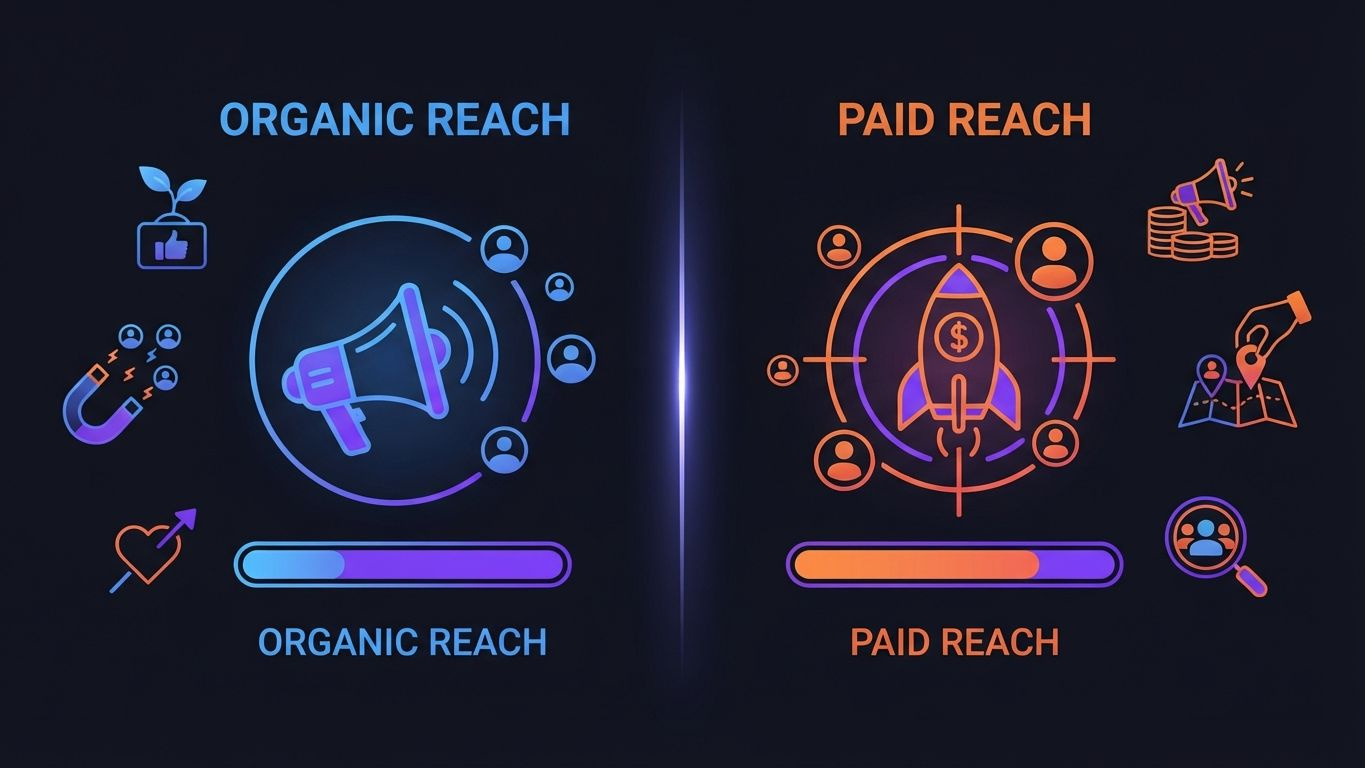
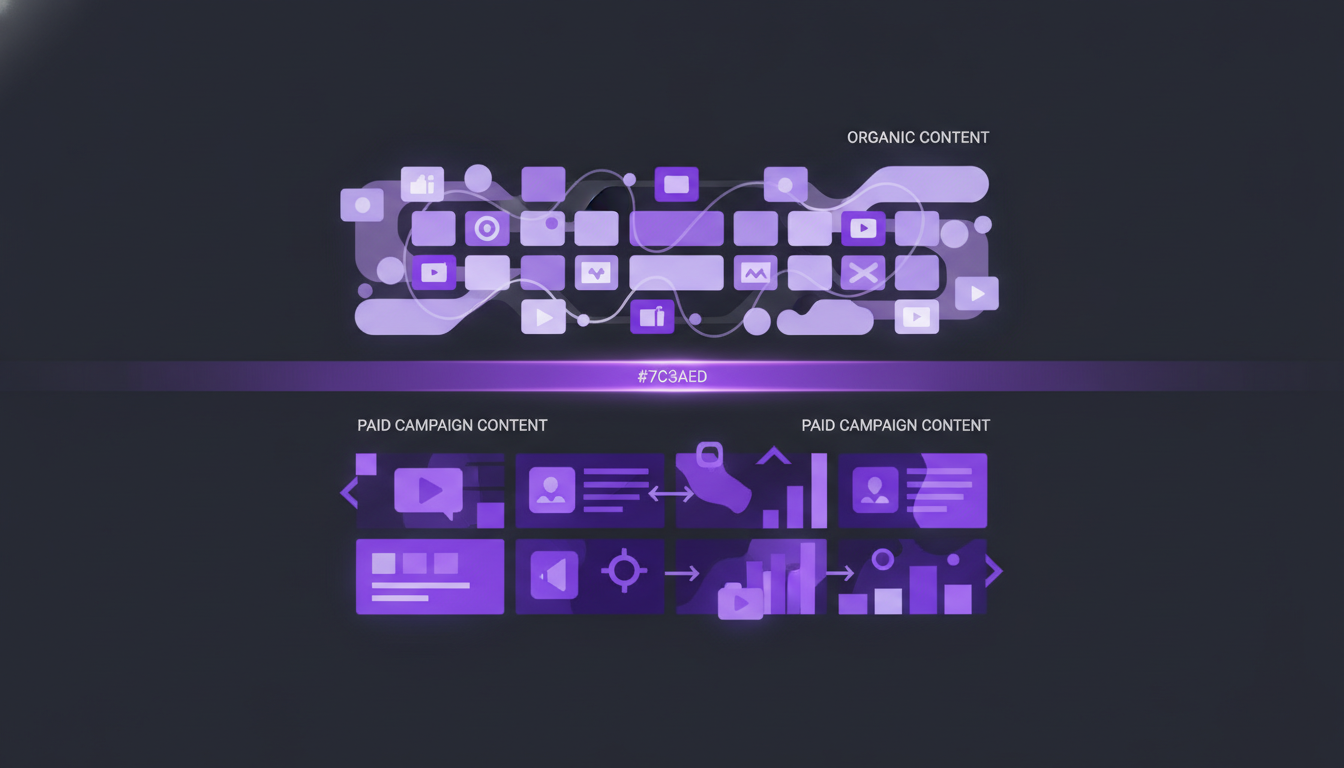
Organic social media is content you post for free that reaches people through algorithmic distribution and shares, while paid social media is content you pay to boost or run as ads to reach a targeted audience beyond your existing followers. Organic builds long-term trust and community. Paid buys speed, scale, and precision targeting.
Think of organic as the foundation and paid as the accelerant. You can technically run either one alone, but most brands that grow steadily use organic to establish voice and credibility, then use paid to push their best-performing content further.
- Organic: Free posts, stories, Reels, threads, and videos published through your normal content calendar.
- Paid: Sponsored posts, boosted content, and ad campaigns with defined budgets, targeting, and objectives.
- Hybrid: Organic content that gets a paid budget behind it once it proves it works.
How far does organic reach actually go in 2026?
Organic reach for an average business page typically falls between 2% and 8% of total followers per post, depending on the platform and content format. Video-based formats like Reels and TikTok still get wider algorithmic distribution than static image posts, which is why short-form video remains the most cost-effective organic format available.
Here's what tends to happen across platforms:
- Instagram feed posts often reach a small fraction of followers unless the content sparks saves or shares.
- Reels and TikTok videos can reach far beyond your follower base because they're pushed to non-followers through discovery feeds.
- LinkedIn organic posts from personal profiles usually outperform company page posts by a wide margin.
- Facebook Pages see some of the lowest organic reach of any major platform, largely because the feed prioritizes friends and family content.
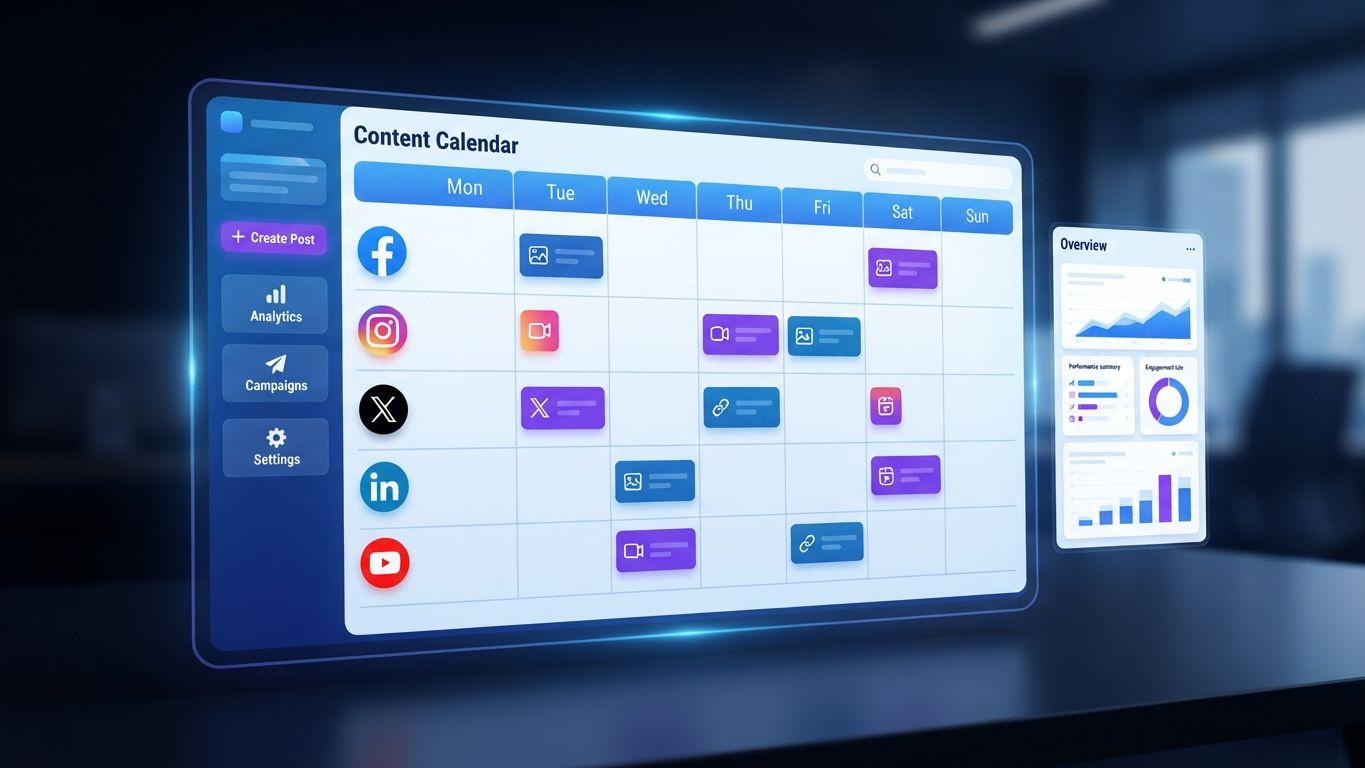
This is the core reason so many brands say "organic is dead." It's not dead, but it's harder to scale without a strong content hook, consistent posting, and format variety. Using a content calendar to plan a mix of formats instead of repeating the same post type every day makes a measurable difference in reach.
Why organic still matters even with low reach
Organic content is where trust gets built. People check your profile before they buy, and an active, authentic feed signals that a real business is behind the brand. Paid ads can get someone to click, but organic content is often what convinces them to actually convert.
How much does paid social media cost and is it worth it?
Paid social media costs vary widely by platform and objective, but most small to mid-size businesses spend anywhere from a few hundred to a few thousand dollars a month to see meaningful results. Cost per click on platforms like Facebook and Instagram commonly ranges from $0.50 to $3.50 depending on industry and targeting, while LinkedIn ads tend to run higher due to its B2B audience value.
Whether it's worth it depends entirely on what you're measuring. Paid social is worth it when:
- You have a clear conversion goal, like sales, leads, or app installs.
- You've already tested organic content and know what messaging resonates.
- You need to reach a specific audience segment fast, such as a product launch window.
- Your organic reach has plateaued and you need to break through algorithm limits.
Paid social is a poor investment when you're boosting content with no clear objective, targeting an audience that's too broad, or running ads without a landing page built to convert. Money spent on ads without a strategy behind it disappears fast.
Typical paid social budgets by business size
- Solo creators and freelancers: often start with $100 to $300 monthly test budgets.
- Small businesses: commonly allocate a few hundred to low thousands per month across platforms.
- Mid-size and enterprise brands: frequently run five to six-figure monthly budgets split across multiple ad accounts and platforms.
Organic vs. paid social media: which one should you prioritize?
You should prioritize organic first if you're building brand awareness or have limited budget, and prioritize paid first if you need fast, measurable results with a defined conversion goal. Most growing businesses eventually need both working together rather than picking one permanently.
Here's a side-by-side comparison to help you decide where to put your energy right now.
| Factor | Organic Social Media | Paid Social Media |
|---|---|---|
| Cost | Free to produce, time investment only | Requires ongoing ad budget |
| Speed of results | Slow, builds over weeks or months | Fast, results within days |
| Audience reach | Limited to followers and algorithm push, roughly 2-8% per post | Scalable to any size, defined by budget |
| Trust building | High, feels authentic and community-driven | Lower initially, seen as an ad |
| Targeting precision | Limited to who follows or discovers you | Highly precise, by demographics, interests, behavior |
| Best for | Brand voice, community, long-term loyalty | Lead generation, sales, product launches |
| Measurability | Engagement metrics, harder to tie to revenue | Direct ROAS and conversion tracking |
How do you combine organic and paid social media effectively?
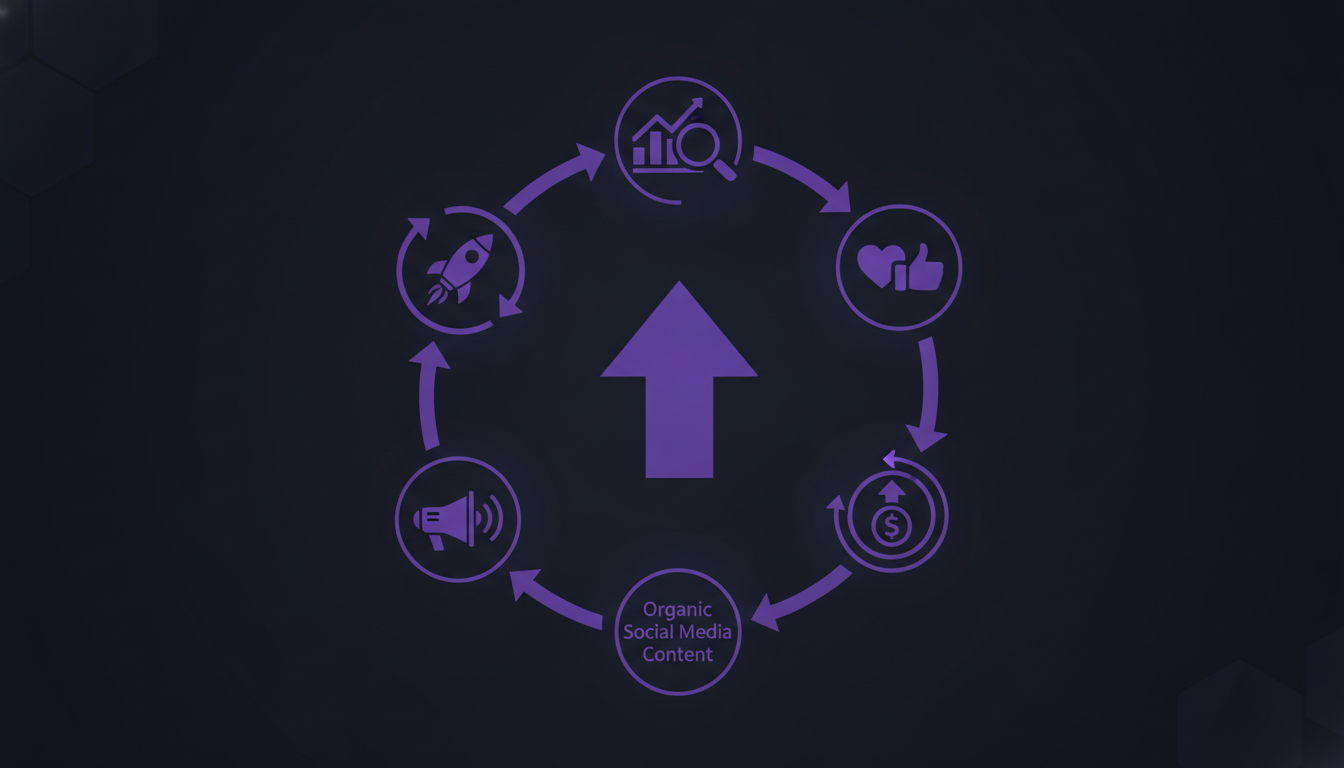
The most effective approach is to test content organically first, then put paid budget behind whatever already performs well. This "test and amplify" method reduces wasted ad spend because you're not guessing what will resonate, you're scaling proven winners.
Here's a simple process to follow:
- Post consistently across your core platforms for at least 3 to 4 weeks using varied formats.
- Track engagement rate, saves, shares, and comments to identify your top 10-15% performing posts.
- Take your best-performing organic posts and turn them into paid ads or boosted posts.
- Set a clear objective for the paid campaign, such as traffic, leads, or conversions.
- Run the campaign for at least 5 to 7 days before evaluating performance, since algorithms need a learning period.
- Reinvest budget into whichever ad variations perform best and pause the rest.
This loop keeps repeating. Organic finds the message, paid scales the message, and the data from paid often tells you what to create next organically. Tools that combine scheduling with performance data, like social media analytics dashboards, make this loop much easier to manage without jumping between five different apps.
Platform-specific considerations
Not every platform rewards the same organic-to-paid ratio. Instagram and TikTok tend to reward organic video heavily, so save paid budget for retargeting and conversion-focused campaigns rather than pure awareness. LinkedIn ads work best when paired with a genuinely active organic presence, since cold ads on LinkedIn without any organic trust signal often underperform.
- Instagram: strong organic potential via Reels, pair paid with retargeting warm audiences.
- TikTok: organic discovery is still strong, paid works best for driving traffic to a specific offer.
- LinkedIn: organic builds authority, paid works well for lead gen forms targeting job titles.
- Facebook: organic reach is weakest here, paid is often necessary just to reach existing followers.
- Pinterest: organic pins have long shelf lives, paid can accelerate seasonal campaigns.
If you're managing multiple platforms and trying to keep this balance consistent, an AI social media agent can help identify which organic posts are trending upward before you commit ad spend to them.
What metrics should you track for organic vs. paid performance?
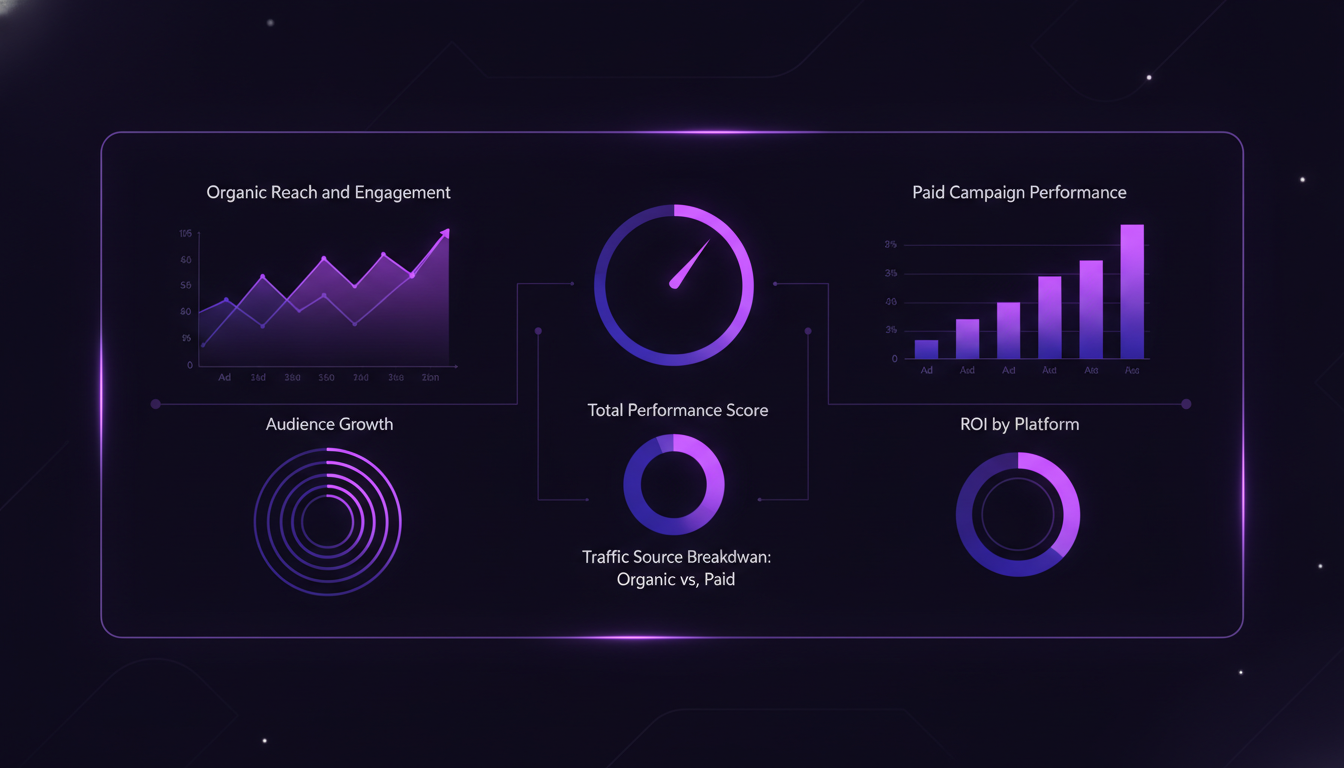
The metrics that matter most differ between organic and paid, and mixing them up leads to bad decisions. Organic success is measured through engagement quality, while paid success is measured through direct conversion and cost efficiency.
For organic content, track:
- Engagement rate (likes, comments, shares divided by reach)
- Save rate, especially on Instagram and Pinterest
- Follower growth rate over time
- Click-through rate to your website or bio link
For paid campaigns, track:
- Cost per click (CPC) and cost per acquisition (CPA)
- Return on ad spend (ROAS)
- Click-through rate on the ad itself
- Conversion rate on the landing page
A common mistake is judging a paid ad by likes and comments, which are vanity metrics in an ad context. Paid campaigns should be judged almost entirely on whether they hit the business objective you set, whether that's sales, sign-ups, or downloads.
What mistakes do brands make when choosing between organic and paid?
The biggest mistake is treating organic and paid as competing strategies instead of complementary ones. Brands either dump their entire budget into ads with no organic foundation, or refuse to spend anything on ads and wonder why growth has stalled.
Common mistakes to avoid:
- Boosting every post instead of only the ones that already show organic traction.
- Running ads without a clear call to action or landing page.
- Ignoring organic community management while all attention goes to ad performance.
- Expecting paid ads to fix weak or inconsistent content.
- Not testing multiple ad creatives before scaling budget.
- Posting organically without ever reviewing what's actually working.
Consistency matters more than people expect. A brand that posts sporadically and then runs a big ad campaign often sees weaker results than one that's been steadily active for months, because the ad clicks lead to a profile that doesn't reinforce the message. If you're unsure when to post organically for maximum reach before considering paid boosts, a tool like the best time to post calculator can help remove the guesswork.
How much of your budget should go to organic vs. paid social media?
A common starting split for small to mid-size businesses is roughly 70% of effort into organic content creation and 30% of budget into paid amplification, adjusting as data comes in. This isn't a fixed rule, but it's a reasonable starting point if you're not sure where to begin.
As your paid campaigns start showing consistent ROAS, it often makes sense to shift more budget toward paid while keeping organic active as the trust-building layer underneath. Brands that cut organic entirely once paid is working usually see ad performance decline over time, because cold traffic lands on a profile that looks abandoned.
- New businesses: 80% organic, 20% paid to start testing.
- Growing businesses: 60% organic, 40% paid once messaging is validated.
- Established brands with proven funnels: 40% organic, 60% paid for scale.
These ratios shift based on industry, competition, and how saturated your paid channels already are. E-commerce brands often lean more into paid earlier because conversion tracking is direct and immediate, while service-based businesses tend to rely more heavily on organic trust-building first.
Frequently Asked Questions
Is organic social media still worth doing in 2026?
Yes. Organic social media still drives trust, brand recall, and community engagement even though reach percentages have dropped. It's also the cheapest way to test content ideas before putting paid budget behind them.
Can you succeed with only paid social media and no organic content?
You can generate short-term sales with paid ads alone, but most brands see weaker long-term results because visitors who click an ad often check the profile first, and an inactive or sparse profile hurts conversion and trust.
How long before paid social media ads start working?
Most ad platforms need at least 5 to 7 days in the learning phase to optimize delivery, and meaningful performance data usually takes 2 to 3 weeks to assess accurately, especially for conversion-focused campaigns.
What's the easiest way to manage both organic and paid content without doubling my workload?
Using a unified scheduling and analytics platform helps you plan organic posts, track which ones perform best, and move those winners into paid campaigns without switching between multiple tools. Platforms like social media autopilot tools handle scheduling and repetitive tasks so you can focus on strategy and creative decisions.
Organic vs. paid social media isn't really a competition, it's a partnership. Organic content earns trust and tells you what your audience actually wants, while paid budget takes that proof and scales it faster than any algorithm would on its own. Start by getting your organic content consistent, watch what performs, then put money behind the winners instead of guessing. If you want to manage both sides of that equation from one place, platforms like Brandlix let you plan, schedule, and analyze content across all your channels so the organic-to-paid pipeline stays simple instead of chaotic.