Social Commerce is the next logical step for any online shop. While classic social media marketing directs users to an external website, Social Commerce enables the complete purchasing process directly within the platform. This reduces drop-offs, shortens the path to conversion, and meets buyers exactly where they already spend their time.
- Social Commerce allows you to sell products directly on platforms like Instagram, TikTok, and Pinterest, without routing customers through your own shop.
- According to Statista, the global Social Commerce market will grow to over 1 trillion US dollars by 2028.
- Product Tags, Live Shopping, and Shoppable Videos are the most effective formats for direct sales.
- Each platform has its own strengths: Instagram for visually high-quality products, TikTok for impulse purchases, Pinterest for purchase decisions that require more planning.
- User-generated content (UGC) significantly increases willingness to buy because it builds trust that traditional advertising cannot.
What is Social Commerce and how does it differ from classic social media marketing?
Social Commerce describes the buying and selling of products directly within social networks. The key difference from classic social media marketing: the user never leaves the platform. They discover a product, tap on it, and complete the purchase without ever landing in an external browser.
Classic social media marketing uses platforms as an attention channel. Social Commerce turns them into a sales channel. That may sound like a small shift, but it has a massive impact on Conversion Rates. Every additional click, every new page, every form that needs to be filled out is a potential drop-off point.
According to a study by Oberlo, over 70 percent of online shoppers abandon a purchase before reaching checkout. A smooth, in-platform purchasing process reduces exactly this friction.
Which platforms are best suited for Social Commerce?
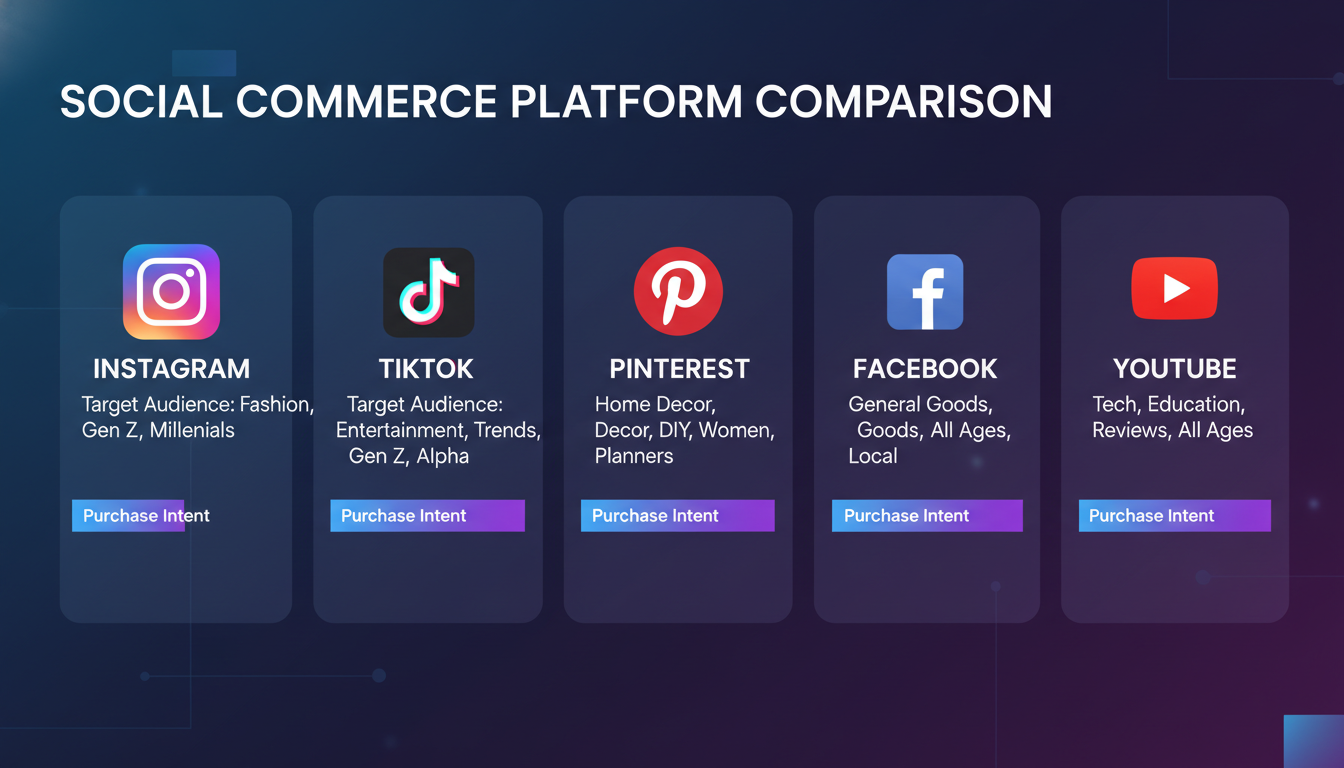
Not every platform is equally well-suited for direct sales. The choice depends on your target audience, your product category, and your content format. Here is a direct comparison of the most important options:
| Platform | Main Feature | Strength | Ideal For |
|---|---|---|---|
| Instagram Shop, Product Tags | Visual discovery channel | Fashion, beauty, lifestyle | |
| TikTok | TikTok Shop, Shoppable Videos | Impulse purchases through viral content | Trending products, gadgets, beauty |
| Product Pins, Shopping Ads | Purchase intent through inspiration search | Home decor, DIY, weddings, food | |
| Facebook Shops, Marketplace | Broad demographic reach | Wide product range, local retailers | |
| YouTube | Shopping integration in videos | Long-form product presentations | Tech, outdoor, tutorials |
Pinterest users are particularly ready to buy: according to Pinterest Business, 83 percent of them have made a purchase based on a Pin discovery. That is one of the highest purchase conversion rates among all social platforms.
How do Product Tags and Shoppable Posts work in practice?
Product Tags are the foundation of any Social Commerce strategy. They turn every organic post into a potential sales channel without making the content feel like an advertisement. A photo of an outfit is tagged with the individual clothing items, a living room photo with furniture and accessories.
How to set up Product Tags on Instagram
Before you can tag on Instagram, your product catalog must be linked to your Instagram account. This is done through the Meta Commerce Manager. There you upload your catalog or connect it via Shopify, WooCommerce, or another compatible e-commerce platform.
Once the catalog is approved, you can tag individual products directly in the image when creating a post or Reel. Users see the shopping bag icon and can tap it to view the price, a short description, and the purchase button.
TikTok Shop: The impulse purchase accelerator
TikTok Shop works a little differently. Here the video is the focal point. Products are linked directly within the running video, often through product links that appear at the bottom of the screen. What makes it special: TikTok's algorithm amplifies content that performs well, regardless of follower count. A product can go viral before the first paid ad is even placed.
The phenomenon "TikTok made me buy it" is no coincidence. Over 49 percent of TikTok users say they have purchased products they discovered on the platform.
Why is Live Shopping an underestimated sales channel?
Live Shopping combines the immediacy of a livestream with the simplicity of Product Tags. Products are presented in real time during the stream, viewers can purchase directly, ask questions, and share reactions. This creates a sense of urgency that traditional product pages cannot generate.
In China, Live Shopping already accounts for around 20 percent of total e-commerce revenue. In Europe and the US the channel is still in its early stages, but platforms like TikTok, Instagram, and YouTube are actively driving its development.
What makes a good Live Shopping format?
The best Live Shopping streams follow a clear pattern:
- A host with genuine product knowledge - no scripted readings
- Time-limited offers or exclusive discount codes available only during the stream
- Active audience participation through questions, polls, or comments
- Products that can be shown and explained on video, not just static items
- Optimal stream length between 30 and 60 minutes
Anyone who wants to try Live Shopping should start small. A monthly stream featuring three to five selected products is better than an overloaded event that overwhelms the team and bombards viewers with too many options.
How do you use user-generated content to drive more sales?
User-generated content (UGC) is one of the most effective trust builders in Social Commerce. When real customers show, wear, use, or review products, it carries more persuasive power than any professional campaign. According to Nielsen, 92 percent of consumers trust recommendations from other users more than brand advertising.
How to systematically collect and use UGC
UGC does not happen automatically. You need to actively ensure that customers share content and that you can find and use that content:
- Create a brand hashtag and promote it on packaging, in emails, and in bios
- Actively ask for photos or videos after purchase, for example through an automated follow-up email
- Actively share and comment on UGC to motivate further contributions
- Always obtain explicit permission before reusing content
- Link UGC posts to the products shown in them to make them shoppable
According to Bazaarvoice, brands that integrate UGC into their product pages see an average Conversion Rate increase of 29 percent. That is far from a marginal effect.
Which mistakes destroy Social Commerce performance?
Many e-commerce brands set up their shop on a platform and then wonder why sales are not coming in. The technical setup is only the first step. What comes after determines success or failure.
These mistakes are particularly common:
- Outdated product catalog: Sold-out items with active tags seriously damage the user experience and trust.
- Content that is too promotional: Content that looks like an ad gets scrolled past. Platform-native content that delivers genuine value performs better.
- Poor mobile optimization: Over 90 percent of all Social Commerce purchases happen on smartphones. Product photos that look great on desktop can appear unattractive on mobile.
- Poor product descriptions: Within an app, users have little patience for long texts. Keep it short, concise, and with a clear benefit.
- No community management: Ignoring comments under product posts means losing potential buyers. A response time of under one hour is the standard.
How do you plan and coordinate Social Commerce efficiently across multiple platforms?
Running Social Commerce simultaneously on Instagram, TikTok, Pinterest, and Facebook quickly creates organizational complexity. Product catalogs must be kept in sync, posts adapted to different formats, and campaign timelines coordinated.
Tools like Brandlix help you centrally plan and publish content for different platforms without having to manage each channel manually. This saves time and ensures a consistent brand image.
One important note: do not skip platform-specific adaptations. A square Instagram image does not translate one-to-one into a TikTok video. Brands that post identical content across all platforms come across as inauthentic and are treated accordingly by the algorithm.
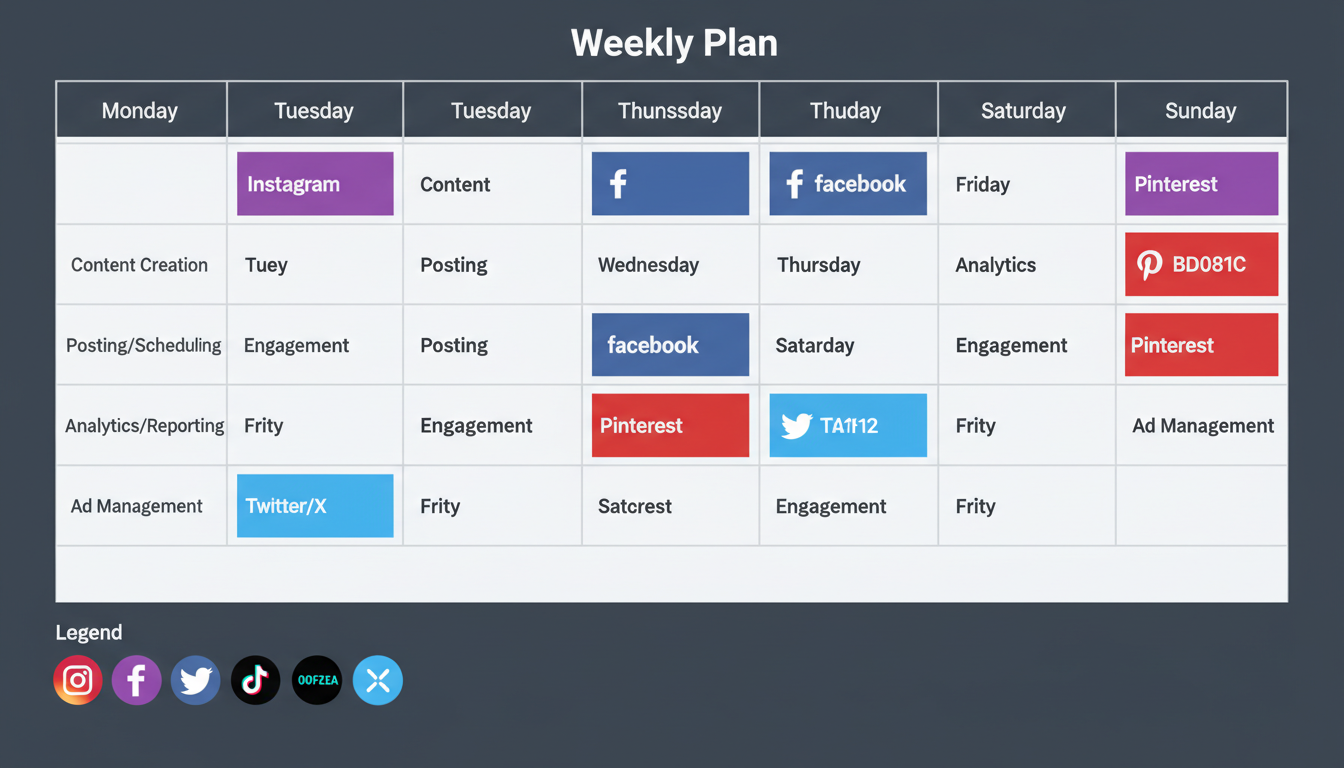
A practical structure for weekly planning looks like this:
- Monday: define content themes and product focus for the week
- Tuesday through Thursday: produce content and adapt it for each platform
- Friday: planning and scheduling for the following week
- Daily: community management and responding to comments
Frequently Asked Questions
Is Social Commerce worthwhile for small online shops too?
Yes, especially for smaller shops, Social Commerce is often more efficient than search engine advertising. The barrier to entry is low, targeting is precise, and building a community is more cost-effective in the long run than paid clicks. The important thing is to start with one or two platforms and work them consistently, rather than spreading yourself across all of them at once.
Do I need a Shopify account to use Social Commerce?
No, Shopify is not strictly required. Most platforms also support WooCommerce, BigCommerce, or the direct upload of a product catalog in CSV format. However, Shopify offers native integrations that considerably simplify the setup process.
How do I measure the success of my Social Commerce strategy?
The most important metrics are: Social Commerce Revenue (direct revenue from the platform), product page views via tags, click-to-purchase rate, and cost per sale. Platforms like Instagram and TikTok offer their own shop analytics that evaluate this data directly. Compare these numbers monthly and adjust your product selection and content accordingly.
Which product categories perform best in Social Commerce?
Visual, emotional, or products that benefit from explanation perform the strongest. Fashion, beauty, home decor, food, and gadgets lead the categories. Products that can be shown in a short video and whose benefit is immediately recognizable are ideally suited for platforms like TikTok and Instagram Reels.
Social Commerce is not a trend that will disappear. It is a structural shift in how people shop online. Anyone who starts building a product catalog on Instagram or TikTok today and cultivating a community around their products will have a real competitive advantage tomorrow. The best time to start was yesterday. The second best time is now. Set up your first shop on one platform, tag your best-selling products, and see what happens.