A/B testing on social media is one of the few methods that lets you stop guessing and start knowing. Instead of relying on gut feeling, you measure directly which variant performs better. This article shows you how to set up tests effectively, what you should really test, and how to draw conclusions from the results that improve your content long-term.
- A/B testing means: testing two variants of a post against each other, one variable at a time
- Testable elements include imagery, caption length, call-to-action, posting time, and format
- For statistically reliable results, you need at least 1,000 impressions per variant
- Platforms differ significantly - a test on LinkedIn does not automatically apply to Instagram
- Regular testing beats one-time optimization: results become outdated faster than you think
What Exactly Is A/B Testing on Social Media?
A/B testing means testing two variants of the same content in parallel to find out which one better achieves a defined goal. You change exactly one variable while keeping everything else identical. Only this way can you be sure that the measured difference is actually attributable to that one change.
In the social media context, this means specifically: you post the same content twice with a different image, or you test two versions of a headline against each other. The target metric can be reach, click-through rate, comment count, or conversions - depending on what you want to optimize.
According to a study by HubSpot, companies that test regularly achieve on average a 20 percent higher conversion rate than those that rely on fixed content templates without iteration. This is not coincidence but the result of systematic data work.
An important distinction from multivariate testing: in an A/B test, you change one thing. In a multivariate test, you change multiple things simultaneously. The latter requires significantly more traffic and is premature for most social media accounts.
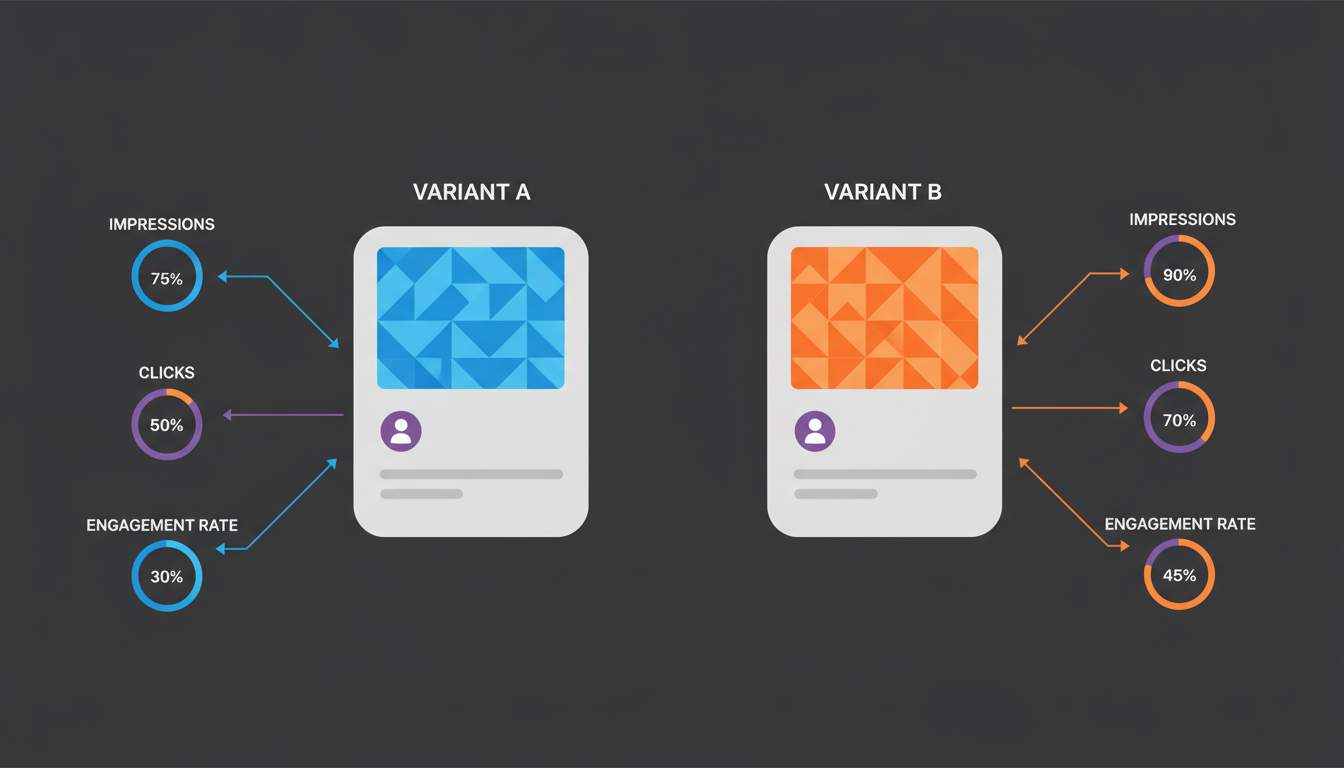
Which Elements Are Worth Testing on Social Media?
Not every variable delivers equal value. Some elements significantly impact performance, others barely at all. You should start where the leverage is greatest - and that is usually not where you would first expect.
Visual Elements
The image or video is usually the first thing users notice. Test here: static image versus short video, light versus dark color palettes, people in the image versus product photos, text on image versus no text. The difference can be enormous - image format tests on Instagram regularly show differences of 30 to 50 percent in reach.
Caption and Text
Short captions versus long ones, questions versus statements, personal language versus professional tone. Especially interesting is where you place the call-to-action: at the beginning of the caption or at the end? On LinkedIn, short texts that get straight to the point often show better click-through rates than detailed descriptions.
Posting Time
Monday versus Wednesday, 8 AM versus 12 PM - the timing influences who gets to see your content at all. This test is easy to conduct and quickly delivers reliable data because you can use the same content.
Format and Structure
Carousel versus single image, Reel versus static post, Story versus feed post. Format tests are particularly insightful on Instagram and TikTok because the algorithms weight formats differently.
| Test Element | Effort | Leverage | Recommended Platform |
|---|---|---|---|
| Imagery | Medium | High | Instagram, Pinterest, Facebook |
| Caption Length | Low | Medium | LinkedIn, Twitter/X, Threads |
| Posting Time | Low | Medium | All Platforms |
| CTA Wording | Low | High | All Platforms |
| Content Format | High | Very High | Instagram, TikTok, YouTube |
| Hashtag Strategy | Low | Low to Medium | Instagram, TikTok |
How Do You Set Up an A/B Test on Social Media Correctly?
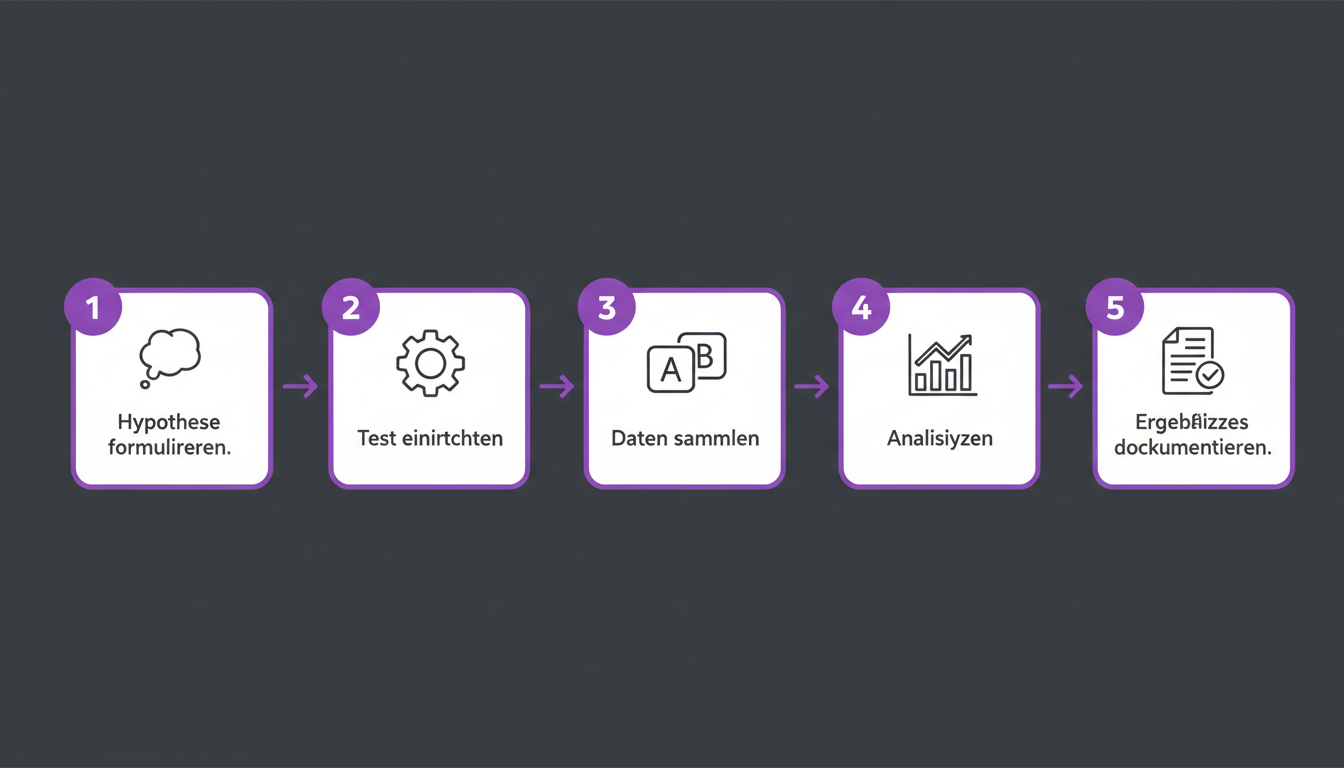
A test that is methodologically poorly designed delivers no usable results - worse, it can lead to wrong conclusions. The following steps ensure that your test delivers real insights.
Step 1: Formulate a Hypothesis
Formulate a clear hypothesis before you test. Not: "I will just try out what works better." But rather: "I expect that a caption with a question at the beginning generates more comments than a caption without a question." A clear hypothesis forces you to define from the start what you measure and what you want to learn.
Step 2: Define the Target Metric
Choose one primary metric. Reach, engagement rate, click-through rate, saves, or conversions - you cannot optimize all of them simultaneously. The choice depends on where you currently see the biggest gaps in your funnel.
Step 3: Test Duration and Sample Size
Tests that are too short deliver random results. As a rule of thumb: at least 1,000 impressions per variant, preferably more. The test period should cover at least 5 to 7 days to balance out weekday effects. Anyone who declares a winner after 200 impressions is working with chance, not data.
Step 4: Maintain Control Conditions
Do not test during a holiday, a crisis, or an unusual event. External factors significantly skew your results. Also: test at the same time of day whenever possible, unless you are explicitly testing timing as a variable.
How Do You Properly Evaluate A/B Test Results on Social Media?
Numbers do not lie - but you can read them wrong. The most common source of error in evaluation is confusing correlation with causation. Just because variant B performs better does not automatically mean the reason is the tested variable.
First check whether the differences are statistically significant. With smaller accounts, this is difficult because the sample sizes are too small. A difference of 8 to 12 comments is not a reliable result. A difference of 300 to 450 clicks with 5,000 impressions each is more meaningful.
Segment your results by audience if possible. A result that applies to your entire follower base can look completely different for a specific segment. Platforms like Meta offer the ability to break down by age, gender, and location in their Insights.
Document every test carefully: what was tested, what hypothesis was behind it, which metric was the target, how long the test ran, what was the result. Only with such a test history can you recognize patterns that repeat over time.
Common Evaluation Mistakes
- Ending the test too early as soon as one variant takes the lead
- Running multiple tests simultaneously that influence each other
- Not accounting for seasonal effects
- One variant was shown under poor technical conditions (e.g., algorithm dip after account changes)
- Transferring results to other platforms without retesting
What Are the Differences in A/B Testing Between Social Media Platforms?
What works on Instagram does not automatically apply to LinkedIn. Each platform has its own algorithms, user habits, and content formats. This means: insights from one test are platform-specific and must be validated separately.
Instagram and TikTok
Visual tests dominate here. Format (Reel vs. Carousel vs. static image), thumbnail design, and caption length are the most important test variables. TikTok tests often reach a result faster through the For You algorithm because the content also reaches non-followers.
On LinkedIn, the caption takes center stage. Tests around length, personal stories vs. professional articles, and the first sentence before the "see more" fold deliver the strongest insights here. LinkedIn content also has a longer lifespan - a post can still perform strongly after 3 to 4 days.
Pinterest and YouTube
Here the test cycle is longer. Pinterest content develops over weeks, YouTube videos over months. Test thumbnails, titles, and description texts on these platforms - these elements influence the click more than the content itself.

How Often Should You Run A/B Tests on Social Media?
Testing once and applying the insights for years does not work. Algorithms change, user behavior evolves, trends come and go. An insight from twelve months ago can be completely outdated today.
A sensible frequency for actively growing accounts: one to two tests per month per platform. This is realistic and builds a solid foundation of platform-specific knowledge over a year. Those who post more can also test more often.
Prioritize by impact: test the elements first that contribute most to the primary metric. If your goal is reach, start with format tests. If your goal is clicks, optimize the call-to-action first.
With a tool like Brandlix, you can plan and test content for multiple platforms simultaneously - so you never lose track of which variant is running where and which results you have already documented.
Which Mistakes Ruin a Social Media A/B Test?
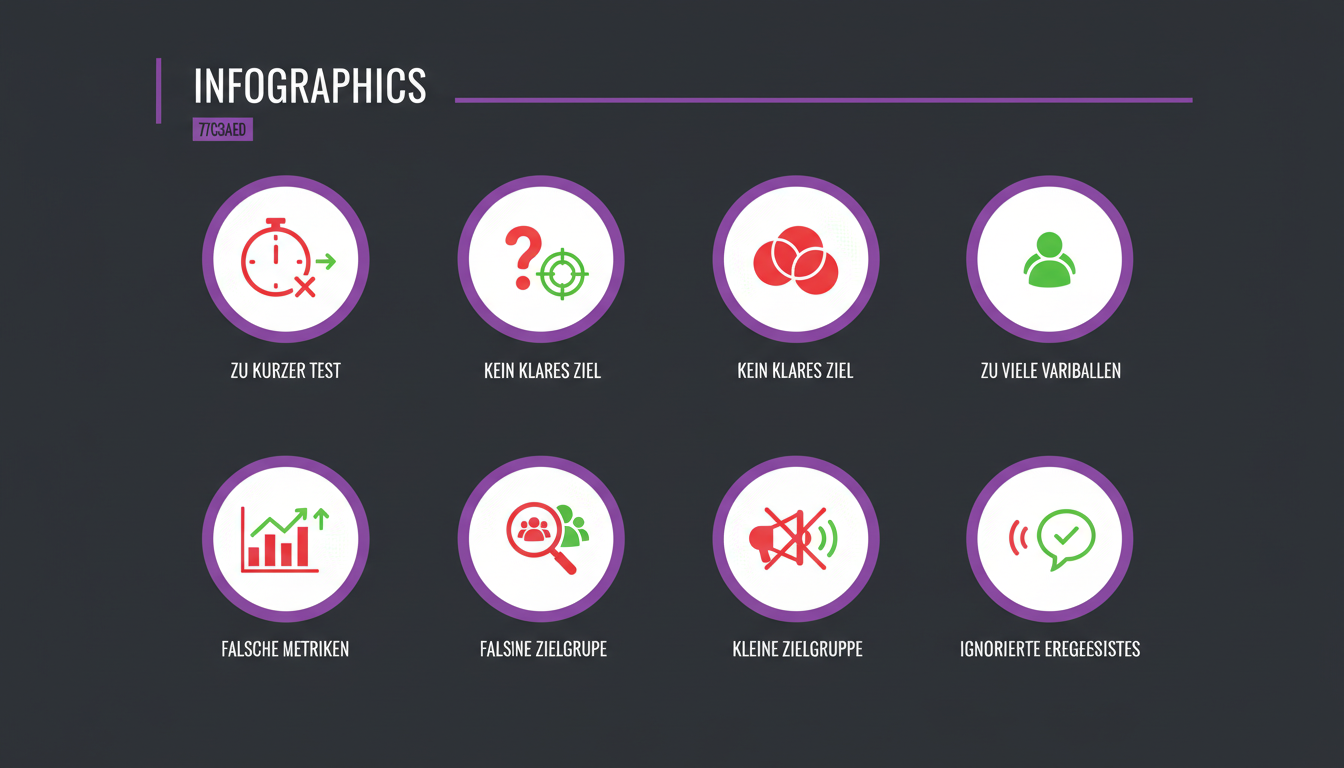
Even experienced content teams regularly make the same mistakes when testing. Knowing them means you can avoid them.
- Too many variables at once: You test a new image and a new caption at the same time. Then you do not know afterward what made the difference.
- No defined goal: Without a clear target metric, you collect data without direction. You need a question before you can test.
- Too short a test period: 24 hours is almost always too short. Algorithms need time to distribute content. Early results are often not representative.
- Testing trivialities: Whether a hashtag "#marketing" or "#digitalmarketing" performs better is rarely decisive. Test elements with real impact.
- Not documenting results: What you do not write down, you do not learn from. A simple spreadsheet is enough to record test results and recognize patterns.
- Confirmation bias: You interpret results in a way that confirms your existing opinion. Let the numbers speak, even if the result surprises you.
Frequently Asked Questions
How long should an A/B test on social media run at minimum?
At least 5 to 7 days to balance out weekday fluctuations. Each variant should also reach at least 1,000 impressions before you consider a result reliable. With smaller accounts, this may take longer - it is better to wait patiently than to draw premature conclusions.
Can I run an A/B test on multiple platforms at the same time?
Yes, but only if you evaluate the results separately. What applies on TikTok does not automatically transfer to LinkedIn. Each platform has different algorithms and user expectations. Treat each platform test as an independent experiment.
Which metric should I prioritize in A/B testing on social media?
That depends on your current goal. If you want to build awareness, test for reach. If you want to increase engagement, use engagement rate as the target. If you want to drive traffic to a website, the click-through rate is key. Always choose only one primary metric per test.
What do I do if my A/B test delivers no clear result?
An inconclusive result is also a result: it shows that the tested variable makes no measurable difference for your audience. In this case, you can choose the simpler or cheaper variant and focus your testing resources on a variable with greater impact.
A/B testing on social media is not an elaborate project you launch once a year. It is a way of working - a mindset that leads to continuous improvement. Start small: one test, one variable, one clear question. Those who test systematically stop wasting time on content that does not work - and focus on what demonstrably does. If you want to coordinate and document your tests across platforms, take a look at how Brandlix can help you keep track.