AI analysis of social media data is one of the most practical applications of machine learning available to marketers right now. Instead of spending hours inside native analytics dashboards, AI can surface patterns, flag underperforming content, and predict what your audience will respond to - all before you hit publish. This guide walks you through exactly how it works and what you can do with it today.
- AI analysis converts raw social media metrics into actionable signals in minutes, not hours.
- Sentiment analysis, predictive posting, and anomaly detection are the three highest-value AI use cases for social data.
- The quality of your input data determines the quality of AI output - garbage in, garbage out still applies.
- Small teams benefit most from AI analysis because it replaces the need for a dedicated data analyst.
- AI tools work best when paired with human judgment - especially for interpreting context and tone.
What exactly is AI analysis of social media data?
AI analysis of social media data means using machine learning models to automatically process, interpret, and draw conclusions from the metrics, text, images, and behavioral signals your social accounts generate. Rather than reading a spreadsheet of follower counts, you get structured insights: which content format drove the most saves, which audience segment is most likely to convert, and when engagement typically drops off.
The term covers a broad set of techniques. Natural language processing (NLP) reads the text of captions and comments. Computer vision classifies images. Regression models predict future performance based on historical patterns. Clustering algorithms group similar audience segments together without anyone manually defining the groups.
What makes this different from traditional social media analytics is the scale and speed. A human analyst reviewing 90 days of post data across five platforms might take a full workday. A trained AI model does the same job in seconds and can run that analysis every morning automatically.
The core data types AI can process
- Engagement metrics - likes, comments, shares, saves, clicks, video views, story taps
- Text content - captions, hashtags, comment threads, direct message themes
- Audience data - demographics, geographic distribution, active hours, device type
- Visual content - image composition, dominant colors, presence of faces or text overlays
- Timing data - post frequency, publish times, response latency
- Competitive signals - share of voice, topic overlap, follower growth comparison
Why does AI-powered social analysis matter more now than before?
The volume of social data has grown well beyond what any individual or small team can process manually. Consider that over 500 hours of video are uploaded to YouTube every minute, and hundreds of millions of posts go live on Instagram and Facebook daily. At that scale, manual analysis is not just slow - it is structurally impossible to do comprehensively.
AI closes that gap. More importantly, it closes it without requiring a data science background. Modern AI analysis tools present findings in plain language or visual dashboards, which means a solo founder or a three-person marketing team can act on the same quality of insights that was previously only available to enterprise brands with dedicated analytics departments.
There is also a competitive pressure element. Brands that act on AI insights faster iterate content strategy faster. Over a 12-month period, compounding small improvements in engagement rate, posting time, and content format mix creates a measurable gap between brands that analyze rigorously and those that post by gut feel.

What are the most valuable AI analysis techniques for social media?
The highest-value techniques are sentiment analysis, predictive performance modeling, and anomaly detection. Each solves a different problem, and together they cover most of what a rigorous social media analyst would spend their week doing.
Sentiment analysis
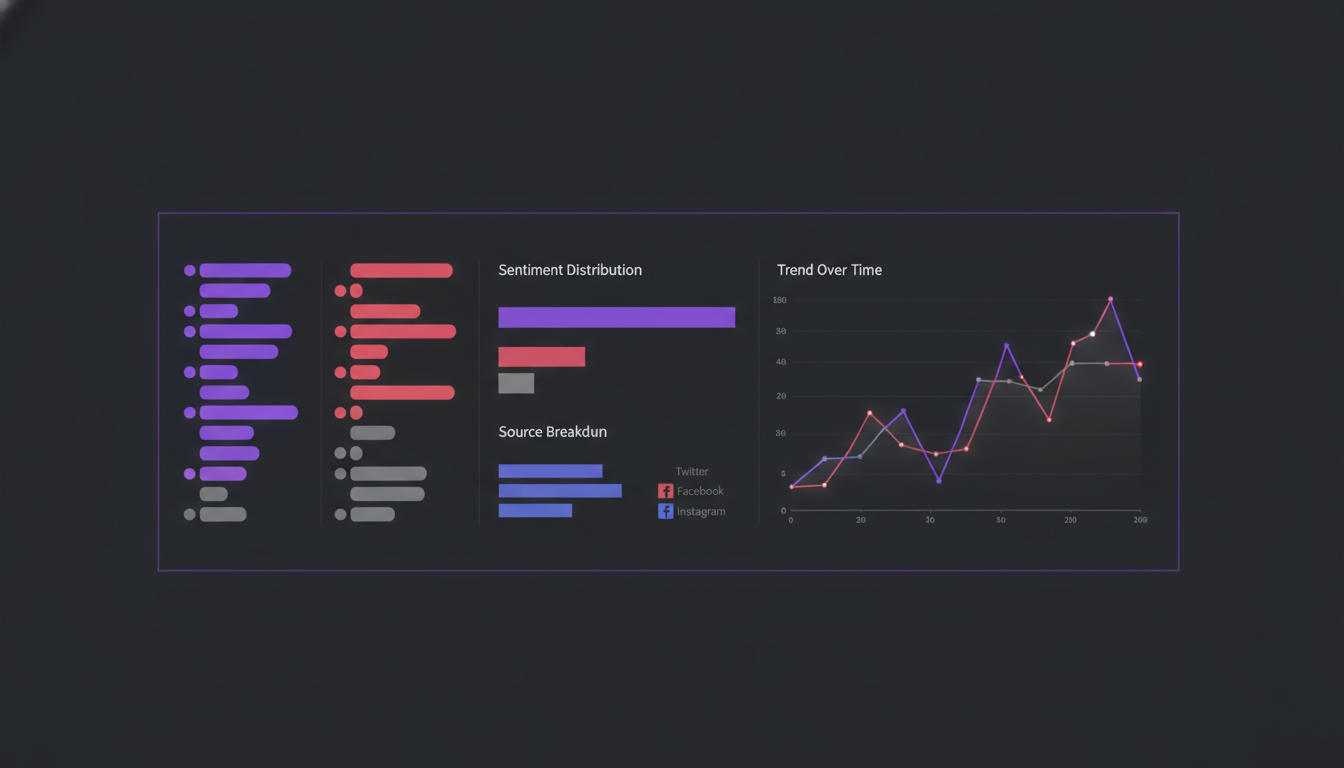
Sentiment analysis uses NLP to classify comments, mentions, and replies as positive, negative, or neutral. More advanced models detect specific emotions - frustration, excitement, confusion - and can flag sarcasm, which trips up simpler keyword-based tools.
For brand monitoring, this matters a lot. A post with 800 comments looks great until sentiment analysis reveals that 60% of those comments are complaints about a shipping delay. Without AI, you might not catch that signal until it escalates into a PR issue.
Predictive performance modeling
Predictive models look at your historical post data - format, caption length, hashtag count, publish time, day of week - and build a probability distribution for how a new post is likely to perform. Some tools score drafts before publishing, giving you a rough expected reach or engagement rate range.
This is not fortune-telling. The model is only as good as your historical data. If you have fewer than 60-90 days of consistent posting history, predictions will be noisy. Once you have a solid baseline, the accuracy improves significantly.
Anomaly detection
Anomaly detection flags when a metric deviates from its expected range. If your average Instagram reach per post sits around 4,000 and one post hits 40,000, that is an anomaly worth investigating - not just celebrating. AI can surface it immediately, so you can understand what drove the spike and replicate it intentionally.
The same logic applies in reverse. A sudden drop in story completion rate or an unusual spike in unfollows both represent anomalies that warrant a response. Manual monitoring often catches these too late.
Audience segmentation
Clustering algorithms can group your followers by behavior - not just demographics. You might discover that one segment only engages with video content posted on weekday evenings, while another segment consistently saves your text-heavy carousel posts regardless of when they go live. Those two groups need different content strategies.
How do you build an AI-powered social media analysis workflow?
Building a functional workflow comes down to six steps. The setup takes time upfront, but once running, it operates largely in the background.
- Audit your current data sources. List every platform you post on and confirm that you have API access or can export data in a structured format. Native exports (CSV files) work, but live API connections are far more useful for ongoing analysis.
- Consolidate into one place. Whether you use a dedicated social analytics platform or route data into a BI tool like Looker or Metabase, the goal is a single source of truth. Switching between five different native dashboards makes pattern-spotting nearly impossible.
- Define your key performance questions. AI tools answer questions better than they generate insights unprompted. Start with specific questions: "Which content format has the highest save rate on Instagram?" or "What publish time correlates with above-average LinkedIn reach?" The more precise the question, the more actionable the answer.
- Select and configure your AI tool. Match the tool to your use case. If sentiment analysis is your priority, look for NLP-first platforms. If you want post-scoring before publishing, look for tools integrated into your scheduling workflow. Brandlix, for instance, integrates AI analysis directly into its content calendar so you can review predictive scoring without leaving your planning view.
- Set up automated reporting cadences. Weekly and monthly reports should run automatically. Anomaly alerts should trigger in near-real-time. Manual reporting is a time sink that AI tools eliminate.
- Review, interpret, and act. AI surfaces patterns - you decide what to do about them. Block time each week to review AI outputs and translate findings into specific content or scheduling changes. Insights that sit in a dashboard without triggering action have zero business value.
How do leading AI analysis tools compare for social media teams?
Choosing the right tool depends on team size, budget, and which platforms you prioritize. The table below compares the major categories of tools currently available, focusing on their primary strengths and trade-offs.
| Tool Category | Best For | Key Strength | Main Limitation | Typical User |
|---|---|---|---|---|
| All-in-one social platforms (e.g., Brandlix) | Scheduling + analysis in one place | No data export needed; AI works on live post data | Analysis depth may be narrower than specialist tools | SMBs, agencies, creators |
| Dedicated social analytics tools | Deep per-platform reporting | Granular metrics, historical benchmarking | Does not help with content creation or scheduling | In-house social media teams |
| Social listening platforms | Brand monitoring, competitor tracking | Real-time mention tracking, sentiment at scale | Expensive; often overkill for small accounts | Enterprise brands, PR teams |
| BI tools with social data connectors | Custom dashboards, cross-channel analysis | Highly flexible; integrates with other business data | Requires technical setup; no built-in AI models | Data-savvy teams with analyst support |
| AI writing and scoring tools | Caption optimization, post pre-screening | Fast feedback loop before publishing | Limited to text; does not analyze historical account data | Content creators, copywriters |
No single tool category wins outright. For most growing brands managing multiple platforms, the practical answer is an all-in-one platform for day-to-day operations, supplemented by a social listening tool if brand reputation monitoring is a priority. You can explore how AI-driven scheduling and analysis work together on Brandlix's AI social media page.
What are the biggest mistakes teams make with social media AI analysis?
The most common mistake is treating AI output as a final answer rather than a starting point. AI tells you what happened and suggests probabilities - it does not understand brand voice, cultural context, or the specific campaign goal behind a post. Blindly following AI recommendations without applying judgment produces technically optimized but contextually flat content.
Over-indexing on vanity metrics
AI analysis is only as useful as the metrics you feed it. If you configure your AI tool to optimize for likes, you will get content designed to generate likes - which may have nothing to do with driving traffic, generating leads, or building an email list. Before running any analysis, define what a successful outcome actually looks like for your business.
Ignoring data quality
Inconsistent posting schedules, mixed content experiments, and frequent account changes all create noisy data that degrades model accuracy. If you switched content strategy three times in the past six months, your historical data reflects three different strategies, not one. AI models need stable baselines to identify real patterns. A minimum of 60 consistent posts per platform is a reasonable threshold before trusting predictive outputs heavily.
Treating all platforms the same
Each platform has its own algorithm, audience behavior, and content format norms. Analysis insights from Instagram do not automatically apply to LinkedIn or TikTok. Platform-specific analysis is essential. Using dedicated tools or filters - like the Brandlix analytics dashboard which segments data by platform - helps you avoid drawing false cross-platform conclusions.
Skipping the action step
This is the most expensive mistake. Teams invest in AI tools, review dashboards regularly, and then continue posting exactly as they did before. The value of analysis is entirely downstream of the changes it prompts. Build a habit of turning at least one insight per week into a concrete content test.
How do you turn AI social media insights into a concrete content strategy?
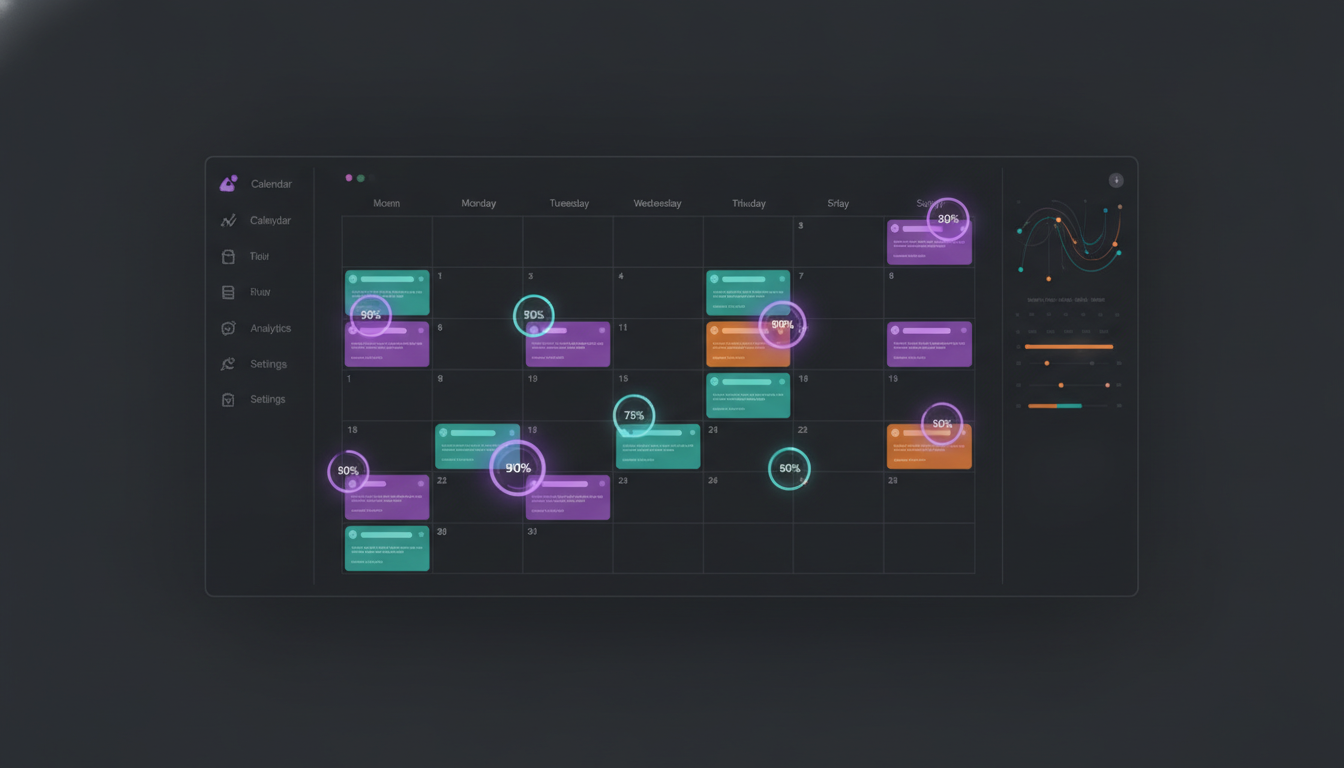
The bridge between insight and strategy is the content calendar. Once AI analysis tells you what is working, the next step is systematically building more of it into your publishing schedule - not as a one-off, but as a repeatable process.
Build a weekly insight-to-action loop
Structure your week so that analysis happens early (Monday morning works well for most teams) and content decisions are made immediately after. A simple one-page format helps: what performed above average last week, what underperformed, and what one change you will test this week as a result.
Keep tests isolated where possible. If you want to test whether longer captions improve Instagram saves, change only caption length across your next five posts. Changing format, caption, hashtags, and posting time simultaneously makes it impossible to know what drove any change in results.
Use AI to pre-score new content
Several tools, including integrations available through AI social media agents, allow you to submit a draft post for pre-publication scoring. The model compares your draft against your historical top performers and flags any structural differences - a caption that is 3x longer than your average high-performer, a hashtag set with lower-than-usual reach potential, or a publishing time outside your audience's peak activity window.
This does not replace creative judgment. It adds a data layer on top of it.
Map insights to platform-specific strategies
Different platforms reward different behaviors, and your AI analysis will reflect that. Some principles to apply once your analysis starts generating clear signals:
- On Instagram, save rate and share rate are stronger quality signals than like count - optimize around those.
- On LinkedIn, dwell time and comment depth matter more than surface-level reactions - analyze which posts generate substantive replies.
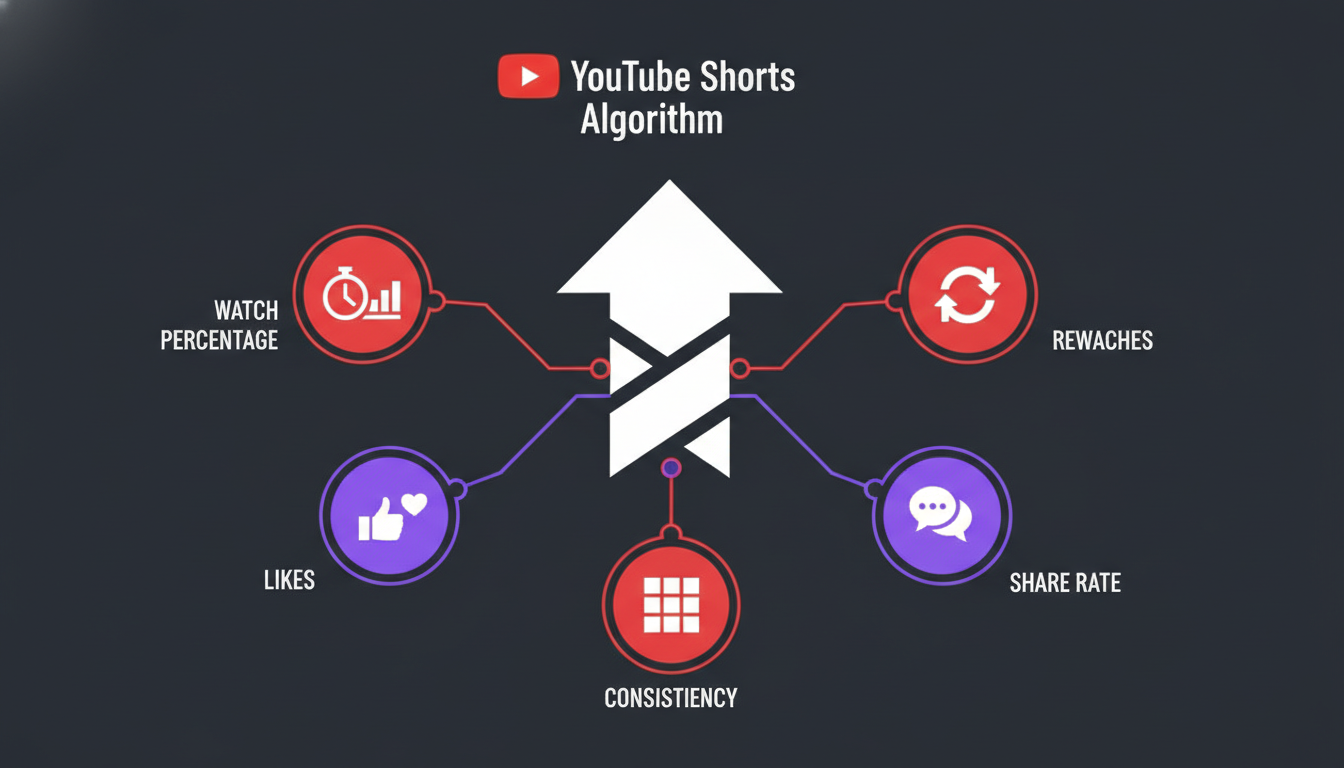
- On TikTok, completion rate and rewatch rate are the algorithm's primary inputs - a post with 50,000 views but a 20% completion rate is actually underperforming relative to a post with 5,000 views and 80% completion.
- On Pinterest, a longer content half-life means posts from 6+ months ago may still be driving traffic - time-based analysis windows need to be much wider than on other platforms.
For platform-specific scheduling insights tied to your analysis, the best time to post tool can give you a useful baseline to compare against your account-specific AI findings.

What does the future of AI social media analysis look like?
The direction is toward real-time, multi-modal analysis that goes well beyond text and engagement metrics. In 2026, the most advanced tools are already processing video content frame-by-frame to identify which visual moments drove a spike in watch time. Audio analysis of video captions and voiceovers is adding another layer to understanding why content resonates.
Predictive models are also becoming more cross-platform aware. Rather than analyzing Instagram in isolation, next-generation tools are starting to model how content performance on one platform predicts or influences performance on another - particularly relevant for brands that repurpose content across TikTok, Instagram Reels, and YouTube Shorts.
The role of AI analysis will also expand into influencer and creator evaluation. Rather than relying on follower counts or aggregate engagement rates, brands are beginning to use AI to evaluate audience authenticity, content consistency, and topic alignment at a much finer level of detail.
One thing will not change: the brands that use AI analysis most effectively will be the ones that build strong feedback loops between data and content decisions. The technology gets better every quarter, but the discipline of acting on insights is a human habit, not a software feature. You can explore how automated publishing fits into this loop on the social media autopilot page.
Frequently Asked Questions
How much data do you need before AI social media analysis produces reliable results?
As a practical rule, aim for at least 60-90 published posts per platform with consistent content strategy before relying heavily on predictive model outputs. Sentiment analysis and anomaly detection can work on smaller datasets, but performance prediction models need enough historical variance to identify real patterns. Accounts that post three or more times per week will reach a reliable baseline in roughly four to six weeks.
Can AI analysis help with competitor benchmarking?
Yes, but with some limitations. AI-powered social listening tools can track public competitor data - posting frequency, engagement rates on visible posts, topic distribution, and mention volume. They cannot access private analytics like reach, impressions, or audience demographics. That data is proprietary to each account. For competitive benchmarking, focus on the behavioral signals you can observe publicly and use AI to process them at scale.
Is AI social media analysis suitable for small businesses or solo creators?
It is arguably most valuable for small teams. A solo creator or small business cannot hire a dedicated analyst, so AI analysis tools fill that gap directly. The key is choosing tools that present insights in plain language rather than raw data exports. All-in-one platforms with built-in AI analysis are usually the right fit - they eliminate the need to connect separate tools or understand statistical models manually.
How do you measure whether your AI analysis workflow is actually working?
Track three things over a 90-day period: average engagement rate trend, time spent on manual reporting (it should drop significantly), and the number of content decisions made based on data rather than intuition. If engagement is trending upward, reporting time is lower, and your team can point to specific data-driven changes they made, the workflow is working. If you are running AI tools but content decisions are still made by gut feel, the workflow exists but is not yet embedded in your process.
AI analysis of social media data is not a luxury reserved for large marketing teams. The tools are accessible, the learning curve is manageable, and the compounding benefit of better-informed content decisions adds up quickly. Start with one platform, define two or three clear analytical questions, and build the habit of acting on what you find. That feedback loop - analyze, act, measure, repeat - is what separates brands that grow predictably from those that post and hope.