Bluesky for brands is no longer just an experiment for early adopters. With over 35 million registered users as of early 2026, the platform has become a serious consideration for social media marketers who want to reach engaged, text-driven communities without the algorithmic noise of older networks.
- Bluesky has crossed 35 million users and is growing fast among creators, journalists, and tech-savvy audiences.
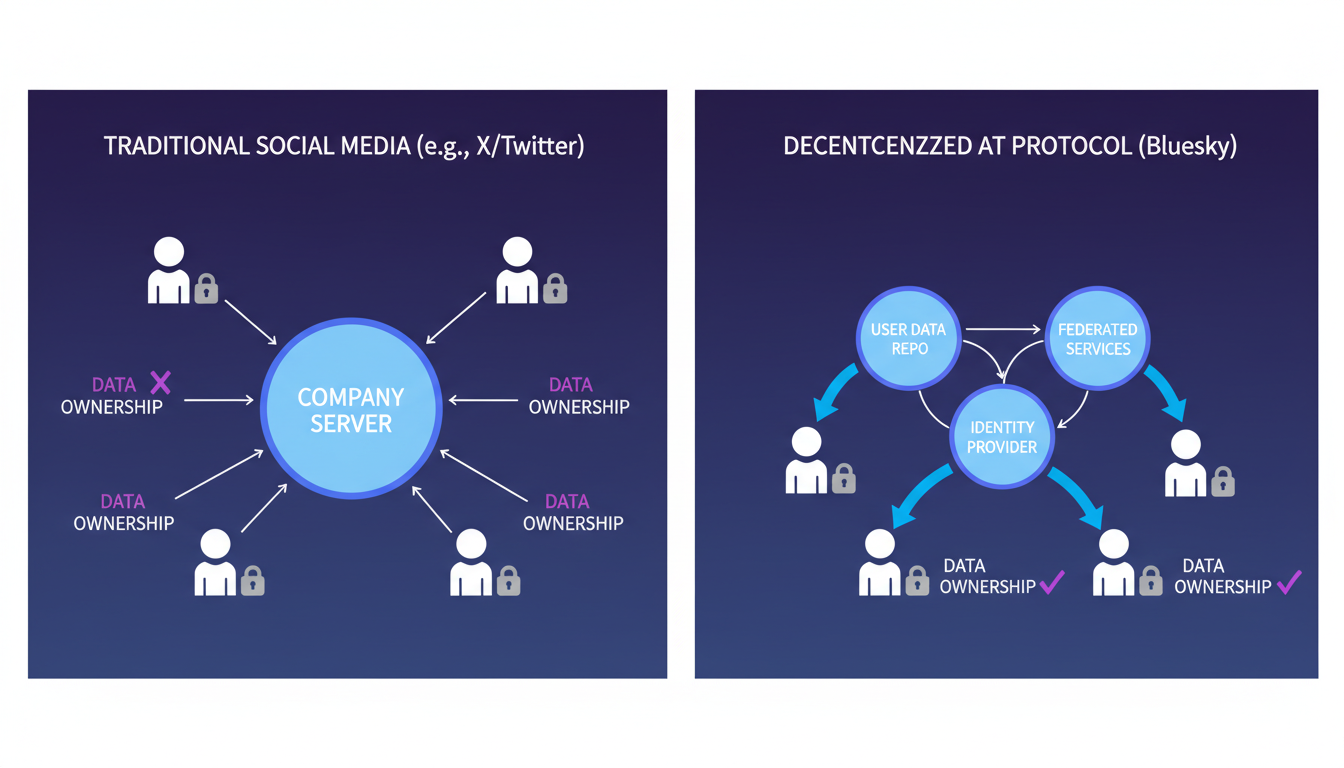
- The platform runs on the AT Protocol, which gives brands more control over their content distribution than any major social network.
- Text-first content and authentic conversation drive the best results - polished ad-style posts underperform here.
- Bluesky's algorithmic feeds are customizable, which means brands can target niche communities more precisely.
- Early movers on Bluesky report significantly higher organic reach per follower than on comparable platforms.
What is Bluesky and Why Should Brands Pay Attention?
Bluesky is a decentralized social network built on the open AT Protocol, originally incubated by Twitter co-founder Jack Dorsey. It looks and feels like early Twitter but gives users and platform operators far more control over the experience. For brands, that distinction matters more than it sounds.
Traditional platforms like Instagram and LinkedIn decide what content reaches whom based on proprietary algorithms you cannot see or meaningfully influence. On Bluesky, feeds are composable - meaning users can subscribe to custom algorithmic feeds built by third parties. A brand that understands this architecture can reach the right audience far more deliberately.
Bluesky's rapid growth makes it one of the fastest-growing social platforms globally. That kind of velocity is exactly what brands missed when they ignored TikTok in its early days.
Who Is Actually Using Bluesky in 2026?
Bluesky's core audience skews toward journalists, academics, developers, designers, and politically engaged users - particularly those who migrated from Twitter/X after its ownership change. This is not a mass-market platform yet, but that is precisely its value for certain brands.
Many of Bluesky's active users hold a bachelor's degree or higher, and many work in decision-making roles. If you sell B2B software, publish research, or serve a tech-literate audience, those traits should get your attention.
The platform also indexes high on media professionals. Newsrooms, independent journalists, and podcast hosts have adopted Bluesky as a primary distribution channel. For brands in media, publishing, or thought leadership, this creates a rare opportunity to be part of conversations that actually shape narratives.
Bluesky vs. Twitter/X vs. Threads: Who Goes Where?
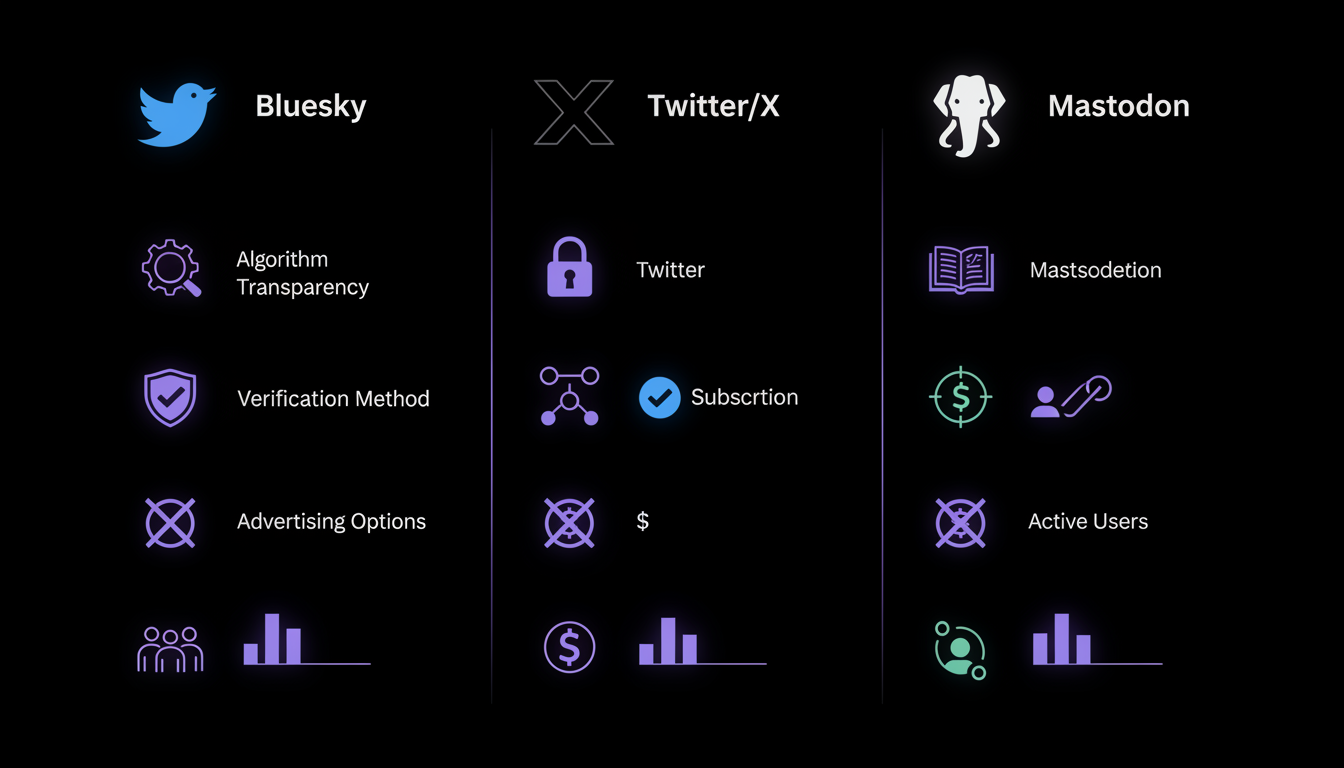
| Platform | Monthly Active Users (2026) | Core Audience | Algorithm Control | Brand Ad Options |
|---|---|---|---|---|
| Bluesky | A fraction of X or Threads | Journalists, developers, academics | High (custom feeds) | None (organic only) |
| Twitter/X | Hundreds of millions | News, politics, entertainment | Low | Paid ads available |
| Threads | Hundreds of millions | Instagram spillover, casual users | Medium | Paid ads available |
What Content Works Best for Brands on Bluesky?
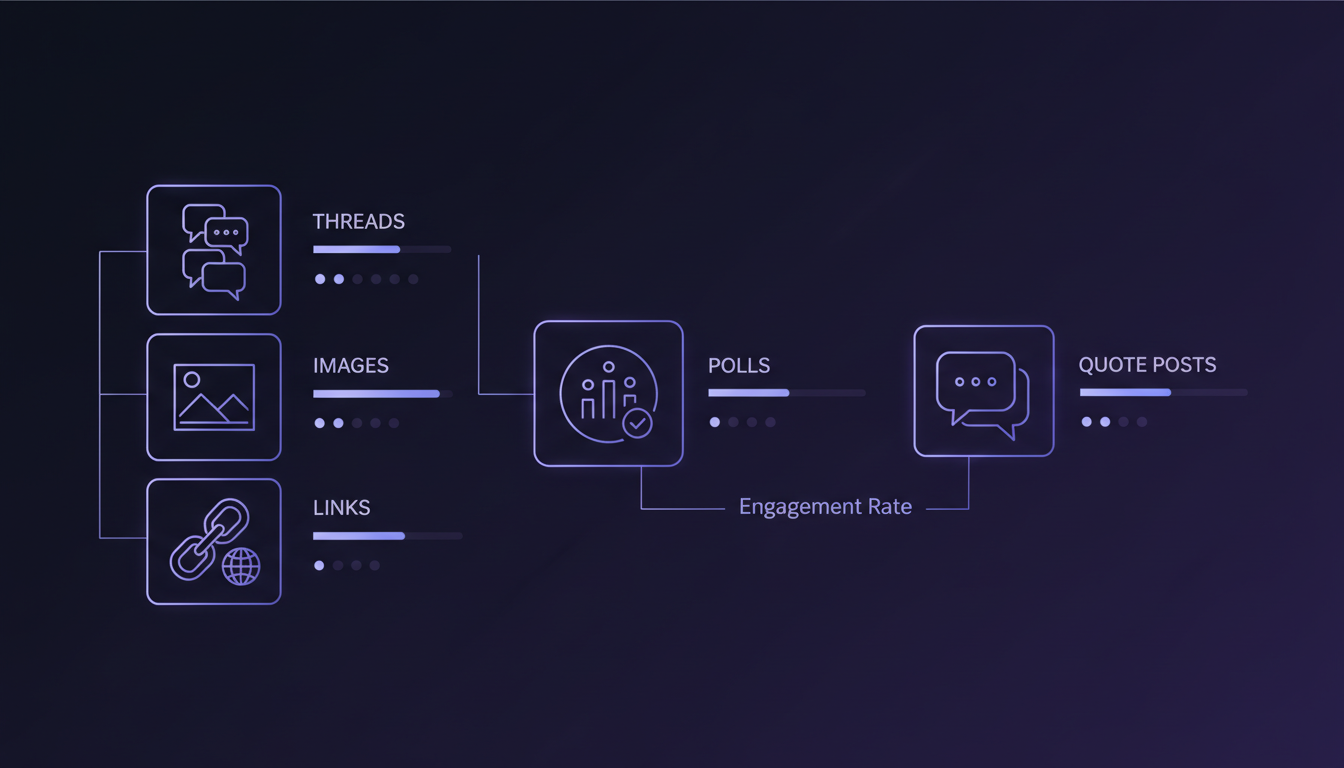
Short, opinionated text posts with genuine substance consistently outperform anything that looks like a press release or a boosted ad. Bluesky users are unusually quick to call out promotional language, and the community rewards authentic takes over polished brand voices.
Think of your Bluesky presence less like a broadcast channel and more like a public Slack thread where your team talks openly about what you are building, what you are thinking, and what you are getting wrong. That tone is not just accepted here - it is expected.
Content Formats That Perform Well
- Thread-style breakdowns - multi-post threads that explain a concept, share a process, or unpack an industry trend
- Hot takes with receipts - short opinion posts backed by a linked study, report, or original data
- Behind-the-scenes updates - product decisions, team moments, or honest post-mortems
- Original research teasers - a key stat from a report your brand published, linked back to the full piece
- Community questions - open-ended prompts that invite replies, which boost post visibility in custom feeds
Content Formats That Tend to Underperform
- Heavily designed image posts with minimal text context
- Promotional announcements written in press-release language
- Cross-posted content that was clearly written for Instagram or LinkedIn
- Overly polished video content (short text clips work better)
How Do Custom Feeds Change Your Distribution Strategy?
Custom feeds on Bluesky function like subscribable algorithms that any developer can build. Instead of one platform-wide feed, users follow curated feeds like "Tech News Daily," "Science Discoveries," or "Indie Founders" - each with its own curation logic. Brands that create content relevant to those feeds appear in them without paying for placement.
This is structurally different from every other major platform. On Instagram, you compete for the main feed. On Bluesky, you can show up in dozens of niche feeds simultaneously if your content matches their criteria. Posts that appear in several custom feeds can reach far more people than posts surfaced only through follower timelines.
How to Get Your Brand Content into Custom Feeds
- Research which custom feeds your target audience subscribes to - you can browse the Bluesky Feed Marketplace directly.
- Study what kinds of posts each feed surfaces and note recurring topics, hashtags, and post structures.
- Write posts that genuinely match that feed's criteria - do not force keywords into content that does not fit.
- Engage with other posts in that feed's ecosystem so your account becomes recognized within the community.
- Track which of your posts surface in feeds using third-party tools that connect via the AT Protocol API.
How Should Brands Set Up Their Bluesky Profile?
Your profile on Bluesky is more than a bio - it is also a verifiable identity layer. Bluesky allows domain verification, meaning your brand's handle can literally be your domain name (e.g., @yourbrand.com). This eliminates impersonation risk and signals credibility immediately to any user who sees your posts.
Beyond verification, your profile picture, display name, and bio need to do the same job they do on any platform: communicate who you are, why someone should follow you, and what they will get from doing so. Keep the bio tight - users scan profiles in under three seconds before deciding to follow or not.
Profile Setup Checklist for Brands
- Claim your domain as your handle via Bluesky's domain verification settings.
- Use a clean, recognizable logo as your profile picture - avoid text-heavy images at small sizes.
- Write a bio that states what your brand does and what kind of content you will post, in plain language.
- Pin a starter post that introduces your brand's presence and sets expectations for followers.
- Follow relevant accounts in your industry - the people you follow signal your positioning to new visitors.
- Join at least one Starter Pack (Bluesky's curated follow lists) relevant to your niche.
What Are the Best Posting Habits for Brand Growth on Bluesky?
Consistency matters more than frequency on Bluesky. Posting three to five times per week with quality content outperforms posting fifteen times a week with filler. The community is small enough that users notice when an account floods the timeline with low-effort posts, and that kind of behavior damages your reputation faster than silence would.
As a starting point, the highest-engagement windows on Bluesky are Tuesday through Thursday between 9am and 11am UTC, with a secondary peak at 7pm to 9pm UTC. These windows align with European morning hours and US East Coast afternoons, reflecting the platform's current user distribution.
A Weekly Content Rhythm That Works
- Monday - Share a useful resource, article, or original insight relevant to your industry
- Wednesday - Post a thread that unpacks a process, framework, or behind-the-scenes story
- Thursday - Ask a community question or share a contrarian take that invites replies
- Friday - Lightweight and conversational - a team moment, a product update, or a week-in-review
Managing this cadence across Bluesky alongside your other platforms gets complicated quickly. Tools like Brandlix let you schedule and publish to Bluesky alongside nine other platforms from a single dashboard, which saves significant time without disrupting your posting consistency.
How Do You Measure Results on Bluesky?
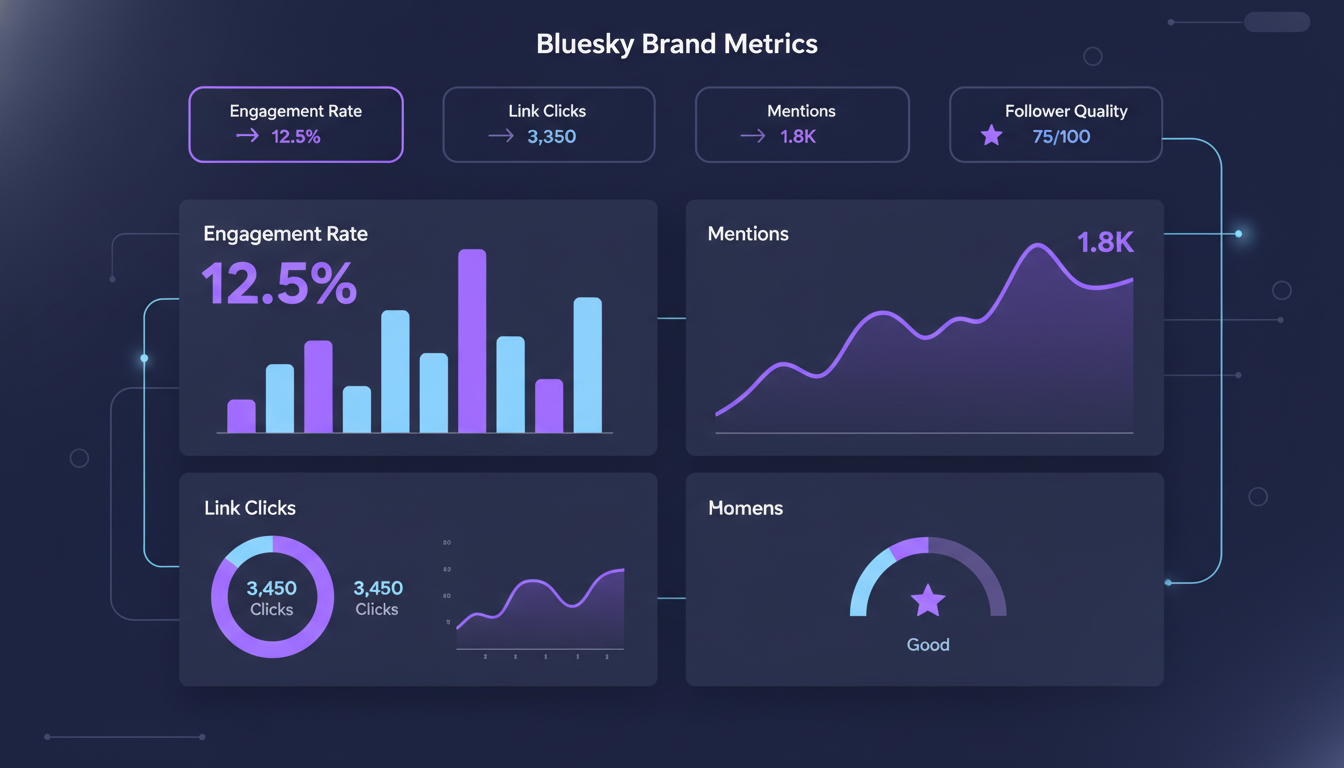
Bluesky's built-in analytics are minimal compared to more established platforms, but the core metrics available - replies, reposts, quotes and likes shown on every post - are enough to build a meaningful performance picture. The key is knowing which metrics to prioritize based on your goals.
Because Bluesky has no paid advertising yet, every metric is organic. That means a 3% engagement rate on Bluesky is not comparable to a 3% rate on a platform where paid distribution inflates impressions.
Key Metrics to Track for Brand Accounts
- Reply rate - the percentage of posts that generate replies; this is your strongest signal of genuine community interest
- Repost rate - how often your content gets amplified; high repost rates indicate content that resonates broadly
- Follower growth rate - week-over-week change, not total count; plateau periods signal a need for content strategy adjustments
- Profile visit-to-follow conversion - how many people who visit your profile actually follow you; low conversion usually means a weak bio or an unclear content proposition
- Feed appearances - which custom feeds pick up your posts; trackable via the AT Protocol API
Is Bluesky Worth It for Every Brand?
Honestly, no. Bluesky is not a fit for every brand in 2026, and pretending otherwise would waste your time. The platform's strengths are specific, and so is its audience. If your brand sells consumer packaged goods to a broad demographic, or if your strategy depends heavily on visual content and influencer marketing, Bluesky is not where your budget and energy should go first.
But if you operate in tech, media, SaaS, research, design, journalism, or any field where thought leadership drives pipeline - Bluesky is worth serious investment right now. The organic reach advantage will not last indefinitely. Platforms always become more competitive as they scale, and 35 million users is still early-stage territory where genuine engagement is achievable without paid amplification.
Brands That Should Prioritize Bluesky Now
- SaaS and developer tools companies
- Media brands, newsletters, and independent publishers
- Research institutions and think tanks
- Design agencies and creative studios
- B2B companies targeting senior decision-makers
- Advocacy organizations and NGOs
Brands That Can Wait
- Consumer retail brands with broad demographic targets
- Entertainment brands relying on video-first content
- E-commerce businesses dependent on product discovery feeds
- Local service businesses with geographically specific audiences
Frequently Asked Questions
Does Bluesky have paid advertising options for brands?
As of 2026, Bluesky does not offer paid advertising. All brand reach on the platform is fully organic. This is a significant advantage for brands willing to invest in genuine content, but it also means you cannot supplement weak organic performance with a media budget the way you can on Instagram or LinkedIn.
How is Bluesky different from Mastodon for brand marketing?
Both are decentralized, but they run on different protocols and have meaningfully different user experiences. Bluesky uses the AT Protocol and has a more unified, Twitter-like interface with custom feeds. Mastodon runs on ActivityPub and is split across hundreds of independent servers. For brands, Bluesky offers a more consistent audience and a lower barrier to entry than navigating Mastodon's federated structure.
Can I schedule posts to Bluesky in advance?
Yes. The AT Protocol API supports third-party scheduling, and several social media management platforms now include Bluesky as a supported channel. This allows you to plan your Bluesky content calendar alongside other platforms without needing to post manually every time.
What kind of engagement rate should brands expect on Bluesky?
There is no reliable public benchmark yet. Your rate varies significantly based on content quality and how well your posts align with active custom feeds. New accounts in niche-relevant communities can see strong rates early on.
Bluesky for brands is a genuine opportunity right now, not a theoretical future bet. The audience is engaged, the organic reach is unusually strong, and the platform's custom feed architecture gives you distribution levers that simply do not exist anywhere else. The brands that build real communities here in 2026 will have a meaningful head start when the platform inevitably gets more crowded. Start with a clear content focus, claim your domain handle, and treat every post as a real contribution to a conversation - not a broadcasting slot. That mindset is what Bluesky rewards, and it is what will make your presence here actually worth the effort.