Organic vs. paid social media is one of those debates that never really settles, because the right answer keeps shifting as platforms change their algorithms. If you are trying to decide where to put your time and budget in 2026, you need more than opinions - you need numbers, a clear framework, and a plan that fits your actual goals.
- Organic reach on Facebook pages now averages below 5-6% of followers, while Instagram organic reach varies strongly by content type and niche.
- Paid social ad spend worldwide has passed the 250 billion dollar mark annually, showing brands increasingly treat ads as a core budget line, not an experiment.
- A blended strategy (organic plus paid) consistently outperforms either channel alone for brand awareness and conversion metrics.
- Video content, whether organic or paid, gets significantly more engagement than static images across almost every platform.
- Small businesses typically see the best early ROI from organic content, then add paid boosts once they know which posts already perform well.
What is the difference between organic and paid social media?
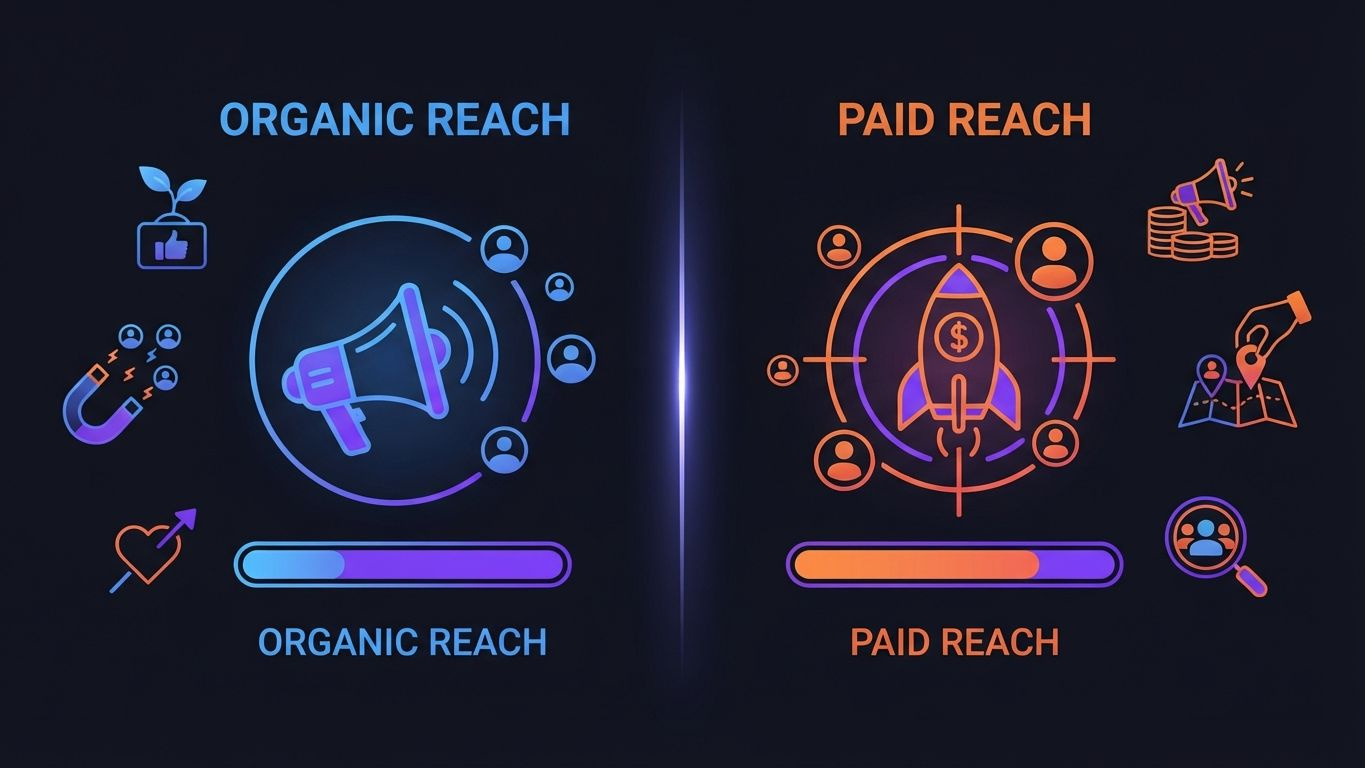
Organic social media means content you publish for free, relying on followers, hashtags, and algorithms to get it seen. Paid social media means you pay the platform to show your content to specific audiences, whether they follow you or not. Both live on the same platforms, but they play by different rules and serve different stages of the customer journey.
Organic content builds trust over time. It's the comments, the DMs, the community that forms around a brand's voice. Paid content, on the other hand, is about control - you choose who sees it, when, and how much you're willing to spend to get in front of them.
- Organic posts appear in feeds based on relevance, timing, and engagement signals.
- Paid posts (ads, boosted posts, sponsored content) appear based on budget, targeting, and bidding.
- Organic growth is slower but compounds - old posts can still bring traffic months later.
- Paid growth is immediate but stops the moment you stop paying.
How much organic reach can you realistically expect in 2026?
Organic reach on most major platforms is usually only a fraction of your total follower count per post, and it varies heavily by platform and content format. Facebook pages generally see the lowest organic reach, often under 6%, while TikTok and Instagram Reels can reach far beyond your follower base if the content resonates.
Here's the thing people miss: organic reach isn't dead, it's just redistributed. Algorithms now favor content that keeps people on the platform longer, which means format matters more than follower count.
- Facebook: average organic reach per post is commonly reported between 2% and 6% of page followers.
- Instagram: feed posts reach only part of your followers, while Reels can reach well beyond follower count due to non-follower distribution.
- LinkedIn: organic reach for company pages tends to be modest, though personal profiles often outperform company pages significantly.
- TikTok: the algorithm prioritizes the For You feed over follower relationships, so even accounts with a few hundred followers can rack up tens of thousands of views on a single clip.
If you're building an organic-first strategy, consistency and format experimentation matter more than posting frequency alone. Tools like the content calendar in Brandlix help you spot which formats and times are actually driving engagement, rather than guessing.
How much does paid social media advertising cost right now?
Paid social media costs vary widely by platform and objective, but average cost-per-click (CPC) across major platforms generally falls between 0.50 and 3.50 dollars, while cost-per-thousand-impressions (CPM) can range from 5 to 20 dollars depending on industry and competition. Global social ad spend has climbed past 250 billion dollars a year, reflecting how central paid campaigns have become to marketing budgets.
Costs shift constantly based on auction dynamics, seasonality, and targeting precision. A retail brand running ads in the weeks before a holiday will pay more per click than the same brand running ads in a quiet month.
- Facebook and Instagram ads: average CPC often lands between 0.40 and 1.50 dollars for most industries, though competitive niches like finance or legal services can be much higher.
- LinkedIn ads: typically the most expensive per click, frequently ranging from 5 to 12 dollars, but with higher-value B2B leads to justify it.
- TikTok ads: generally cheaper to test, with CPCs often under 1 dollar, though minimum campaign budgets can be a barrier for very small businesses.
- Pinterest ads: known for lower CPCs, often under 1.50 dollars, with strong performance for retail and lifestyle brands.
The key takeaway: paid social isn't a fixed price tag, it's an auction. Your targeting quality and creative relevance directly affect what you pay.
What determines whether an ad is worth the spend?
An ad is worth the spend when its return (sales, leads, or measurable brand lift) exceeds the total cost of running it, including creative production and management time. Watch your click-through rate, conversion rate, and cost per acquisition together, not in isolation, since a cheap click that never converts is worse than an expensive one that does.
Which one delivers better ROI: organic or paid?
Neither organic nor paid social media wins on ROI alone - they answer different questions. Organic tends to deliver stronger long-term ROI for brand trust and customer retention, while paid delivers faster, more measurable ROI for lead generation and immediate sales.
Think of it this way: organic is the foundation, paid is the accelerant. Pouring budget into ads without organic credibility often means paying premium prices to convince strangers, since there's no social proof backing up the pitch.
| Factor | Organic Social Media | Paid Social Media |
|---|---|---|
| Upfront cost | Low (time and content creation only) | Direct budget required for every campaign |
| Speed of results | Slow, builds over weeks/months | Immediate, visible within hours |
| Longevity | Content can keep generating views/traffic long after posting | Reach stops the moment budget runs out |
| Targeting precision | Limited to followers and hashtag/algorithm discovery | Highly specific (demographics, interests, behaviors, lookalikes) |
| Trust and credibility | Higher, feels authentic and community-driven | Lower initially, often perceived as promotional |
| Scalability | Hard to scale quickly without more time/resources | Easy to scale by increasing budget |
| Best for | Brand awareness, community, customer loyalty | Lead generation, conversions, time-sensitive promotions |
When should you invest in paid social instead of organic?
You should shift budget toward paid social when you need predictable, fast results, when you're launching a new product, entering a new market, or when your organic content has proven itself but needs a bigger audience. Paid social is also the better choice when you have a specific, time-boxed goal like a product launch or event promotion.
Boosting a post that already performed well organically is generally more cost-effective than creating an ad from scratch, because you already know the content resonates.
- Launching a new product or service with a hard deadline.
- Entering a new geographic market where you have zero existing audience.
- Retargeting website visitors who didn't convert on their first visit.
- Promoting evergreen lead magnets (ebooks, webinars, free tools) at scale.
- Recovering from a slow month where organic alone won't hit revenue targets.
If you're managing multiple platforms and trying to figure out which posts deserve ad budget, an AI social media agent can flag your top-performing organic content automatically, saving you the manual guesswork.
How do you build a blended organic and paid strategy?
A blended strategy works best when you use organic content to test messaging and paid budget to scale what already works. This reduces wasted ad spend and keeps your brand voice consistent across both channels.
- Publish content organically first and track engagement for at least one to two weeks per post.
- Identify the top 10-20% of posts by engagement rate, saves, or shares.
- Turn those top performers into paid ads, adjusting the call-to-action if the goal shifts from awareness to conversion.
- Set a modest test budget (50-100 dollars) per ad set to validate performance before scaling.
- Reinvest in winning ad sets and pause underperformers within the first 3-5 days of testing.
- Review results weekly and feed insights back into your organic content calendar.
This loop, organic test, paid scale, feedback into content, is how most efficient social teams operate today. Platforms like social media autopilot tools can help automate steps 1 and 2 so you're not manually pulling engagement reports every week.
How much budget should go to each channel?
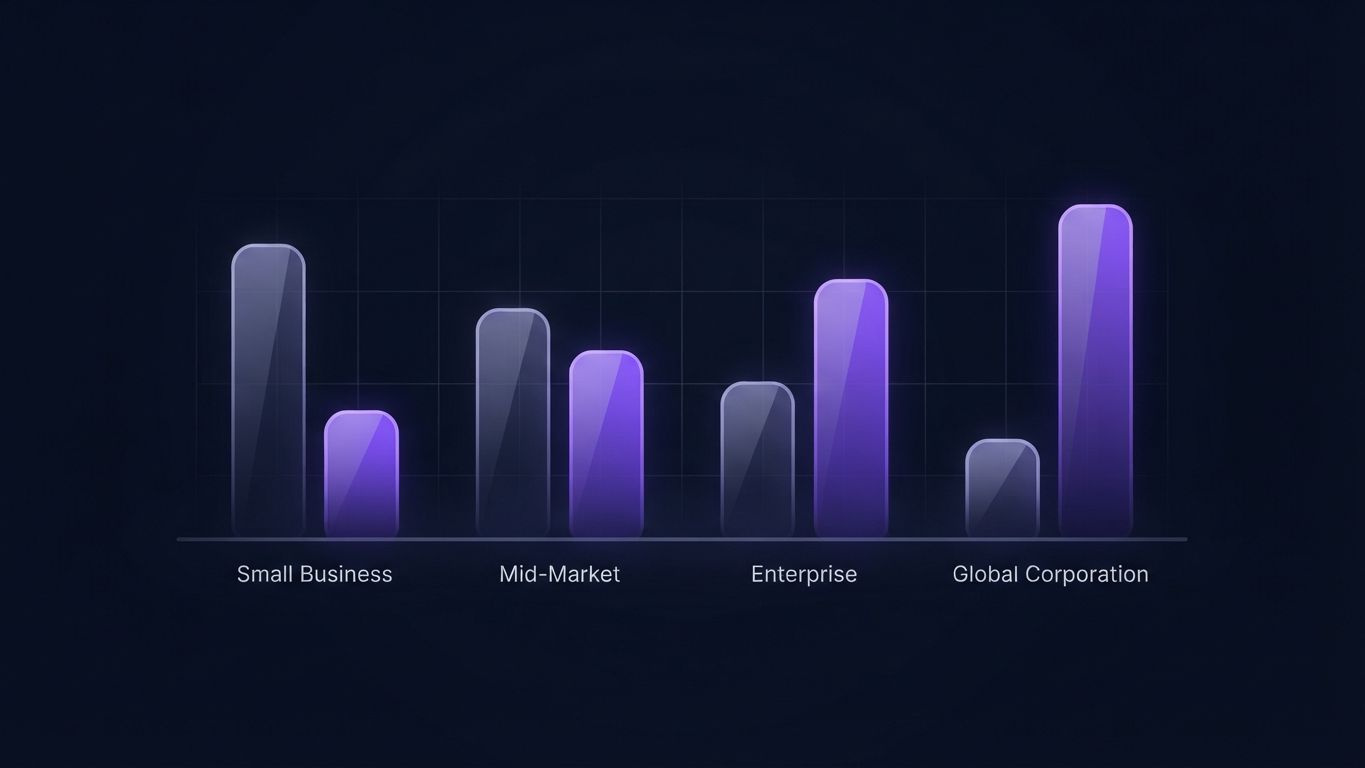
There's no universal split, but a common starting point for small and mid-sized businesses is allocating 60-70% of effort to organic content creation and 30-40% of marketing budget to paid amplification. As your paid campaigns prove profitable, that ratio often shifts toward paid, especially for ecommerce brands chasing direct sales.
What metrics actually matter for comparing the two?
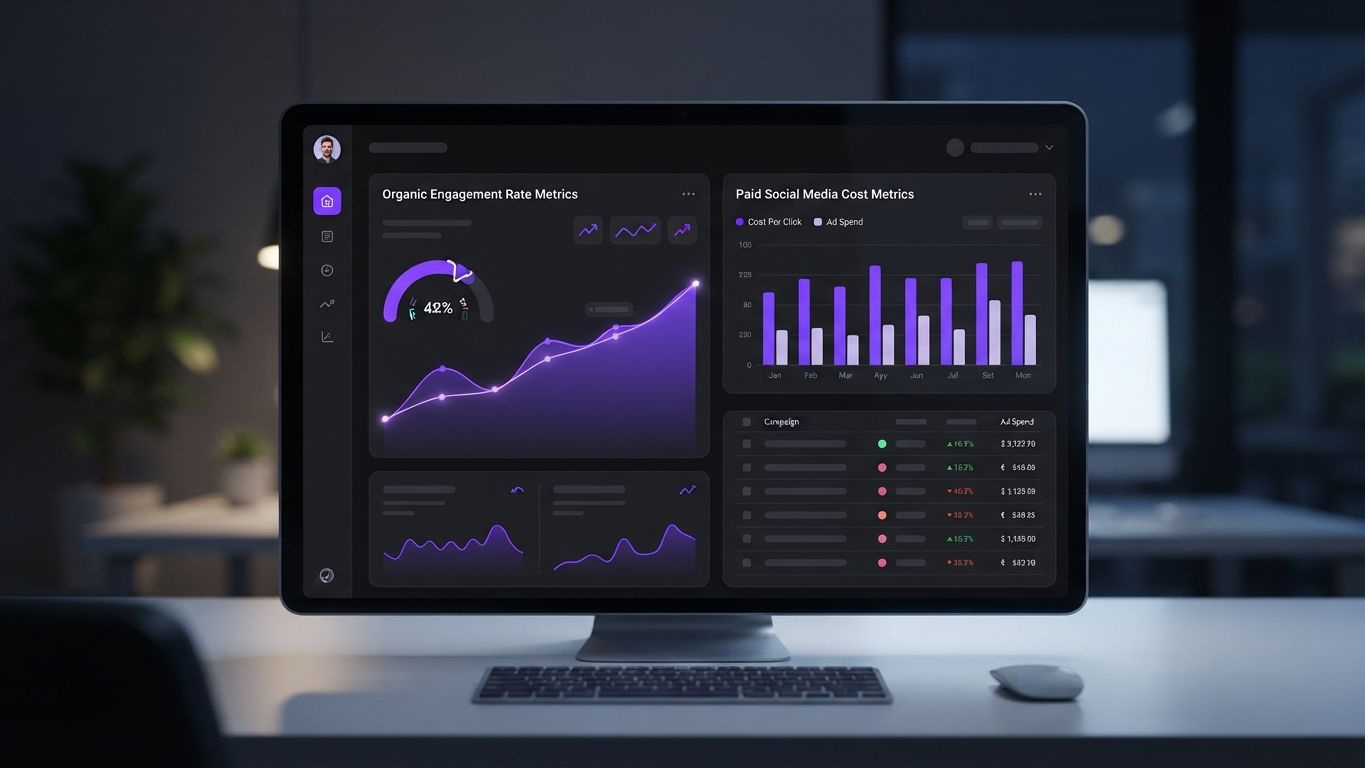
The metrics that matter most depend on your goal, but engagement rate, reach, and follower growth are the core organic metrics, while cost per click, cost per acquisition, and return on ad spend (ROAS) are the core paid metrics. Comparing them side by side, rather than in isolation, gives you a clearer picture of overall channel health.
| Metric | Organic Benchmark (Typical Range) | Paid Benchmark (Typical Range) |
|---|---|---|
| Engagement rate | Varies by platform, often higher on TikTok/Instagram Reels | Ad engagement tends to be lower than organic |
| Click-through rate | Varies with the link post | Depends on platform and creative |
| Cost per result | Effectively free (time cost only) | Varies by platform, often 0.50-12 dollars per click |
| Conversion rate | Usually highest with warm, engaged audiences | Usually highest with well-targeted retargeting campaigns |
You can track most of these in one place using social media analytics instead of jumping between five different platform dashboards.
Can small businesses succeed with organic alone?
Yes, small businesses can grow meaningfully with organic social media alone, especially in the first 6-12 months, but most eventually add a small paid budget to break through algorithm limits and reach new audiences faster. Organic-only strategies tend to plateau once you've exhausted your immediate network and local hashtag reach.
The businesses that succeed longest with organic-only approaches usually have a few things in common:
- They post consistently, at least 3-5 times per week on their primary platform.
- They lean heavily into short-form video, which continues to outperform static posts in reach and watch time.
- They engage actively in comments and DMs, since algorithms reward two-way interaction.
- They repurpose one piece of content across multiple platforms instead of creating from scratch every time.
If you're just starting out, a free best time to post tool can help you find your audience's most active hours before you even think about spending on ads. And once you're ready to scale, understanding organic reach as a concept helps you set realistic expectations instead of chasing vanity metrics.
What are the biggest mistakes brands make in this debate?
The biggest mistake is treating organic and paid as competitors instead of partners, which leads to either wasted ad spend on untested content or missed growth opportunities from under-promoting proven organic wins. Brands that separate the two into different teams with no communication tend to underperform both channels.
- Boosting every post equally instead of only the top performers.
- Ignoring organic engagement data before writing ad copy.
- Running ads with generic stock creative instead of native-feeling content.
- Never pausing underperforming ads, letting budget bleed for weeks.
- Measuring paid social only by clicks instead of downstream conversions.
Avoiding these mistakes usually comes down to better visibility into what's actually working, which is exactly where a unified AI social media platform earns its keep, since it connects organic performance data directly to your ad decisions.
Frequently Asked Questions
Is paid social media replacing organic social media in 2026?
No, paid social media is not replacing organic, it's complementing it. Algorithms still reward genuine engagement, and paid ads perform better when they're built on content that already resonates organically.
How much should a small business spend on paid social ads monthly?
Many small businesses start testing with a modest monthly budget spread across one or two platforms, then scale up once they identify ad sets with a positive return on ad spend. There's no fixed minimum, but consistent small tests beat one large, unmonitored campaign.
Does organic social media still work for B2B companies?
Yes, organic social media works well for B2B, particularly on LinkedIn where personal profile posts often outperform company page content. Combining organic thought-leadership posts with targeted LinkedIn ads tends to produce the strongest B2B lead generation results.
What platform gives the best organic reach right now?
TikTok and Instagram Reels currently offer the strongest organic reach because their algorithms actively push content to non-followers based on watch time and engagement, rather than relying mainly on existing follower relationships like Facebook does.
The organic vs. paid social media debate isn't really about picking a winner, it's about sequencing. Use organic content to learn what your audience actually wants, then use paid budget to put that proven content in front of more people, faster. If you're ready to stop guessing and start connecting the dots between what you post and what you spend, tools like Brandlix can pull both sides of that equation into one dashboard so your next campaign decision is based on data, not gut feeling.