Storytelling on social media is no longer optional - it is the primary reason people stop scrolling and actually pay attention to a brand. When you strip away the algorithm tricks and the posting schedules, what earns genuine engagement is a story that feels real. This guide breaks down exactly how to build that kind of storytelling strategy across every major platform you use in 2026.
- Story-driven content consistently outperforms purely informational posts in reach and saves across every major platform.
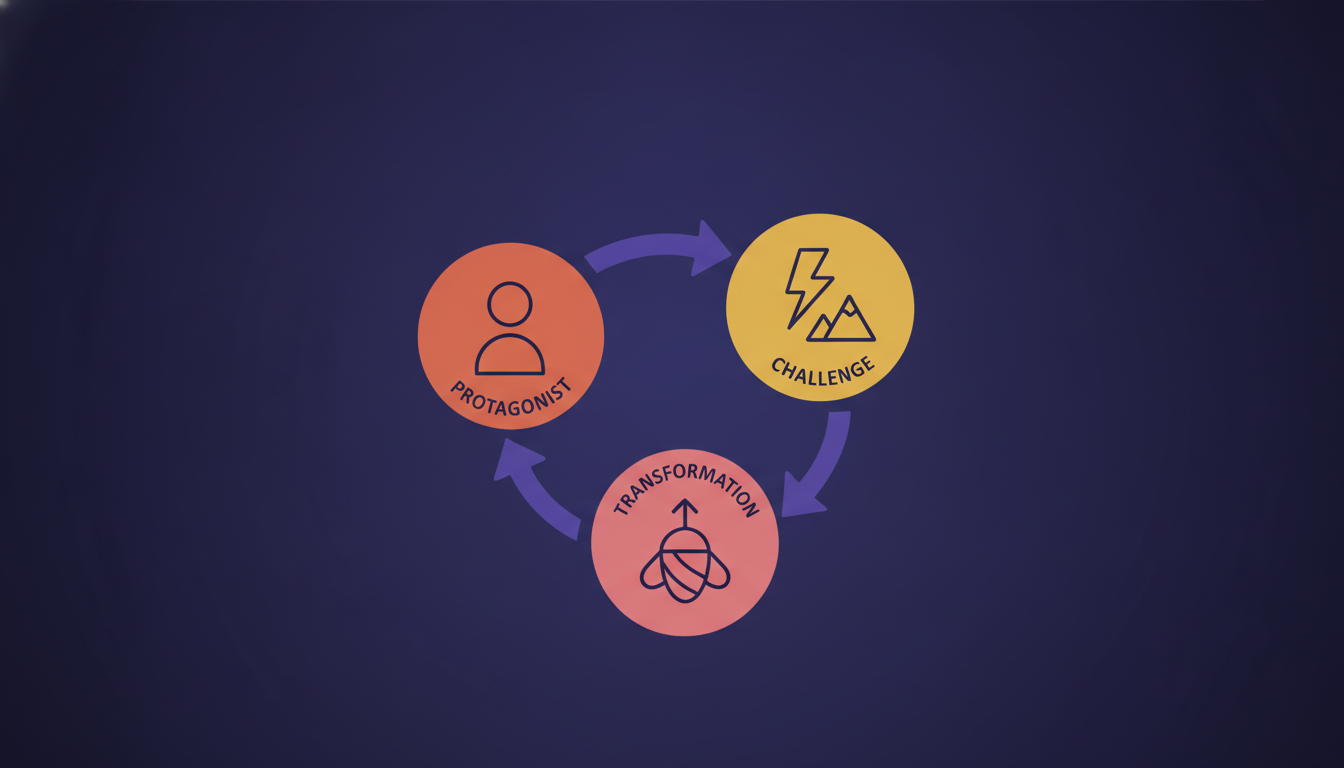
- The most effective social media stories follow recognizable structures - tension, transformation, and resolution - not just "behind-the-scenes" snapshots.
- Short-form video (under 60 seconds) is the highest-performing storytelling format right now, but long-form written posts on LinkedIn and Threads are closing the gap.
- Platform context matters more than format: the same story told on TikTok and LinkedIn needs completely different framing.
- Consistency in narrative voice across all platforms builds brand recognition faster than visual consistency alone.
What exactly is storytelling on social media?
Social media storytelling is the practice of structuring content around a narrative arc - a beginning, a conflict, and a resolution - rather than a simple announcement or product feature. The goal is to make the viewer feel something before they act. That emotional response is what drives shares, saves, and comments that go beyond "nice post."
It is worth separating storytelling from "content." A product photo is content. A post about the three failed prototypes that led to that product is a story. The difference is tension. Tension creates curiosity, and curiosity keeps people reading past the first line.
Brands that consistently apply narrative structure to their social posts report meaningfully higher comment rates and save rates compared to purely informational posts. The mechanism is simple: people are wired to follow a narrative to its conclusion. That wiring does not switch off because someone opened Instagram instead of a book.
Why does storytelling outperform traditional promotional content?
Storytelling outperforms promotional content because it triggers emotional processing, not just rational evaluation. When content feels like an ad, people mentally filter it. When it feels like a story they are part of, they lean in. This is not a theory - it is backed by consistent behavioral patterns across platform analytics.
Here are the core reasons storytelling converts better than direct promotion:
- Emotional memory: People remember how a post made them feel long after they forget the specific claim. A story about a customer overcoming a real problem sticks; a bullet list of features does not.
- Lower resistance: Promotional intent triggers skepticism. Narrative framing bypasses that skepticism by centering a character and a conflict first.
- Higher shareability: People share content that reflects their own identity or experiences. Stories do that; product announcements rarely do.
- Algorithm alignment: Every major platform rewards content that generates saves, comments, and watch time. Stories drive all three metrics more reliably than promotional posts.
Consider that video content with a clear narrative arc consistently achieves watch-through rates above 60%, while purely promotional video rarely clears 30%. That gap in watch time directly affects how often the algorithm surfaces your content to new audiences.
What are the most effective storytelling frameworks for social media?
The most effective frameworks for social media storytelling are the ones short enough to survive a short attention span but structured enough to deliver a payoff. Three frameworks work consistently well across platforms and content types.
The Problem-Agitate-Resolve (PAR) Framework
This is the workhorse of short-form storytelling. You name a problem your audience recognizes, intensify it so they feel the stakes, then resolve it in a way that positions your insight (or product) as the turning point.
- Problem: State a specific, relatable pain point in the first 5 seconds or first line of text.
- Agitate: Add detail that makes the problem feel urgent or frustrating. Use sensory language where possible.
- Resolve: Deliver the payoff - a lesson, a method, a result. Make the resolution feel earned, not easy.
The Before-After-Bridge (BAB) Framework
BAB is ideal for transformation stories - customer testimonials, founder origin stories, and product reveals. You paint the "before" state in enough detail that the audience recognizes themselves in it, then show the "after," and finally explain the bridge that connects the two.
- Before: Describe the starting point honestly. Avoid making it too polished - authenticity is the whole point.
- After: Show the outcome in concrete terms. Numbers, visuals, and specific changes are more credible than vague improvements.
- Bridge: Explain the shift - what changed, what was learned, what tool or decision made the difference.
The Micro-Story (One Character, One Moment)
This is the most underused format on social media. Instead of a full arc, you zoom into a single moment from one person's experience and let that moment carry the emotional weight. A 15-second video of a team member reacting to hitting a milestone tells a richer story than a polished announcement graphic.
The micro-story works because social feeds are fast. You do not always have 3 minutes. One vivid, specific moment can do the same emotional work as a full narrative if you choose the right detail.
How does storytelling differ across platforms?
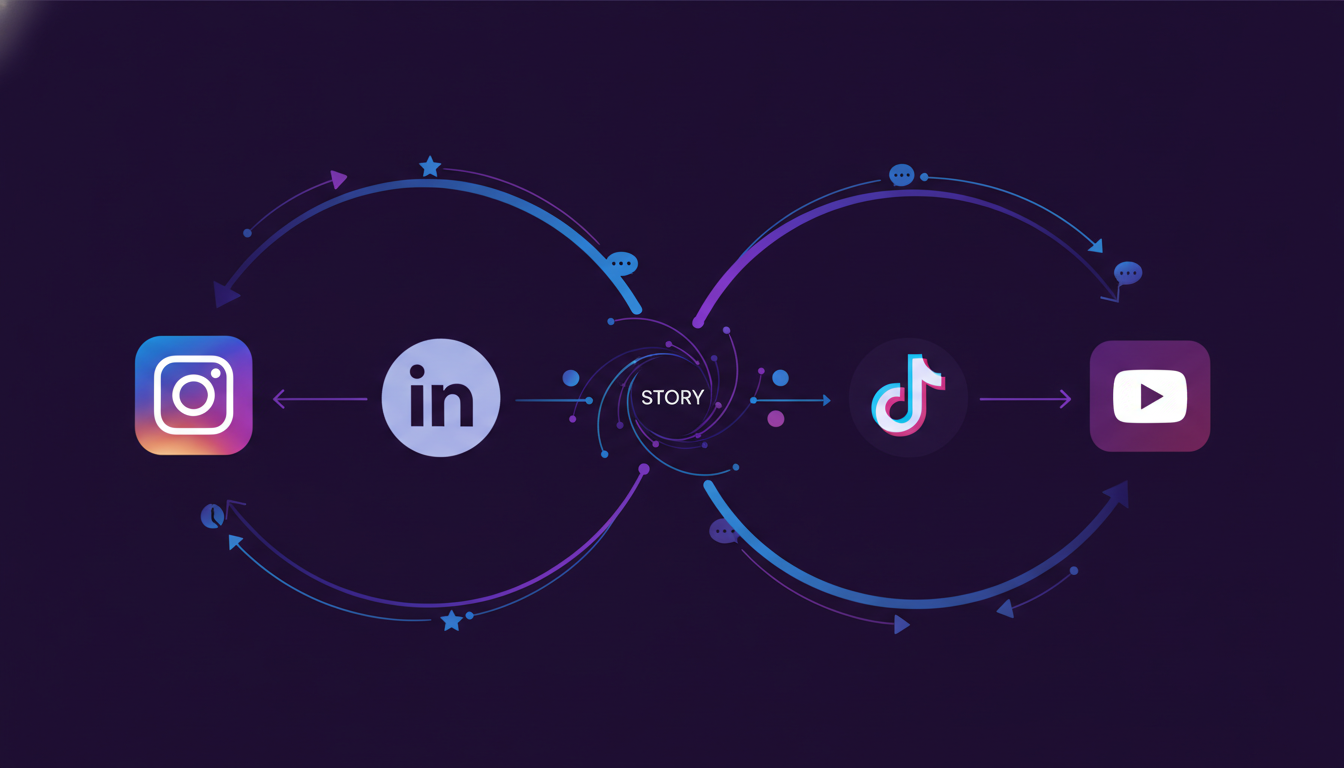
The same story needs different packaging on different platforms. What works on LinkedIn would feel stiff on TikTok. What performs on Instagram Reels would get ignored on a WordPress long-form post. Platform context is not just about format - it is about the mindset your audience brings to each app.
| Platform | Best Story Format | Ideal Story Length | Tone That Works | Key Story Element |
|---|---|---|---|---|
| Reels, carousel posts | 15-60 sec video / 5-10 slide carousel | Aspirational, personal | Visual transformation | |
| Long-form text posts | 150-300 words | Reflective, professional | Lesson or pivot moment | |
| TikTok | Short video with hook | 15-45 seconds | Raw, direct, conversational | Unexpected detail or twist |
| Video + text combo | 1-3 minutes | Community-oriented | Shared experience | |
| Threads / Bluesky | Thread-style text posts | 3-7 short posts in a thread | Casual, opinionated | Hot take with context |
| Step-by-step visual story | 5-10 image pins | Instructional, inspiring | Process reveal | |
| YouTube | Long-form video | 8-20 minutes | Educational, immersive | Full character arc |
The biggest mistake brands make is copying one piece of content across every platform without adjusting the narrative framing. A well-structured content calendar helps you plan platform-specific story angles for the same core message so you are not just cross-posting the same caption everywhere.
What makes a social media story feel authentic?
Authenticity in social media storytelling comes from specificity, not vulnerability for its own sake. The more specific a detail, the more real the story feels. "We almost shut down in March" is more authentic than "we faced challenges." That specificity is what separates content people trust from content they scroll past.
Here are the elements that make a story feel genuine rather than manufactured:
- Named characters: Real people, not "a client" or "our team." Even a first name adds credibility.
- Specific numbers: "We lost 40% of our revenue in six weeks" lands harder than "we struggled financially."
- Unpolished moments: Imperfect visuals, candid reactions, and unscripted commentary signal that a story was not fabricated for the feed.
- Honest conflict: Do not skip the part where things went wrong. The conflict is what makes the resolution meaningful.
- No forced lesson: Not every story needs a "here is what I learned" ending. Sometimes the story itself is enough.
Brands that embrace tension in their storytelling - admitting a product launch failed, sharing a mistake publicly, showing the messy middle of a project - consistently generate stronger engagement than those that only post wins. Audiences have a sharp radar for curated perfection, and it breeds distance rather than trust.
How do you build a repeatable storytelling system for your brand?
A repeatable storytelling system relies on three components: a defined story bank, a consistent narrative voice, and a publishing rhythm that keeps stories connected across weeks and months. Without these, storytelling stays sporadic and loses its compounding effect.
Step 1: Build Your Story Bank
A story bank is a living document of narrative raw material. It should contain customer moments, internal milestones, product backstory, team experiences, and failures worth sharing. Aim to add at least three new story seeds per week. Most of them will never become posts - that is fine. The goal is volume so you always have something real to draw from.
Step 2: Define Your Narrative Voice
Your narrative voice is not your brand tone guide. It is the specific point of view from which every story is told. Are you the underdog? The expert who learned the hard way? The community builder? Pick one and stay consistent. Audiences follow consistent voices the same way they follow writers - they want to know whose perspective they are getting.
Step 3: Create a Story Arc Across Content Series
Single posts work, but the real compounding power comes from serialized storytelling. A 6-post series documenting the launch of a new feature, or a monthly "what we got wrong" post, creates anticipation and return visits. Use your content calendar to map these arcs in advance so the narrative actually has a beginning, middle, and end rather than trailing off after post two.
Step 4: Measure Story Performance Correctly
Most brands measure storytelling with the wrong metrics. Likes are vanity. The metrics that matter for storytelling are saves, shares, comment length, and profile visits from a post. A post with 40 likes but 200 saves performed better as a story than one with 400 likes and 3 saves. Use platform analytics that break down these engagement signals separately so you can see what story types actually resonate.
Step 5: Repurpose the Same Story Across Formats
One good story can become a 60-second Reel, a LinkedIn text post, a Twitter/X thread, a Pinterest infographic, and a blog section. You are not duplicating - you are adapting the same narrative core to each platform's native format. This is where tools like AI-assisted content creation genuinely save time, letting you shift a story's framing without rewriting it from scratch five times.
What storytelling mistakes are costing brands the most reach?
The costliest storytelling mistakes are not bad writing - they are structural errors that prevent the story from landing even when the content itself is solid. Recognizing these patterns is the first step to fixing them.
- Starting with context instead of conflict: "We have been working on something exciting..." is a context opening. "Three months ago, we almost pulled the plug on this entire project..." is a conflict opening. The second one earns the next line.
- Burying the hook: On every platform, the first 2-3 seconds of video or the first line of text determines whether someone continues. If your most compelling detail is in the middle, move it to the top.
- Over-explaining the lesson: Trust your audience to draw conclusions. A story that ends with "and this taught me that persistence always pays off" is weaker than one that just shows the persistence and lets the result speak.
- Inconsistent voice across platforms: If your LinkedIn posts sound like a TED Talk and your Instagram sounds like a different brand entirely, you are not building cumulative recognition. Your narrative voice should be recognizable even when the format changes.
- Treating every post as standalone: Isolated stories do not build brand affinity the way serialized ones do. Plan for continuity.
If you are managing content across 8 to 10 platforms simultaneously, maintaining consistent narrative quality is genuinely difficult without a system. Tools like social media autopilot workflows can handle the distribution side so your creative energy stays on the story itself.
How do you measure whether your storytelling strategy is actually working?
A storytelling strategy is working when it produces compounding engagement - each piece of content that performs well makes the next one easier to distribute. The right metrics to watch are saves and shares (indicating value), comment depth (indicating resonance), and follower growth rate from content-specific sources (indicating new audience capture).
Here is a practical measurement framework broken into three time horizons:
- Post-level (24-72 hours): Track saves-to-reach ratio. A saves rate above 3% indicates strong resonance. Watch comment length - one-word comments signal surface engagement; paragraph-length comments signal a story hit.
- Monthly: Compare story-format posts against non-story posts on the same metric set. If your storytelling content consistently generates 2x more saves or shares, your framework is working. If not, the story structure needs adjustment, not the posting frequency.
- Quarterly: Measure brand sentiment through comment tone analysis and direct message volume. Storytelling builds trust over time, which shows up as warmer inbound messages and a higher proportion of positive comments relative to neutral ones.
The one metric to stop optimizing for is raw like count. Likes require zero cognitive effort and correlate weakly with actual brand affinity. A post someone saves at 11pm to come back to tomorrow tells you far more about story quality than 500 double-taps from people who kept scrolling.
For brands just getting started with tracking narrative performance across multiple channels, the Brandlix analytics dashboard separates saves, shares, and comment data by platform so you can see exactly which story formats are working where, without manually pulling data from seven different apps.
Frequently Asked Questions
How long should a social media story post be?
Length depends entirely on platform and format. On TikTok and Instagram Reels, 15 to 45 seconds is the sweet spot for story-driven video. On LinkedIn, text posts between 150 and 300 words consistently outperform both shorter and longer formats. On Threads and Bluesky, a thread of 4 to 7 short posts lets a story breathe without losing readers. The rule of thumb: make it exactly as long as it needs to be to deliver the payoff, and not one sentence longer.
Do I need video to tell a good story on social media?
No. Video is the highest-reach format right now, but it is not the only one that works. Well-structured carousel posts on Instagram, long-form text posts on LinkedIn, and thread-style posts on Threads and Bluesky all perform strongly when the narrative structure is solid. The format amplifies a good story; it cannot replace one. Start with the story, then choose the format that fits it best.
How often should a brand post story-driven content versus promotional content?
A practical ratio is roughly 70% story-driven or value-based content to 30% promotional content. Pure promotional posts still have a place - product launches, limited offers, event announcements - but they perform better when the surrounding content has already built audience trust through storytelling. Brands that invert this ratio and post mostly promotional content see diminishing organic reach over time because the algorithm (and the audience) deprioritizes it.
Can small brands compete with large ones through storytelling?
Yes - and storytelling is one of the few areas where small brands have a structural advantage. Large brands often struggle to tell authentic stories because their content goes through multiple approval layers that sand off all the rough edges. Small brands can tell real, specific, messy stories quickly and without committee sign-off. That authenticity is exactly what audiences respond to most strongly. Specificity and honesty are free, and they outperform production budget more often than not.
Storytelling on social media is not a creative luxury reserved for brands with big production budgets or viral ambitions. It is a structural choice about how you frame every piece of content you publish. When you consistently lead with conflict, center real people, and deliver a payoff your audience did not see coming, you are not just getting better engagement - you are building the kind of brand recognition that compounds over months rather than fading after 48 hours. Start with one story this week, tell it well, and measure what happens. That single data point will tell you more than any strategy framework ever could.