Bluesky for brands has moved past the "experimental" stage. With over 35 million registered users as of early 2026 (Bluesky official stats), the platform is now a real channel where audiences are active, engaged, and actively looking for accounts worth following. If you have been watching from the sidelines, this guide breaks down exactly how to build a presence that works.
- Bluesky reached 35 million users in 2026 and is growing faster than any other text-based social platform
- The algorithm is chronological and decentralized - which means organic reach is genuinely accessible
- Custom feeds and starter packs are the two biggest discovery tools brands are underusing
- Posting frequency of 3-5 times per week drives the best engagement-to-effort ratio on Bluesky
- Brands that treat Bluesky like Twitter/X rebranded are missing the entire point of the platform
What Makes Bluesky Different From Other Social Platforms?
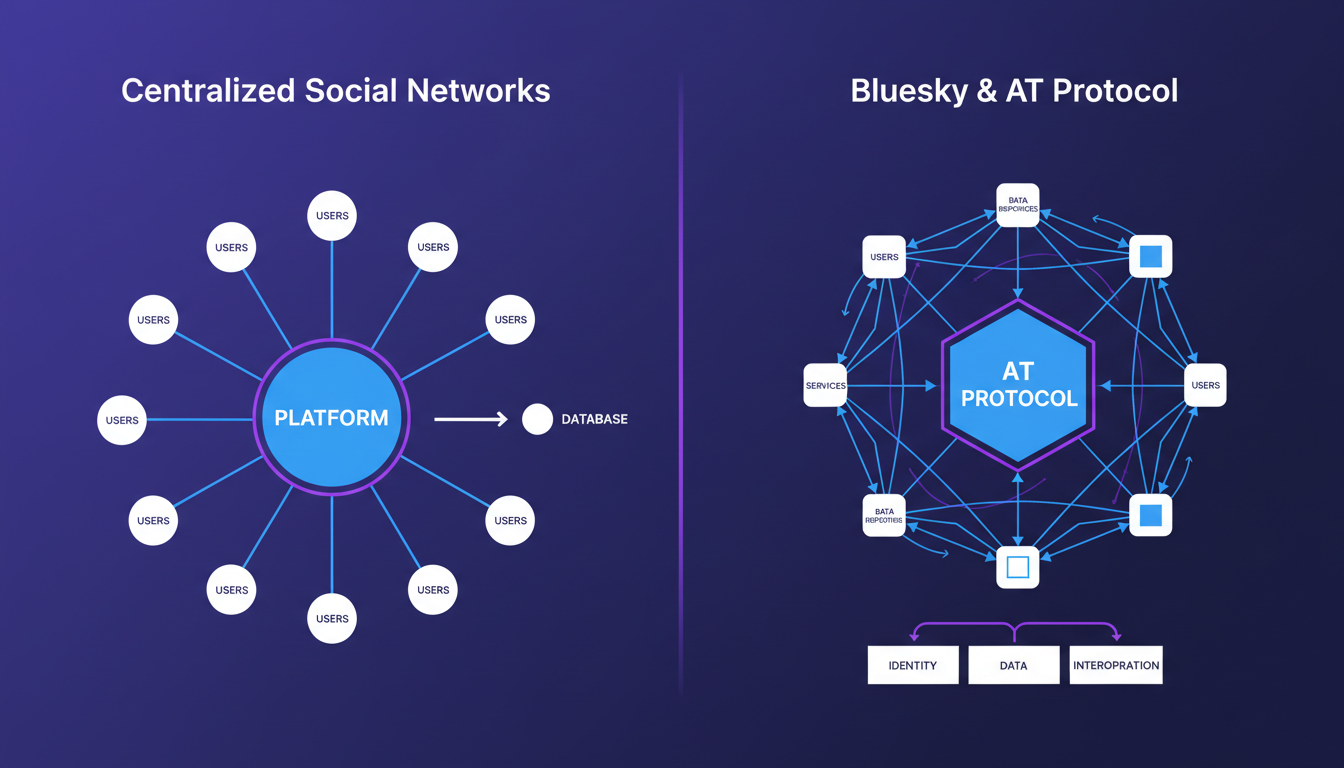
Bluesky runs on the AT Protocol, a decentralized open standard. That means users own their identity and data in a way no centralized platform currently allows. For brands, this changes the power dynamic - you are not at the mercy of a single company's algorithm decisions or policy pivots.
The feed is chronological by default. Posts do not disappear into an engagement-weighted black box. This is significant: a study by Social Media Today in late 2025 found that 68% of users on chronological-feed platforms report seeing more content from accounts they actually chose to follow, compared to 31% on algorithmic platforms. That difference matters when you are trying to build a real audience.
Bluesky also has no ads. That is a constraint for some brands, but it is also an opportunity. Organic content carries more weight here because there is no paid content competing for attention in the feed.
How Big Is Bluesky's Audience in 2026?
Bluesky's registered user base crossed 35 million in Q1 2026, with daily active users estimated at around 8 million (Statista, 2026). Monthly active user growth has averaged 22% quarter-over-quarter since mid-2025, making it the fastest-growing text-based social platform currently active.
The demographic skews toward educated, tech-adjacent, and creatively inclined users. According to Hootsuite's 2026 Social Trends Report, 54% of Bluesky users hold a university degree, and 41% identify as working in creative or knowledge-based industries. That is a valuable audience if your brand operates in media, design, software, publishing, journalism, or any knowledge-heavy sector.
Engagement rates on Bluesky also outperform Twitter/X and Threads for accounts under 50,000 followers. Sprout Social data from Q1 2026 shows average engagement rates of 4.2% per post on Bluesky versus 1.8% on Twitter/X for comparable account sizes. The smaller platform means less noise and more signal.
| Platform | Avg. Engagement Rate (under 50K followers) | Organic Reach (% of followers) | Ad Options Available |
|---|---|---|---|
| Bluesky | 4.2% | 65-80% | No |
| Twitter/X | 1.8% | 20-35% | Yes |
| Threads | 2.4% | 30-50% | Limited |
| 3.1% | 25-40% | Yes |
Sources: Sprout Social Q1 2026, Hootsuite 2026 Social Trends Report
How Should Brands Set Up Their Bluesky Profile?
First impressions on Bluesky are more important than on most platforms because the community is skeptical of corporate accounts by default. A half-finished profile signals that your brand does not take the platform seriously - and users will scroll past you without a second thought.
Profile Setup Checklist
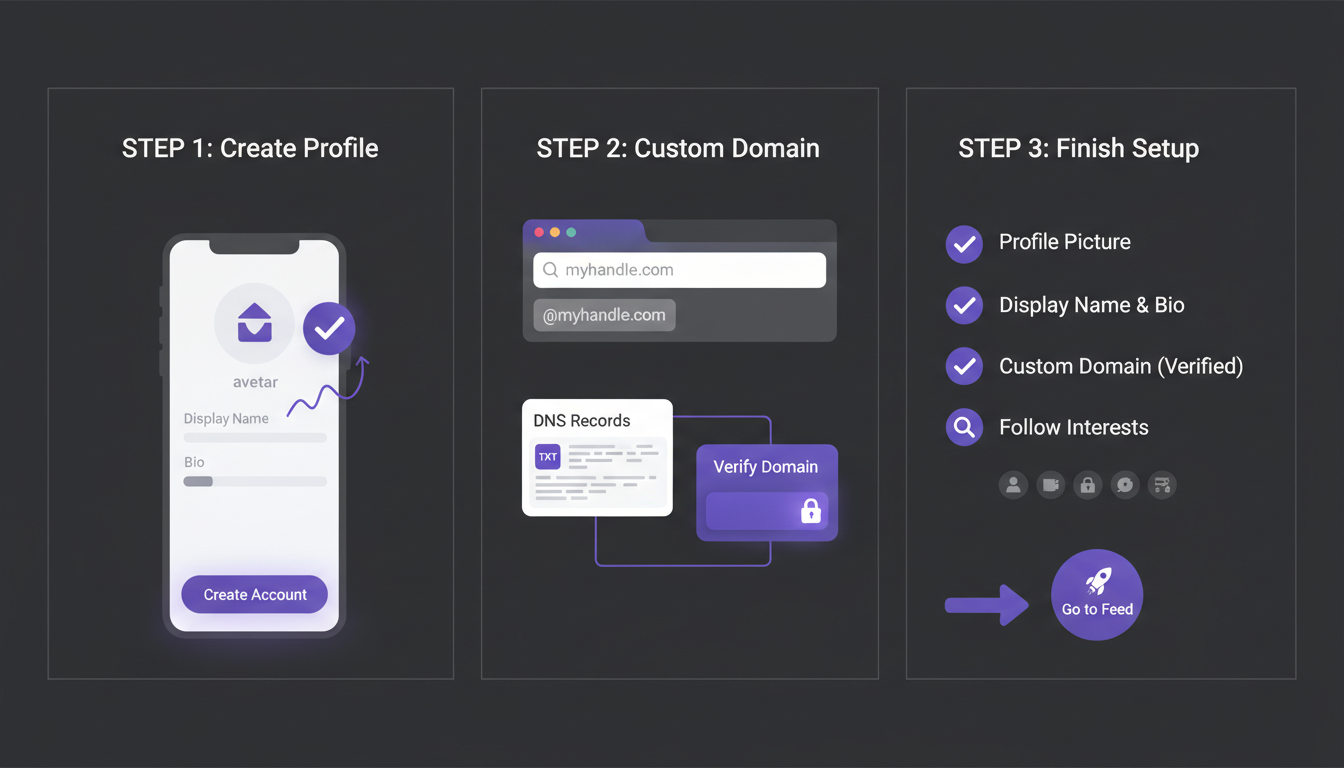
- Custom domain handle: Instead of @yourbrand.bsky.social, verify your domain and use @yourbrand.com. This is free, builds trust, and signals authenticity.
- Clear display name: Use your actual brand name, not a creative variation. Discoverability depends on it.
- Bio that says something real: Describe what you do in one to two sentences. Avoid mission statement language - write like a person, not a press release.
- Profile image: Use your standard brand logo. Consistency across platforms helps with recognition.
- Banner image: Use this space to communicate your niche or current campaign. Update it more often than you think you need to.
- Pinned post: Pin something useful - a starter pack, your most-shared post, or a direct invitation for people to follow you and why.
What Content Strategy Actually Works on Bluesky?
Short, direct posts with genuine perspective outperform promotional content by a wide margin. Bluesky users respond to opinions, behind-the-scenes honesty, and content that teaches something - not to announcements, product pushes, or repurposed press releases.
Bluesky's character limit is 300 characters. That forces a kind of editorial discipline that many brands are not used to. The best-performing brand posts on Bluesky tend to be sharp observations, clear questions, or concise takes that invite a response. Threads (sequential posts) also perform well when each individual post in the thread holds its own value.
Content Types That Perform Well
- Hot takes and genuine opinions from your brand's area of expertise
- Short questions that invite community responses
- Behind-the-scenes moments - product decisions, team processes, real challenges
- Curated links to your own content (blog posts, research, newsletters)
- Threads that break down a complex idea in 5-8 posts
- Reactions to industry news with your specific angle
- User-generated content reshares and community callouts
Content Types to Avoid
- Promotional posts with no value beyond the announcement
- Cross-posted content copied directly from Instagram or LinkedIn
- Engagement bait ("Like if you agree" style posts)
- Over-branded graphics that look like ads
Brands that post 3-5 times per week consistently outperform both daily posters and weekly posters in terms of follower growth rate on Bluesky, according to internal data published by a Bluesky community analytics tool in March 2026. Consistency beats volume here.
How Do Starter Packs and Custom Feeds Drive Brand Discovery?
Starter packs and custom feeds are Bluesky's two most underused discovery tools for brands. A starter pack is a curated list of accounts around a theme - when someone uses your starter pack, they follow everyone on that list at once. A custom feed is an algorithmic or curated feed that users can subscribe to and pin in their app.
How to Use Starter Packs as a Brand
- Create a starter pack around your niche, not your brand. A marketing software company should create a "Best Marketing Voices on Bluesky" pack - not a "Accounts Related to [Your Brand]" pack.
- Include 10-20 genuinely good accounts. Quality matters more than quantity.
- Share the starter pack with a clear reason to use it. Tell people exactly who it is for.
- Update it quarterly to keep it relevant and re-share it with context about what changed.
How to Use Custom Feeds as a Brand
- Build a feed around a topic your audience cares about, not your brand specifically.
- Use keyword-based feed generators (several free tools exist in the Bluesky ecosystem) to automatically surface relevant posts.
- Promote the feed in your bio and in posts. Invite people to subscribe.
- Monitor the feed regularly and manually curate when the automated results miss the mark.
Brands that have launched topic-based starter packs report gaining between 200 and 800 new followers in the first two weeks after publication, depending on how widely the pack is shared within the target community (Bluesky community case studies, 2026).
How Do You Measure Bluesky Performance for Brands?
Bluesky does not offer a native analytics dashboard for brand accounts yet. However, you can measure performance through third-party tools and by tracking key metrics manually or through a social media management platform.
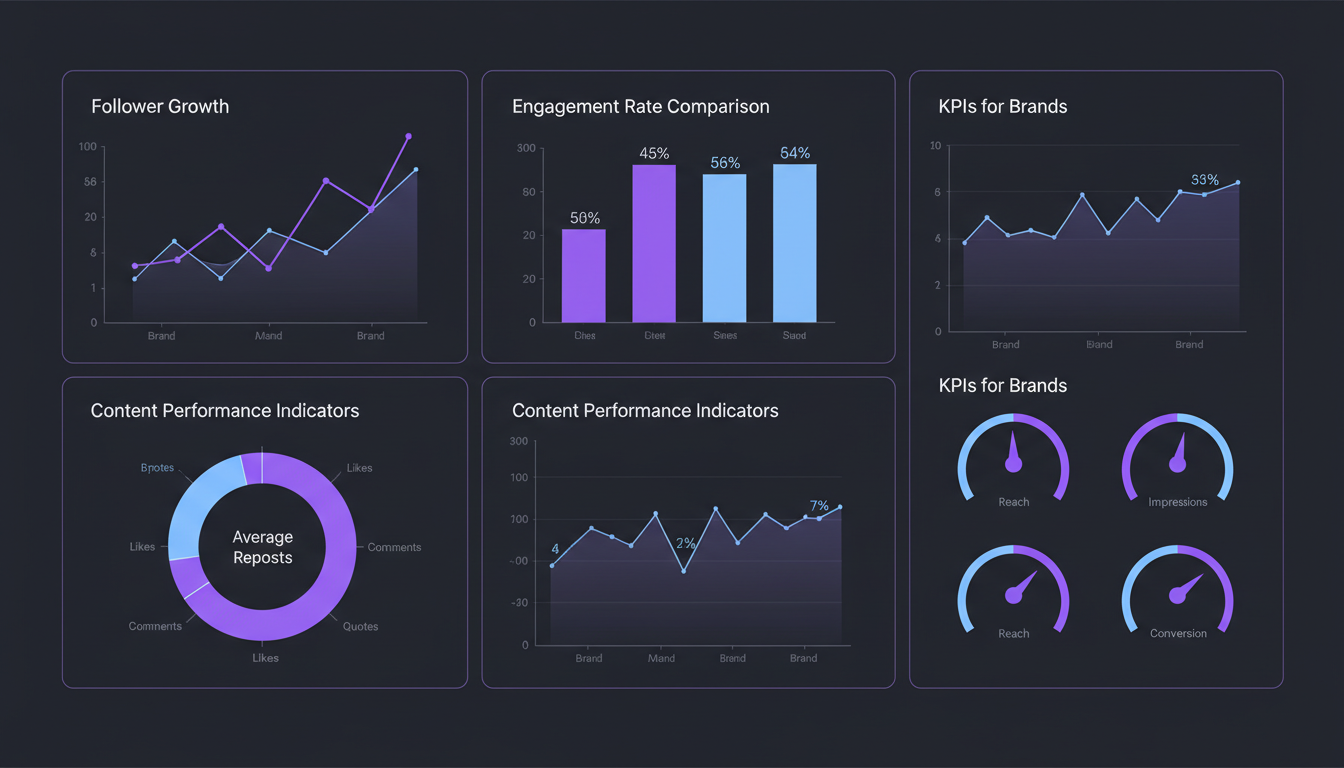
The most useful metrics to track on Bluesky are reply rate, repost rate, and follower growth per post rather than raw impression counts. Because organic reach is high, impressions are less of a differentiator - what matters is whether people are actually engaging and following based on what you post.
Key Metrics to Track
- Reply rate: Percentage of posts that receive at least one reply. A healthy reply rate for brands is above 5%.
- Repost rate: How often your content gets reshared. This drives discovery more than any other action on Bluesky.
- Follower growth rate: Week-over-week change in follower count, correlated with content published that week.
- Link click-through rate: If you are sharing content with links, track how many people actually click through to your site.
- Starter pack usage: How many people have used your starter pack to follow a set of accounts.
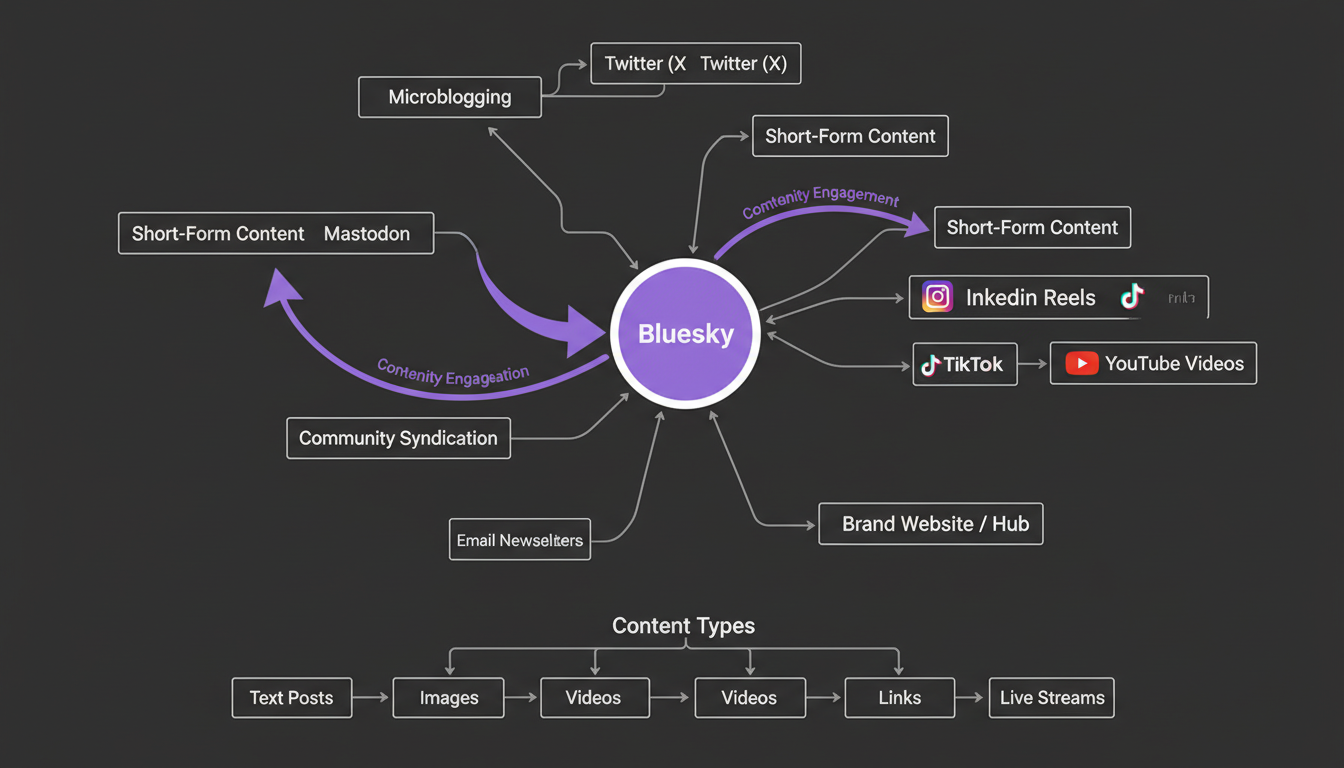
Tools like Brandlix allow you to schedule and publish content to Bluesky alongside your other channels and track cross-platform performance in one dashboard - which makes it easier to compare what is working on Bluesky versus where you might be investing more time than the results justify.
What Are the Biggest Mistakes Brands Make on Bluesky?
The single biggest mistake is treating Bluesky like a backup Twitter/X. The community did not migrate to Bluesky to find the same corporate communication patterns they were used to elsewhere. They came specifically to get away from that.
Common Brand Mistakes (and How to Fix Them)
- Posting too formally: Write in a human voice. If your post sounds like it went through three layers of brand review, it will be ignored. Fix it by having one person own the Bluesky voice with minimal approval layers.
- Only posting promotional content: If 80% of your posts are about your product, you will not grow. The 80/20 rule applies here - 80% value, 20% promotion is the minimum standard.
- Ignoring replies: Bluesky users notice when brands reply and when they do not. Responding to replies - even briefly - signals that a real person is behind the account.
- Not joining existing conversations: Bluesky's culture rewards participation, not just broadcasting. Search relevant hashtags and topics, and contribute genuinely to threads where you have something real to add.
- Starting strong and going quiet: Consistency is more important than quality on Bluesky. An average post that arrives reliably builds more audience trust than occasional brilliant posts with long silences in between.
Frequently Asked Questions
Is Bluesky worth it for small brands with limited resources?
Yes, especially if your audience overlaps with Bluesky's current user base - tech, media, design, journalism, and creative industries. The organic reach advantage means smaller brands can grow meaningfully without ad spend. Starting with 3 posts per week and one active starter pack is enough to build momentum without overwhelming a small team.
Can B2B brands find value on Bluesky?
B2B brands in tech, SaaS, creative tools, publishing, and professional services are already seeing strong results on Bluesky. The platform's audience skews toward decision-makers and professionals in knowledge industries, which is exactly the kind of audience B2B brands struggle to reach organically on other platforms. B2B brands in manufacturing or logistics will find it harder to justify the time investment right now.
How often should brands post on Bluesky?
Three to five times per week is the optimal frequency based on current community data. Daily posting can work if you have strong content, but it also increases the risk of filler posts that dilute your account's quality signal. Starting at three times per week and adjusting based on engagement data is the most reliable approach.
Does Bluesky have a verification system for brands?
Bluesky's verification is domain-based rather than checkmark-based. By setting your handle to your own domain (for example, @yourbrand.com), you prove ownership of that domain and therefore verify your identity. This system is built into the AT Protocol and does not require applying to Bluesky for approval - you control it directly through your DNS settings.
Start Building Your Bluesky Presence With a Plan
Bluesky rewards brands that show up consistently, write like humans, and contribute to conversations rather than dominating them. The platform is still early enough that joining now gives you a real first-mover advantage in most niches - but that window will not stay open indefinitely as more brands arrive and the feed gets more crowded.
Set up your profile with a custom domain handle, build one starter pack around your niche this week, and commit to three posts per week for 60 days. Measure your reply rate and repost rate, not just your follower count. Those two metrics will tell you faster than anything else whether your content is landing. If you want to manage Bluesky alongside your other channels without context-switching all day, a platform like Brandlix lets you schedule across all your active accounts from one place - so you can focus on the content instead of the logistics.