Instagram Reels best practices have shifted significantly over the past year, and what worked in 2024 is not guaranteed to work now. The algorithm has evolved, audience behavior has changed, and competition for attention on short-form video is fiercer than ever. This guide gives you a clear, actionable framework to create Reels that actually get seen, watched, and shared.
- Hook viewers in the first 1-2 seconds or lose them permanently - retention rate is the algorithm's top signal
- Reels between 7 and 15 seconds consistently outperform longer formats for reach and shares
- Posting 4-7 Reels per week significantly increases your chances of hitting the Explore and Reels feed
- Audio choice matters as much as visuals - trending audio can multiply your reach by 3x or more
- Captions, hashtags, and on-screen text all contribute to discoverability and watch time
Why Do Instagram Reels Get More Reach Than Other Formats?
Reels receive preferential distribution from Instagram's algorithm compared to static posts and carousels. According to Hootsuite's 2026 Social Media Report, Reels generate up to 22% more interaction than standard video posts, and they are shown to non-followers far more frequently than any other content type on the platform. Simply put, Reels are Instagram's primary growth engine for organic reach.
Instagram confirmed in its own creator communications that Reels content is prioritized in both the Explore feed and the dedicated Reels tab. This means a well-crafted Reel can reach completely cold audiences without spending a single dollar on ads. For brands and creators trying to grow, that is a significant structural advantage.
The reason comes down to watch time and shares. Instagram rewards content that keeps people watching and prompts them to send it to someone else. Reels, by their short-form nature, are far easier to watch in full - and full plays send a strong positive signal to the algorithm.
What Length Should Your Instagram Reels Be?
The optimal Reels length in 2026 is between 7 and 15 seconds for maximum reach, and between 30 and 60 seconds for deeper engagement and educational content. Short Reels tend to get more loops and replays, which directly boosts their algorithmic performance. Longer Reels, when well-structured, can drive stronger audience connection and higher comment volume.
Short vs. Long Reels: When to Use Each
Short Reels (7-15 seconds) are ideal for trends, humor, quick tips, and product showcases. They loop easily, accumulate watch time fast, and tend to spread through shares. According to Sprout Social data from early 2026, Reels under 15 seconds have a 38% higher share rate than Reels over 60 seconds.
Longer Reels (30-90 seconds) work best for tutorials, storytelling, before-and-after content, and anything that benefits from context. The key is that every second needs to earn its place. Padding a 90-second Reel with filler content is one of the fastest ways to tank your retention rate and signal to the algorithm that your content is not worth distributing.
| Reel Length | Best Use Case | Avg. Completion Rate | Reach Potential |
|---|---|---|---|
| 7-15 seconds | Trends, quick tips, product reveals | ~72% | Very High |
| 15-30 seconds | Story-driven content, transformations | ~58% | High |
| 30-60 seconds | Tutorials, listicles, how-tos | ~41% | Medium-High |
| 60-90 seconds | Deep dives, interviews, storytelling | ~29% | Medium |
How Do You Hook Viewers in the First Two Seconds?
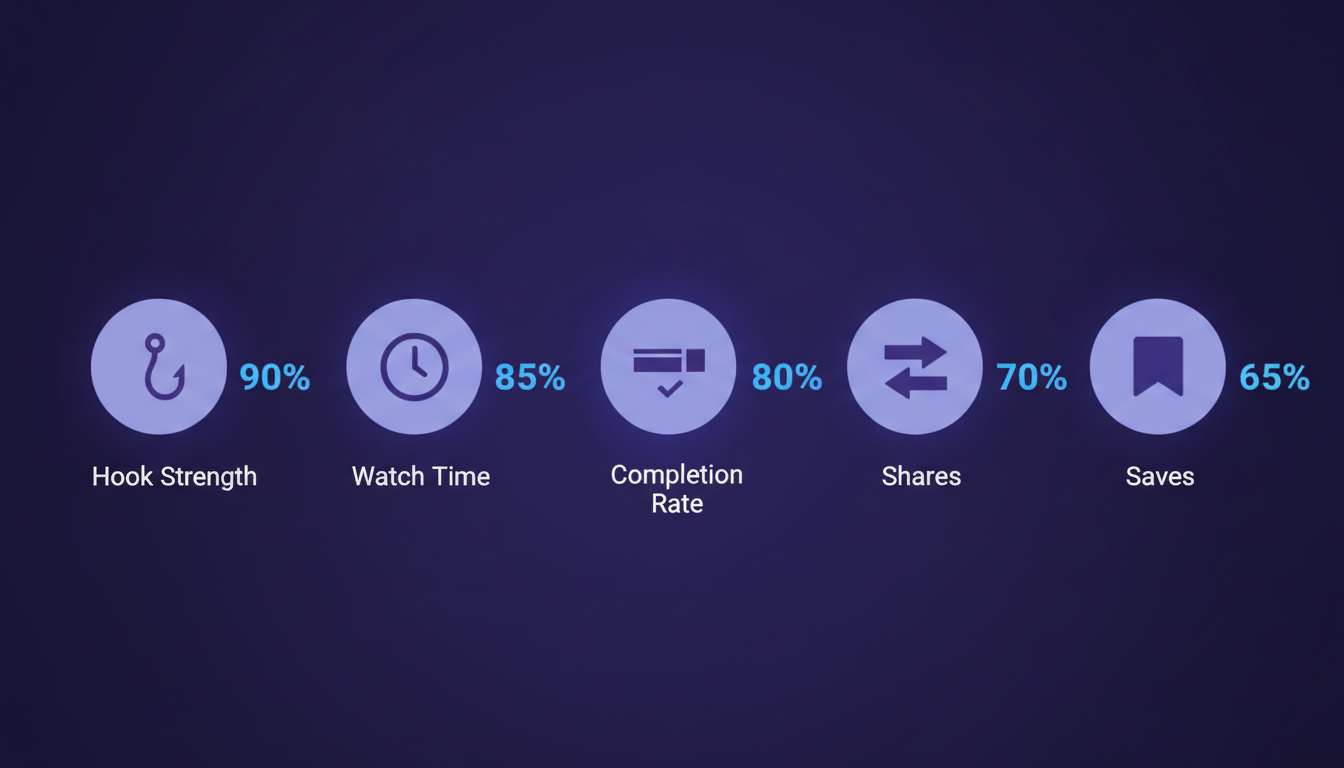
The hook is everything. If your first two seconds do not stop the scroll, nothing else in your Reel matters. The most effective hooks present a bold visual, an unexpected statement, or an immediate payoff that makes the viewer want to stay. According to Meta's internal creator data, 65% of viewers who watch past the 3-second mark will watch at least 50% of the video.
There are several proven hook formats that work consistently across niches:
- The pattern interrupt - Start with something visually unexpected or out of context to break the scroll habit
- The direct question - Ask something your target audience genuinely wants answered (e.g., "Why is your reach dropping?")
- The bold claim - Lead with a counterintuitive statement that demands an explanation
- The result first - Show the finished product, transformation, or outcome before explaining how you got there
- The visual surprise - Use a cut, zoom, or transition within the first second to create movement that the eye cannot ignore
Text overlays at the start of your Reel also help. Many users scroll with sound off, especially in public spaces. A clear on-screen text hook means you are communicating your value even before anyone turns the volume up.
Which Audio Strategy Works Best for Instagram Reels?
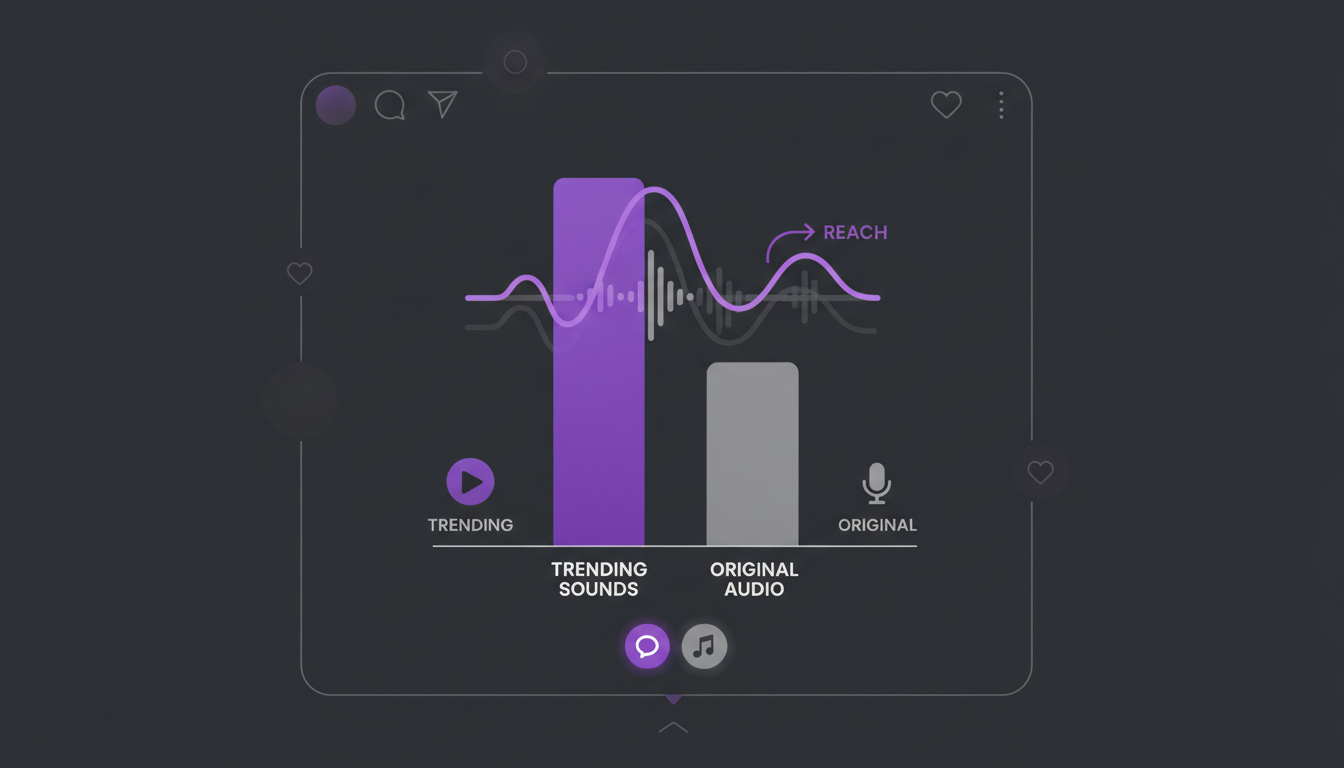
Using trending audio is one of the highest-leverage tactics available to Reels creators. Instagram actively boosts Reels that use trending sounds because the platform benefits when users engage with popular audio tracks. A Reel using a trending audio track can receive 3x more organic reach than the same content posted with original audio, according to Hootsuite benchmarks from Q1 2026.
How to Find Trending Audio on Instagram
- Open the Reels tab and browse for audio that has an upward-pointing arrow icon next to it - that arrow signals the track is trending
- Save audio directly from Reels you encounter while browsing your feed, building a personal library of trending sounds
- Check the "Browse Reels" section in the Instagram audio library when creating a new Reel
- Follow creators in your niche and notice which sounds they are gravitating toward - trends often spread within communities before going mainstream
- Act fast - trending audio has a short shelf life, often peaking within 5-10 days of going viral
When Original Audio Makes Sense
Original audio is not a disadvantage by default. If you are building a distinct brand voice, speaking directly to camera, or producing educational content where narration is central, original audio is often the right call. In fact, if your original audio goes viral, Instagram will credit your account as the source - and every creator who uses your sound links back to your profile automatically.
How Often Should You Post Reels for Maximum Growth?
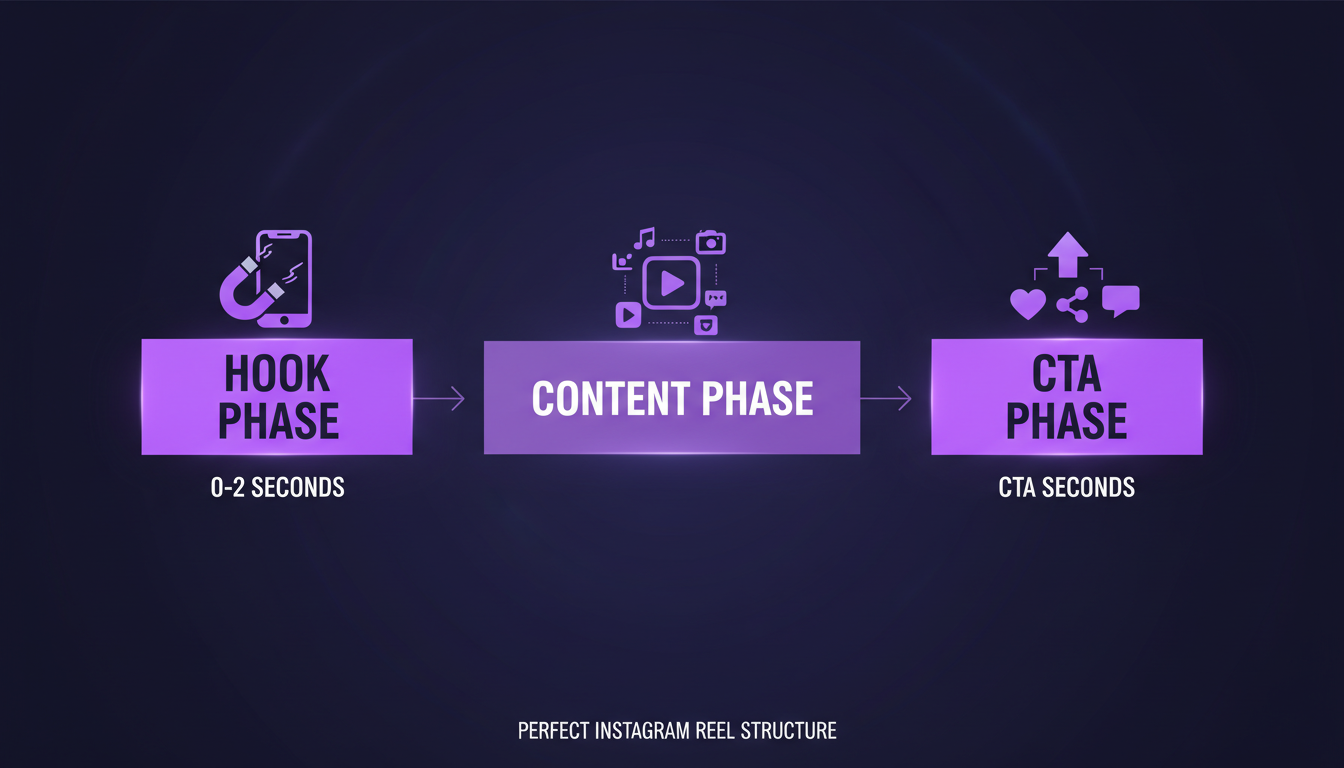
Posting 4-7 Reels per week is the sweet spot for consistent algorithmic exposure without sacrificing quality. Creators who post fewer than 3 Reels per week see slower follower growth and reduced Explore placement, while those who post more than 10 often experience diminishing returns and lower per-post engagement. Consistency matters more than volume.
A study by Later in 2026 found that accounts posting at least 5 Reels per week grew their follower count 3.5x faster than accounts posting 1-2 Reels per week, holding content quality constant. The algorithm rewards accounts that keep users returning, and regular posting builds that habit.
Best Times to Post Instagram Reels
While your own audience analytics should always take priority, the following windows consistently show higher engagement across industries:
- Monday to Friday, 6:00 AM - 9:00 AM - Morning commute scrolling behavior drives early views
- Tuesday and Wednesday, 11:00 AM - 1:00 PM - Lunch break peak, particularly strong for B2C brands
- Thursday and Friday, 7:00 PM - 9:00 PM - Evening relaxation browsing, highest overall engagement window
- Saturday, 9:00 AM - 11:00 AM - Leisure scrolling, strong for lifestyle and entertainment content
Check your Instagram Insights every two weeks and look at when your existing audience is most active. That data will always be more accurate than any general benchmark.
What Role Do Captions and Hashtags Play in Reels Performance?
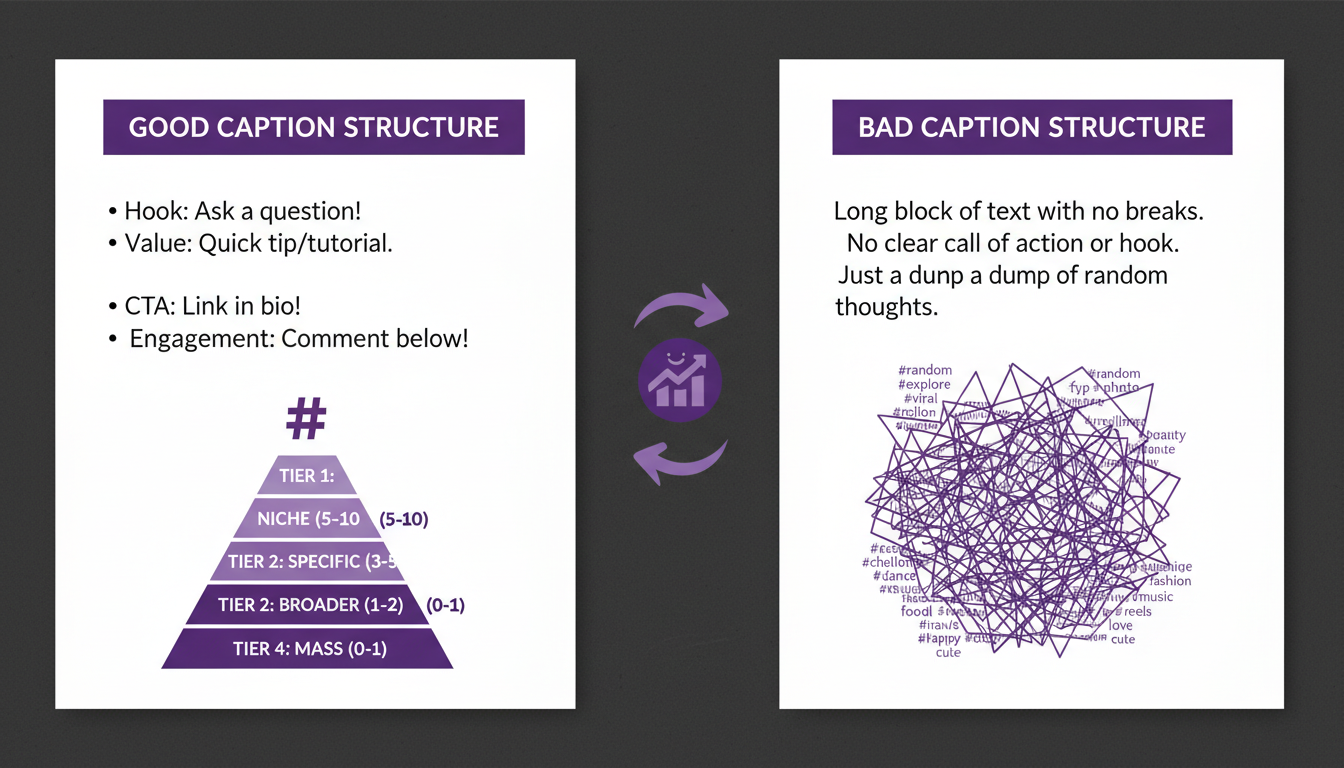
Captions and hashtags are not optional extras - they are discoverability tools that tell Instagram what your Reel is about and who should see it. A well-written caption with a clear call-to-action can increase comment volume by up to 89%, according to Sprout Social's 2026 Engagement Report. More comments signal deeper engagement, which pushes the Reel to more users.
Writing Captions That Drive Comments
The most effective Reels captions are short, specific, and end with a question or invitation. Avoid writing a novel in your caption - most viewers will not read it before they decide whether to engage. Keep the first line punchy because that is all that shows before the "more" cutoff.
Examples of comment-driving caption endings:
- "Which one are you using? Drop it below."
- "Tag someone who needs to see this."
- "Agree or disagree? Tell me why."
- "Save this for later."
Hashtag Strategy for Reels in 2026
Instagram's own guidance has repeatedly stated that 3-5 highly relevant hashtags outperform walls of 30 generic ones. Focus on a mix of niche-specific tags (under 500K posts) and mid-size tags (500K to 2M posts). Avoid hashtags with billions of posts - your content gets buried immediately. Tools like Brandlix can help you plan and schedule your Reels alongside a tested hashtag strategy, keeping everything organized in one place.
How Should You Edit Reels to Maximize Watch Time?
Editing is where good ideas become great Reels. Fast cuts, text overlays, music sync, and transitions all contribute to keeping viewers locked in. According to data from Meta's Creator Studio, Reels with at least 3 visible edit cuts in the first 5 seconds have a 47% higher retention rate than static single-shot videos of the same length.
Step-by-Step Editing Checklist
- Cut silences immediately - Remove any pause where nothing is happening. Dead air kills retention.
- Sync cuts to the beat - When using music, align visual transitions to the rhythm. It feels satisfying and keeps viewers watching.
- Add on-screen text early - Place your hook or key message as text in the first 2 seconds for silent viewers.
- Use captions for spoken content - Auto-captions are now standard expectation. 80% of users watch short-form video with sound off at least part of the time (Meta, 2026).
- End with a visual loop opportunity - If the last frame connects naturally to the first, viewers may rewatch without realizing it, boosting your loop count.
- Keep the color grade consistent - Cohesive visuals signal professionalism and build brand recognition over time.
- Check the cover frame - Your thumbnail appears in your profile grid and in shares. Choose a frame that looks good out of context and represents the content accurately.
What Reels Content Types Drive the Most Engagement?
The highest-performing Reels content in 2026 falls into a handful of consistent categories. Knowing which format serves your goal - reach, saves, comments, or shares - helps you plan content that achieves a specific outcome rather than just hoping something works.
Here is a breakdown of the content types that consistently drive results:
- Tutorial and how-to content - High save rates because viewers want to revisit instructions. Saves are one of the strongest engagement signals on Instagram.
- Behind-the-scenes footage - Drives comments and DMs because it feels personal and exclusive. Authenticity builds trust faster than polished production.
- Trend participation - High share and reach potential when executed quickly. Timing is critical - being two weeks late on a trend looks out of touch.
- Before and after transformations - Among the highest average watch time of any format because of the built-in narrative tension.
- Relatable humor and observations - Drives shares aggressively. People share content that makes them look funny or self-aware to their followers.
- Data and statistics presented visually - Generates saves and shares in professional niches like marketing, finance, and health.
- Product demonstrations - Converts well for e-commerce accounts, especially when the demo solves a visible problem.
According to a Socialinsider analysis of over 50,000 Reels published in early 2026, tutorial content generates 2.1x more saves per view than entertainment content. Meanwhile, entertainment and humor content generates 4x more shares. Match your content type to the metric that matters most for your current goal.
How Do You Measure Whether Your Reels Strategy Is Actually Working?
Vanity metrics like likes and follower count tell you very little about Reels performance. The metrics that actually reflect algorithmic health are reach, plays, shares, saves, and - most importantly - average watch percentage. If your average watch percentage is below 30%, your hook or content structure needs work before anything else.
Set up a simple monthly review process using these five metrics:
- Average watch percentage - Aim for 50% or above. Under 30% means viewers are leaving before your content delivers value.
- Reach from non-followers - A healthy Reels account should see 40-60% of reach coming from people who do not follow you yet.
- Share rate - Divide shares by plays. Even a 1-2% share rate is strong. Above 5% means you have a genuinely viral piece of content.
- Save rate - Particularly important for educational and tutorial content. Saves directly signal high-value content to the algorithm.
- Profile visits from Reels - This tells you whether your Reels are generating genuine interest in who you are, not just passive views.
Review these numbers every two to four weeks, not daily. Short-term fluctuations are normal. Trends become visible over a 30-day window, and that is where your strategy decisions should come from. Using a platform like Brandlix to centralize your analytics across Instagram and other channels makes this review process significantly faster.
Frequently Asked Questions
How long should Instagram Reels be in 2026?
For maximum reach, keep Reels between 7 and 15 seconds. For educational or storytelling content where depth matters, 30 to 60 seconds works well. Anything over 90 seconds should only be used if every second genuinely adds value - padding kills retention rates and signals low quality to the algorithm.
Do hashtags still matter for Instagram Reels?
Yes, but quantity is not the goal. Instagram's own guidance recommends 3-5 highly relevant hashtags rather than 20-30 generic ones. Focus on niche-specific tags with under 500K posts and mid-size tags between 500K and 2M posts. Avoid hashtag walls - they do not improve reach and can look spammy to viewers who read your captions.
How often should I post Reels to grow my account?
Posting 4-7 Reels per week is the optimal range for most accounts. A 2026 study by Later found that accounts posting at least 5 Reels weekly grew 3.5x faster than those posting 1-2 per week. Consistency is more important than volume - a reliable posting rhythm trains both the algorithm and your audience to expect your content.
What is the most important metric for Instagram Reels performance?
Average watch percentage is the single most important metric. It tells you what percentage of your Reel the average viewer watches before leaving. Aim for 50% or higher. If you are below 30%, focus on improving your hook before tweaking anything else. Reach, shares, and saves all matter - but watch percentage drives all of them upstream.
Building a strong Reels presence takes time, but the compounding effect is real. Start with one change - sharpen your hook, test a shorter format, or commit to a consistent posting schedule. Measure the result after four weeks. Then layer in the next adjustment. That methodical approach, grounded in actual data from your own account, will outperform chasing every new tactic you read about. Focus on the fundamentals, stay consistent, and the algorithm will follow.