Social media for e-commerce is no longer an optional channel. If you run an online store and skip organic reach or paid advertising, you're leaving money on the table. According to a Sprout Social study, 76 percent of consumers discover products on social media platforms before making a purchase. The question isn't whether to use these channels, but how to use them profitably.
- Social media is now one of the most important touchpoints in the e-commerce buying journey
- Instagram, TikTok and Pinterest offer direct shopping features that shorten the path to purchase
- Product videos and user-generated content (UGC) convert significantly better than traditional ads
- A consistent posting strategy across multiple platforms is essential for reach and trust
- Data-driven decision making separates successful shops from those producing content with no impact
Why is social commerce so important for online stores?
Social commerce - the direct selling through social media platforms - is growing faster than traditional e-commerce. According to Accenture, the global social commerce market is expected to grow to over 1.2 trillion US dollars by 2026. These aren't abstract numbers. Behind this trend is a concrete shift in user behavior: people buy where they spend their time.
The classic funnel - where users see an ad, visit a website, and buy there - is getting shorter. Instagram Checkout, TikTok Shop and Pinterest product pins allow purchases without ever leaving the platform. Less friction means more conversions.
For store owners, this means social media is no longer just an awareness channel. It's a storefront, a sales consultation, and a checkout system all at once.
Which social media platforms work best for e-commerce?
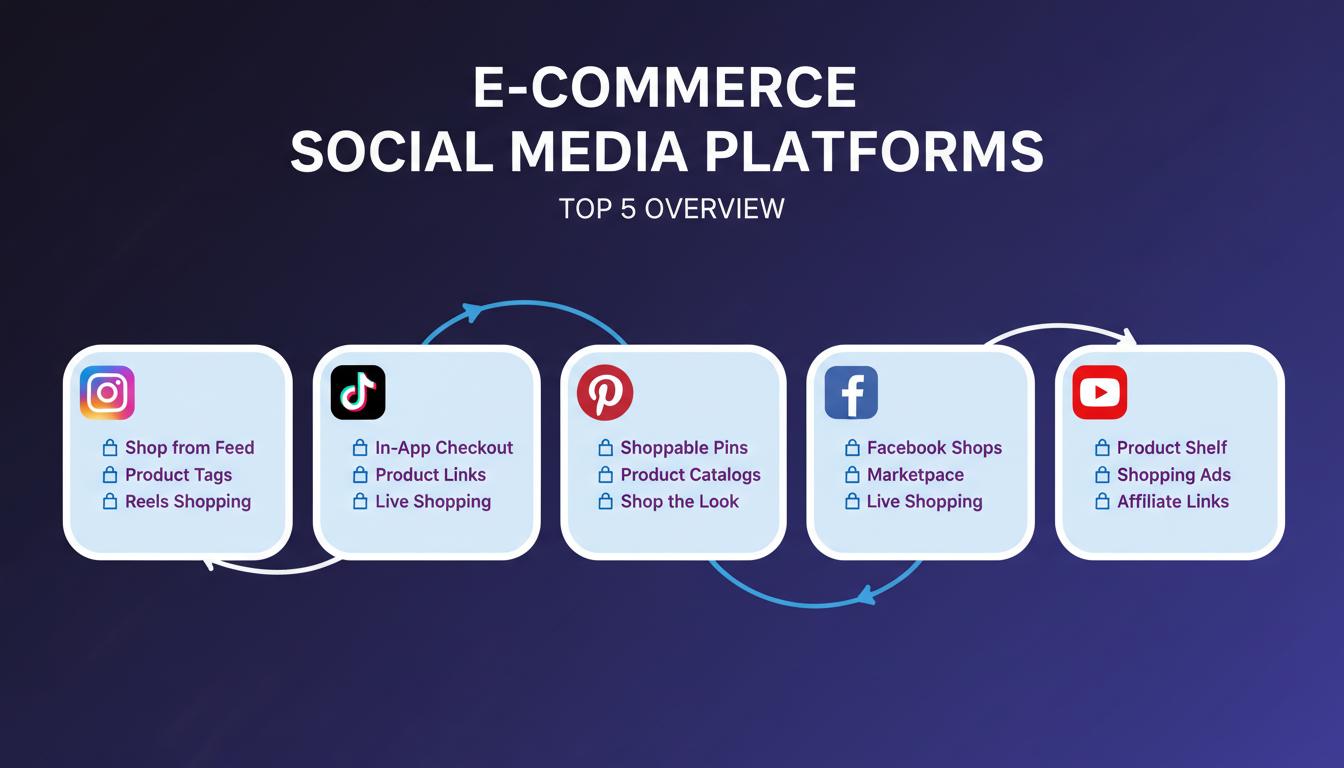
Not every platform works equally well for every store. The right choice depends on your product, your target audience, and the content formats you can produce. Here's a direct comparison of the most relevant channels:
| Platform | E-Commerce Strength | Best Product Categories | Shopping Feature |
|---|---|---|---|
| High purchase intent, visual discovery | Fashion, beauty, home, food | Instagram Shop, Product Tags | |
| TikTok | Viral reach, younger audience | Lifestyle, gadgets, beauty | TikTok Shop, Product Links |
| High purchase intent, research phase | DIY, home decor, fashion, recipes | Product Pins, Catalogs | |
| Audience targeting, retargeting | Broad range, 30+ audience | Facebook Shops, Marketplace | |
| YouTube | In-depth product explanations, SEO reach | Tech, beauty, fitness, household | Shopping Cards, description links |
Rather than trying to be active on every platform at once, it makes more sense to start with two or three channels and do them really well. Producing mediocre content across five platforms will deliver worse results than running two channels with consistency and quality.
What does a content strategy for e-commerce stores look like?
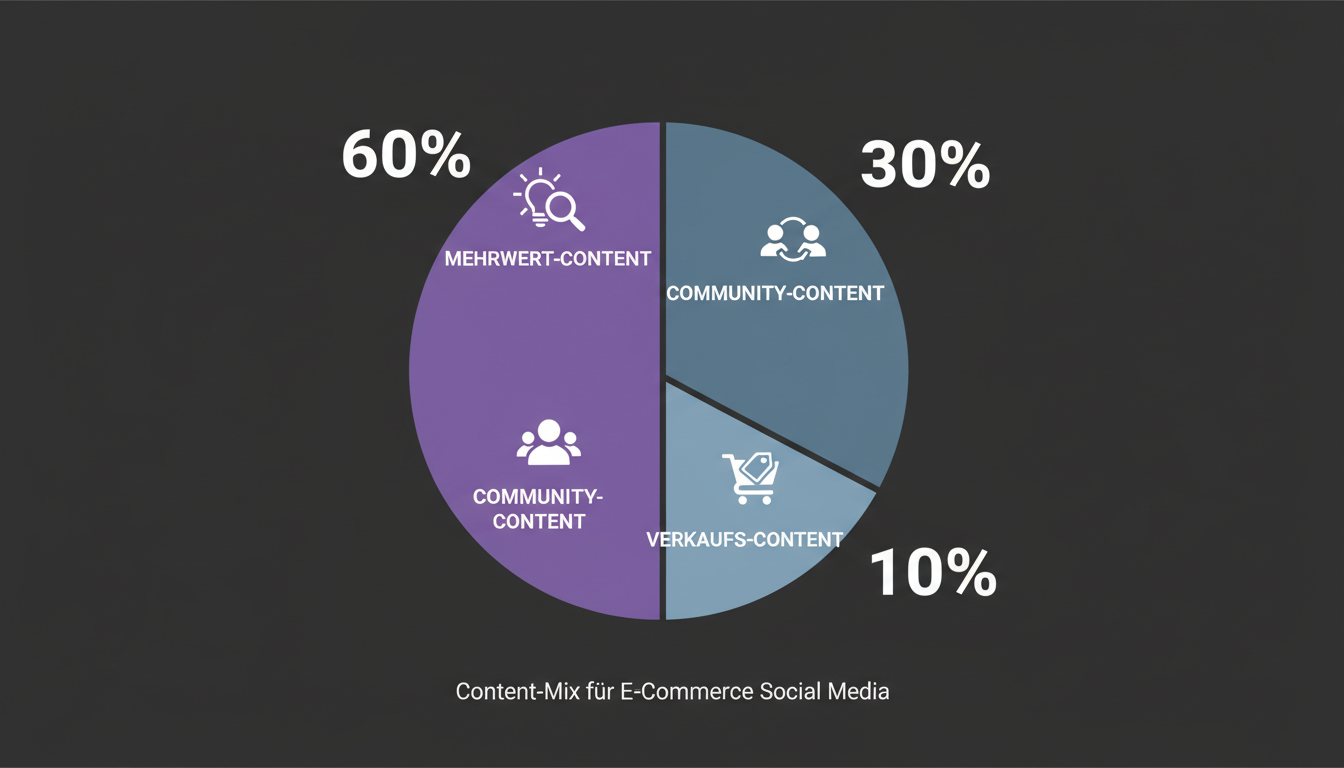
A working content strategy for e-commerce follows a clear rhythm of informative, entertaining, and purchase-driven content. The general rule of thumb is: 60 percent value-driven content, 30 percent community content, 10 percent direct sales content. If every post is a product pitch, you'll lose your audience's attention quickly.
Content formats that convert in e-commerce
Not all formats are equally effective. Product demos and unboxing videos perform particularly well on TikTok and Instagram Reels because they demonstrate real, practical value. Behind-the-scenes content builds trust and gives your store a human face.
- Product videos (15-60 seconds): Show the product in action and visually answer common pre-purchase questions
- User-generated content (UGC): Customer reviews, photos, and videos showing real people using your product in everyday life
- Tutorial and how-to content: Communicates the value of your product without feeling like an ad
- Comparison posts: Before/after, option A vs. B, product bundles
- Seasonal content: Seasonal buying moments like Black Friday, Christmas, Valentine's Day
- Influencer collaborations: Authentic product presentations from people your target audience already trusts
How often should an e-commerce store post?
The optimal posting frequency depends on the platform. On TikTok, daily posting pays off. Instagram works well with 4-7 posts per week. LinkedIn and Facebook require less frequency but more depth. More important than how often you post is how consistently you post. Algorithms reward accounts that reliably deliver active content.
What is user-generated content and why is it so valuable?
UGC (user-generated content) is content created by your customers and users themselves - photos, videos, reviews, or stories featuring real people using your product. According to a Nielsen study, 92 percent of consumers trust recommendations from other people more than traditional advertising. That makes UGC the most effective social proof tool in e-commerce.
UGC costs little to nothing yet outperforms polished, high-production imagery. The reason is credibility. A genuine photo of a customer using your product in their daily life will convince skeptical shoppers faster than any professional product photography.
How to actively generate UGC for your store
UGC doesn't happen on its own. You need to actively invite it. Some tried-and-tested approaches:
- Include inserts in packages asking customers for a review or photo
- Establish a branded hashtag and promote it in your bio
- Reshare customer photos in your Stories and tag the person
- Create small incentives - like discount codes in exchange for reviews with photos
- Run UGC campaigns where customers post photos using a campaign hashtag
Important: always ask for permission before reusing UGC. A quick DM is usually all it takes - and it shows your customers that you genuinely value their content.
How do social ads for e-commerce actually work?
Paid advertising on social media is the fastest route to new customers - but also where the most budget gets wasted. The most common mistakes are targeting audiences that are too broad, testing too few creative variations, and neglecting proper retargeting. Anyone running social ads for e-commerce needs to understand three core campaign types.
The three most important campaign types
- Awareness campaigns: Reach new audiences, build visibility, no direct call to purchase yet
- Conversion campaigns: Optimized directly for completed purchases, using Dynamic Product Ads that automatically show relevant products
- Retargeting campaigns: Re-engage users who have already visited your website, viewed products, or added items to their cart without completing a purchase
Retargeting campaigns in particular deliver above-average conversion rates. Someone who adds an item to their cart and drops off is already primed to buy. A well-timed ad 24 hours later can recover that sale. Meta data shows that retargeting ads can achieve up to ten times higher click-through rates than cold audience ads.
Which metrics should an e-commerce store track?
Tracking the right metrics is essential for allocating budget and time effectively. Not every metric that social media platforms display is actually relevant for e-commerce decisions. Likes and follower counts say very little about real business performance.
The most important KPIs for e-commerce on social media:
- Click-Through Rate (CTR): How many users click on your product or link
- Conversion Rate: How many visitors coming from social media actually make a purchase
- Return on Ad Spend (ROAS): How much revenue each euro invested in advertising generates
- Cost per Purchase: What it costs you to acquire a new customer through social media
- Engagement Rate: Comments, shares, and saved posts as a quality signal
- Revenue per Post: Which content formats and products directly drive revenue
Monthly reporting often isn't enough. Analyzing your top and bottom-performing posts on a weekly basis lets you adjust your content strategy much faster. Platforms like Brandlix make it easy to view all of this data across every channel in one place - without constantly switching between five different dashboard tabs.
How do you build a long-term social media strategy for your store?
A long-term strategy doesn't start with a content plan. It starts with understanding who your target audience is and which platforms they actually use. Many store owners show up on platforms because everyone else is there - not because their customers are. That wastes time and delivers little return.
Step by step toward a strategy that works
- Analyze your audience: Understand their age, interests, platform habits, and purchase motivations
- Choose two to three main platforms: Fewer is better - focus on consistency and quality
- Create an editorial calendar: Plan at least four weeks ahead and build in seasonal moments
- Systematize content production: Batching content saves time and ensures consistent quality
- Set up shopping features: Connect your product catalog across all platforms you use
- Monthly review: What worked, what didn't, and why
Social media for e-commerce is not a sprint. If you post for six weeks, see sales haven't exploded, and give up - your expectations were off from the start. Algorithms and trust take months to build. Those who start early and stay consistent will gain a lasting advantage over competitors who are only sporadically active.

Frequently Asked Questions
Which social media platform is best suited for e-commerce?
Instagram is the strongest channel for most e-commerce stores because it combines visual product discovery, built-in shopping features, and a user base with high purchase intent. TikTok is particularly well-suited for younger audiences and viral reach. Pinterest is ideal for stores with strong visual aesthetics and products that get discovered during the planning phase - such as furniture or fashion.
How much budget should an online store set aside for social media ads?
Starting with 300 to 500 euros per month is enough to gather initial data and understand which audiences and creatives are working. Scaling only makes sense once your ROAS is solid. Experienced e-commerce stores typically invest 10 to 20 percent of their revenue in paid social media advertising.
Is organic social media content still worth it, or do you always need to spend money?
Organic content is still very much worth it - especially on TikTok, where even accounts with no ad budget can go viral. Instagram and Facebook have significantly reduced organic reach, which is why a combination of organic and paid is the most effective strategy. Organic content builds trust and community, while paid ads scale your reach quickly.
How long does it take for social media to generate measurable revenue?
With paid ads, first results can be visible within two to four weeks. Organic growth takes longer - typically three to six months before a consistent presence has a noticeable impact on revenue. Consistency is what matters most. Stores that regularly produce high-quality content see clearly measurable results after six months.
Conclusion: Social media as a growth channel for your online store
Social media for e-commerce works when it's approached strategically and consistently. Platform selection, content mix, UGC, and data-driven optimization are the four levers that make the real difference. Bringing these elements together and following through on both planning and analysis builds a channel that generates long-term revenue - without becoming entirely dependent on expensive paid advertising. Start with two platforms, produce content that genuinely adds value, and learn from the numbers. Everything else will follow.