A solid social media strategy for small businesses is no longer optional. With over 5.2 billion active social media users worldwide (Statista, 2026), your potential customers are already scrolling, saving, and buying through social platforms every single day. The question is not whether to show up - it is how to show up in a way that actually works for a small team with limited time and budget.
- Focus on 2-3 platforms where your target audience is most active instead of spreading thin across all channels.
- Posting consistency matters more than posting frequency - brands that post on a regular schedule see up to 3x higher engagement rates (Hootsuite, 2026).
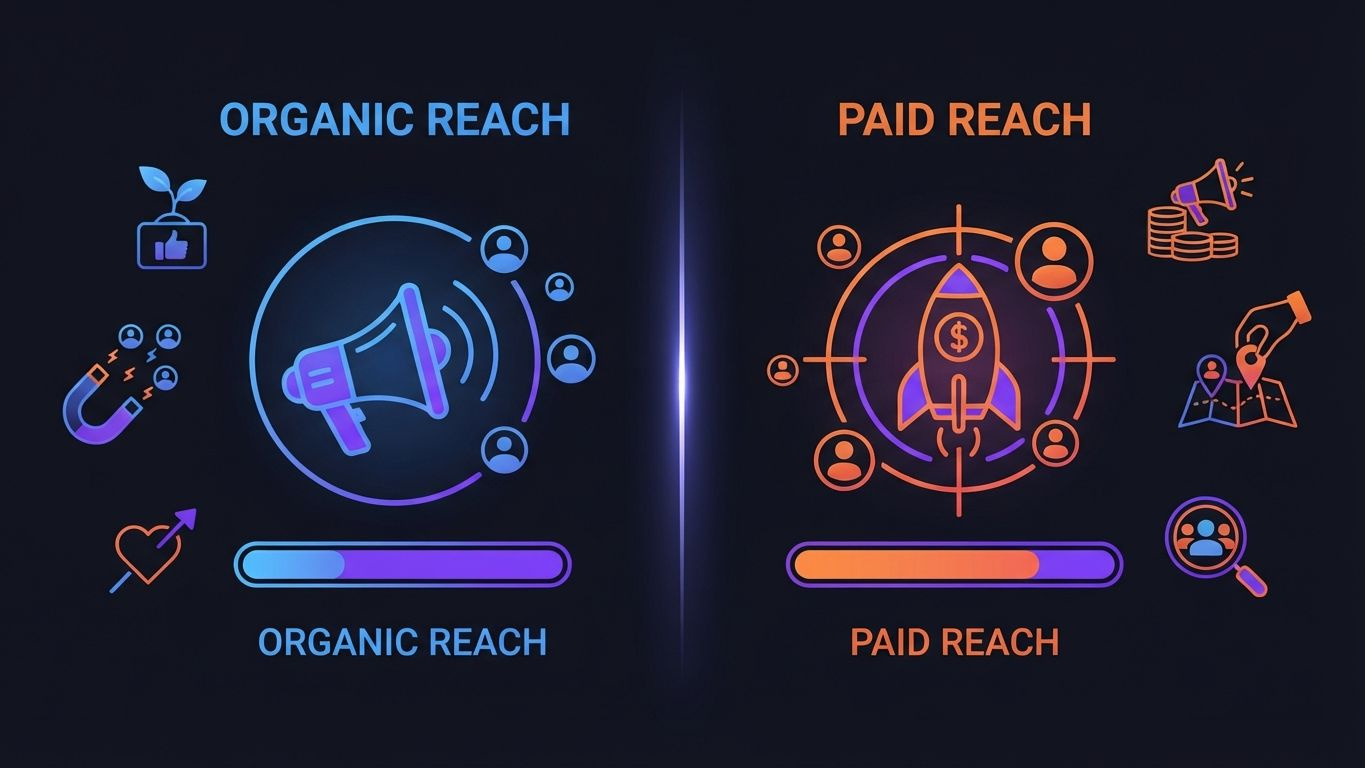
- Short-form video content drives the highest organic reach for small businesses on nearly every major platform in 2026.
- Set clear, measurable goals before creating a single piece of content - otherwise you cannot tell what is working.
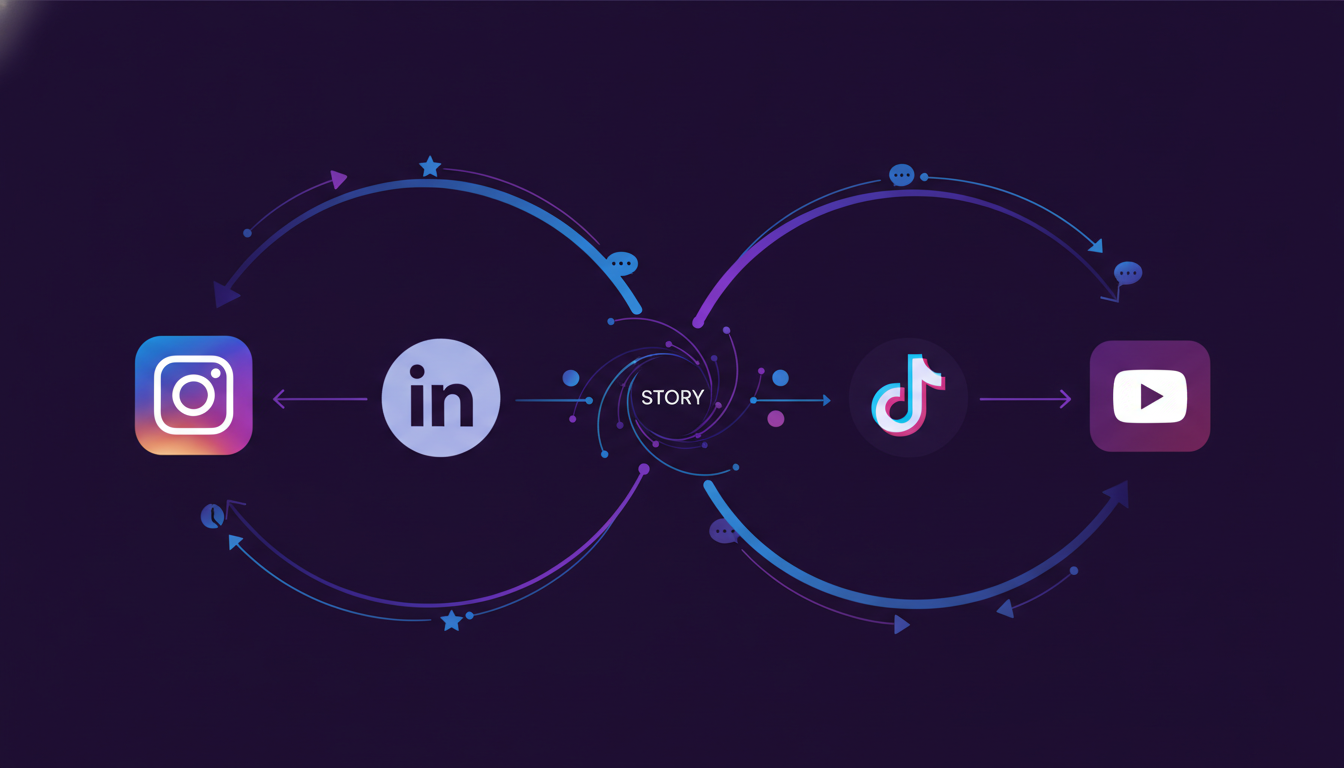
- Repurposing one core piece of content across multiple platforms can reduce your content creation workload by up to 60%.
Why Do Small Businesses Need a Social Media Strategy?
Without a strategy, social media becomes a time sink that produces no measurable results. A documented social media strategy gives your efforts direction, keeps your messaging consistent, and helps you spend your limited resources where they actually move the needle.
According to Sprout Social's 2026 Index, 78% of consumers say they are more likely to buy from a brand they follow on social media. That is not a small number. For a local bakery, a freelance designer, or a five-person e-commerce shop, that kind of brand familiarity used to require expensive advertising. Social media changes that equation entirely.
Small businesses that work from a written strategy are 313% more likely to report success than those who post without a plan (CoSchedule, 2026). The strategy does not need to be a 40-page document. It needs to be clear, actionable, and realistic for your team size.
The Real Cost of Having No Strategy
When you post without direction, you end up creating content that feels disconnected. Followers notice this even if they cannot name it. Your reach drops, your engagement stagnates, and you conclude that "social media does not work" for your business - when the real issue was the absence of a plan.
A strategy also protects your time. Small business owners spend an average of 6 hours per week on social media tasks (Clutch, 2026). Without clear goals and a content system, those hours can double with nothing to show for it.
How Do You Choose the Right Platforms for Your Business?
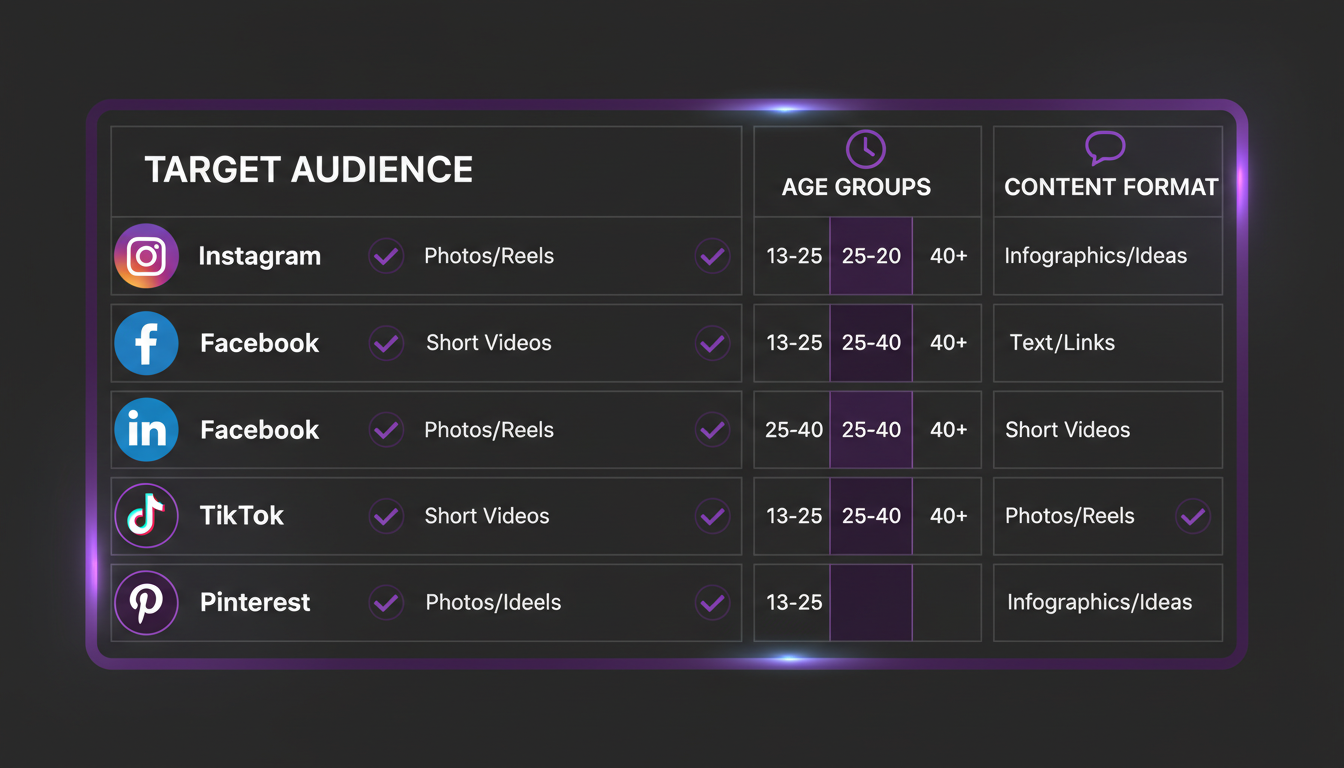
Choose platforms based on where your specific audience spends time, not based on where your competitors are or what platform feels most familiar to you. Each platform has a distinct user base and content format, and the right mix for a B2B consulting firm looks nothing like the right mix for a handmade jewelry brand.
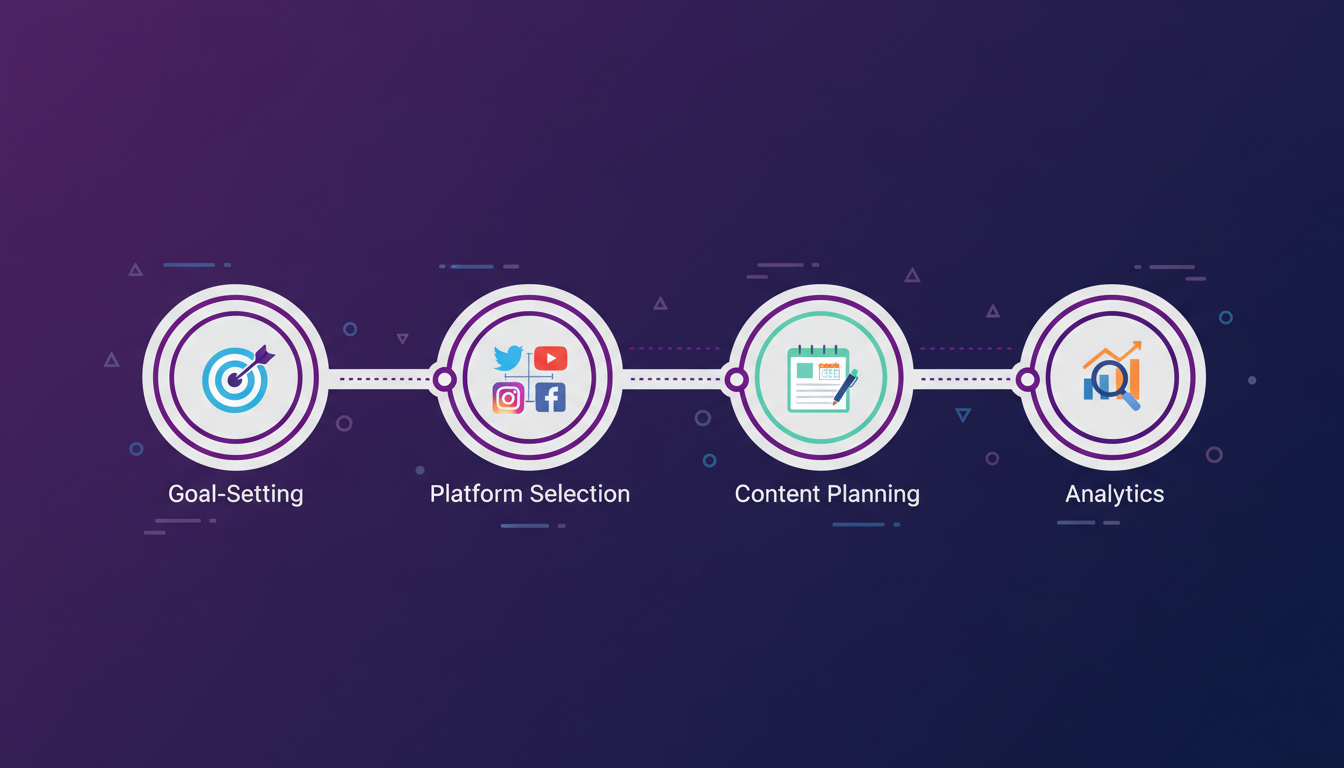
Here is a practical breakdown of the major platforms and which business types tend to see the strongest results:
| Platform | Best For | Primary Content Type | Avg. Organic Reach (2026) |
|---|---|---|---|
| Lifestyle, retail, food, fashion | Short video, photo carousels | ~9% of followers | |
| B2B, professional services, SaaS | Text posts, articles, documents | ~15% of followers | |
| TikTok | Consumer brands, entertainment, education | Short-form video | ~20% (algorithm-driven) |
| Local businesses, community groups | Mixed media, events, groups | ~5% of followers | |
| Home decor, DIY, recipes, fashion | Static images, idea pins | High via search | |
| YouTube | Education, tutorials, product demos | Long-form and short video | Search-driven |
| Threads / Bluesky | Brands building community, thought leaders | Text-based conversation | Growing, early adopter advantage |
The rule of thumb: start with two platforms, master them, and then expand. Trying to be everywhere at once leads to mediocre presence everywhere rather than strong presence somewhere.
How to Audit Where Your Audience Actually Is
- Survey your existing customers - ask them which social platforms they use most.
- Check your website analytics to see which social platforms already send you traffic.
- Research your top three competitors and note which platforms drive their highest engagement.
- Look at platform demographic data (Meta Business Suite, LinkedIn Audience Insights) to match user profiles to your buyer persona.
What Goals Should a Small Business Set for Social Media?
The most useful social media goals are tied directly to business outcomes: more website traffic, more leads, more sales, or more brand recognition in your local market. Vanity metrics like follower counts feel good but rarely correlate with revenue.
Use the SMART framework. Goals should be Specific, Measurable, Achievable, Relevant, and Time-bound. "Get more followers" is not a goal. "Grow Instagram followers by 500 within 90 days through weekly Reels and three engagement posts per week" is a goal you can actually track.
Goal Examples by Business Type
- Local restaurant: Increase online reservation clicks from Instagram bio by 25% in 60 days.
- Freelance photographer: Generate 10 direct inquiry messages per month via LinkedIn and Instagram combined.
- E-commerce store: Drive 500 monthly sessions from Pinterest to product pages within 90 days.
- B2B software company: Publish two thought-leadership posts per week on LinkedIn and achieve 200 post impressions on average within 30 days.
According to HubSpot's 2026 Marketing Report, businesses that set documented goals are 376% more likely to achieve them. The documentation step is not a formality - it creates accountability and makes weekly reviews much faster.
How Do You Build a Content Plan Without a Full Marketing Team?
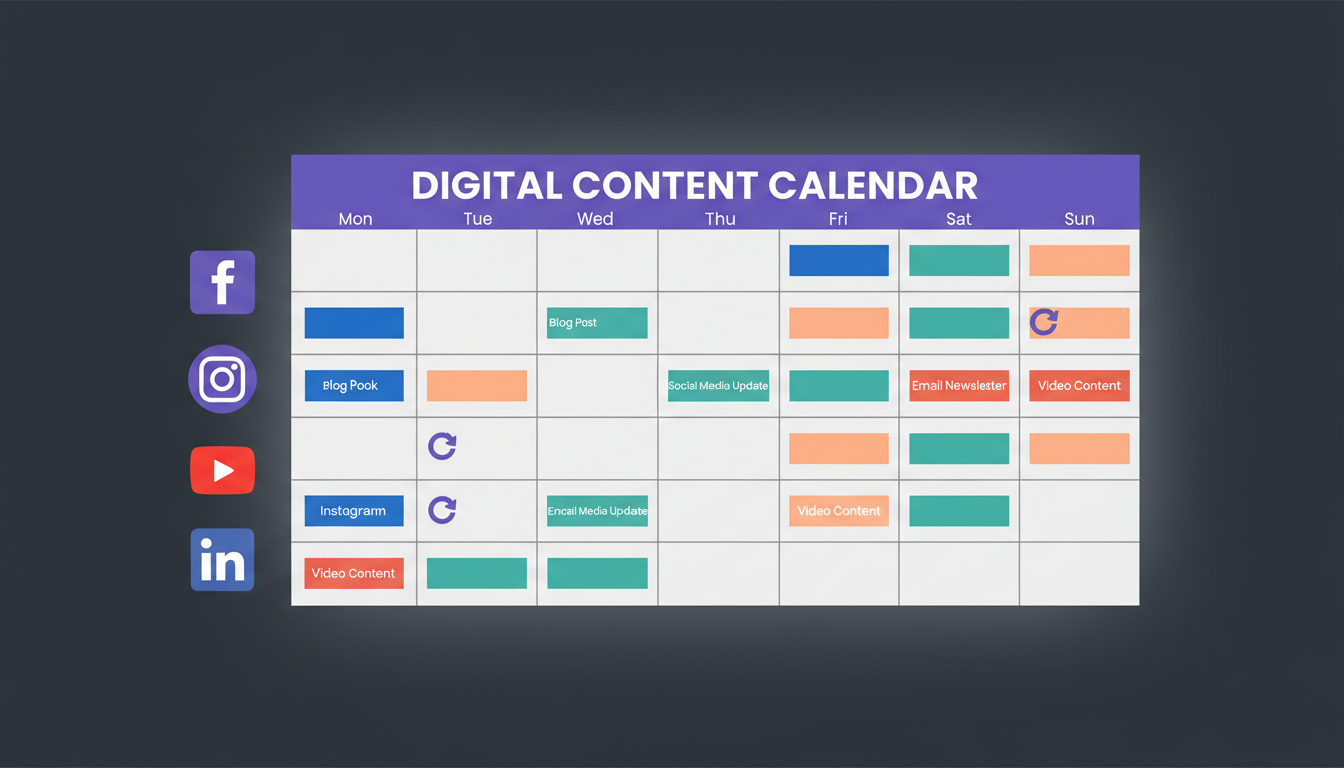
A lean content plan focuses on three content pillars, a repeatable posting schedule, and a batching system that lets you create a week's worth of content in one sitting. Most small businesses do not need to post every day - they need to post well on the days they do publish.
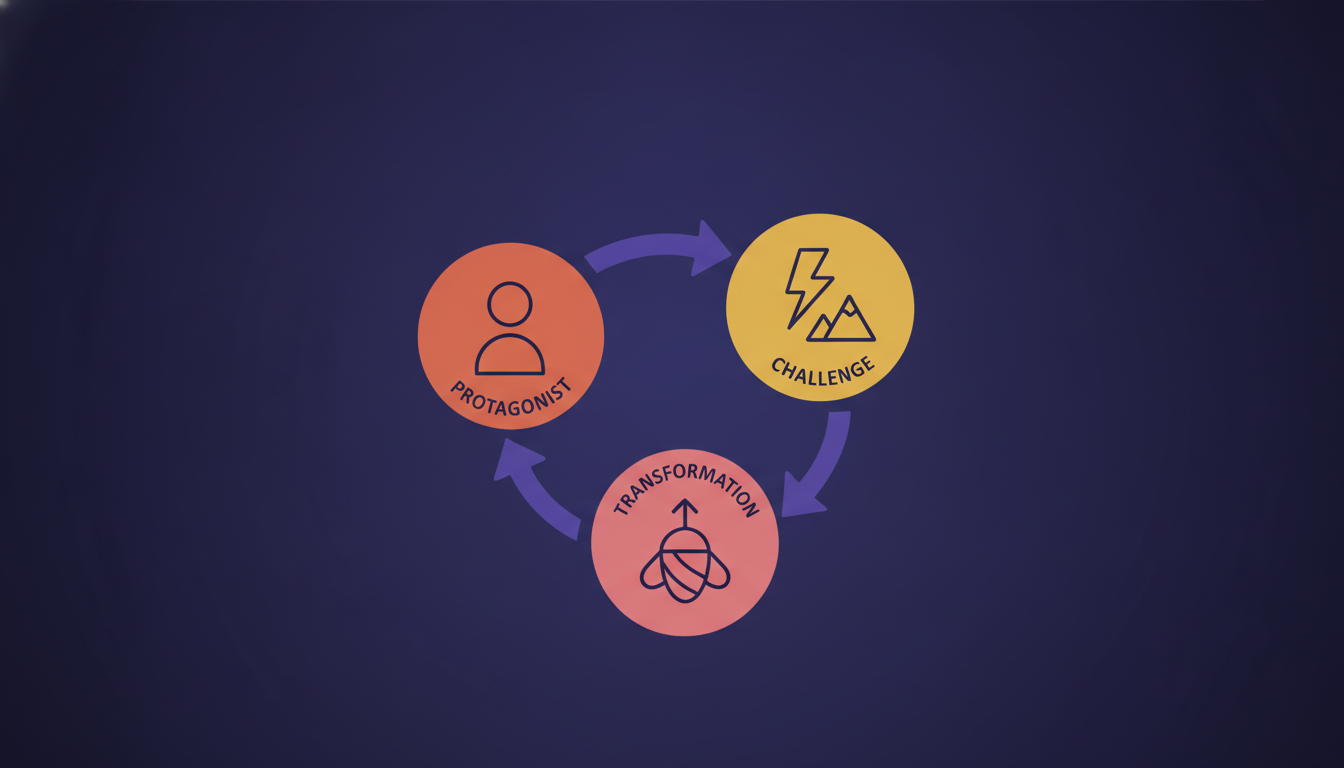
Content pillars are the three to four themes your brand will consistently talk about. A personal finance coaching business might use: money mindset, practical budgeting tips, and client success stories. Every piece of content fits under one of those pillars, which keeps the feed coherent without requiring you to reinvent the wheel every week.
The Content Batching Method
- Pick one day per week for content creation - block it in your calendar like a client meeting.
- Brainstorm 10-15 post ideas using your content pillars as starting categories.
- Write captions and design graphics for the coming week or two in one session.
- Schedule everything using a social media management tool so it publishes automatically.
- Reserve 15 minutes daily for responding to comments and engaging with your community.
Brands that batch and schedule content in advance save an average of 4.5 hours per week compared to those who create content on the fly (Buffer, 2026). For a solo founder or a two-person marketing team, those hours are significant.
Content Formats That Work Best in 2026
- Short-form video (under 60 seconds) - highest organic reach across Instagram, TikTok, YouTube Shorts, and LinkedIn.
- Carousel posts - generate 3x more saves than single-image posts on Instagram (Hootsuite, 2026).
- Behind-the-scenes content - builds trust and humanizes your brand without requiring production budget.
- User-generated content and customer testimonials - 84% of consumers trust peer recommendations more than brand advertising (Nielsen, 2026).
- Educational posts and how-to guides - high shareability and strong performance in algorithm-driven feeds.
How Do You Grow Your Following Organically on a Small Budget?
Organic growth in 2026 depends on three things: consistency, genuine community interaction, and content that earns saves and shares rather than just likes. Follower counts grow faster when existing followers actively share your content with their own networks.
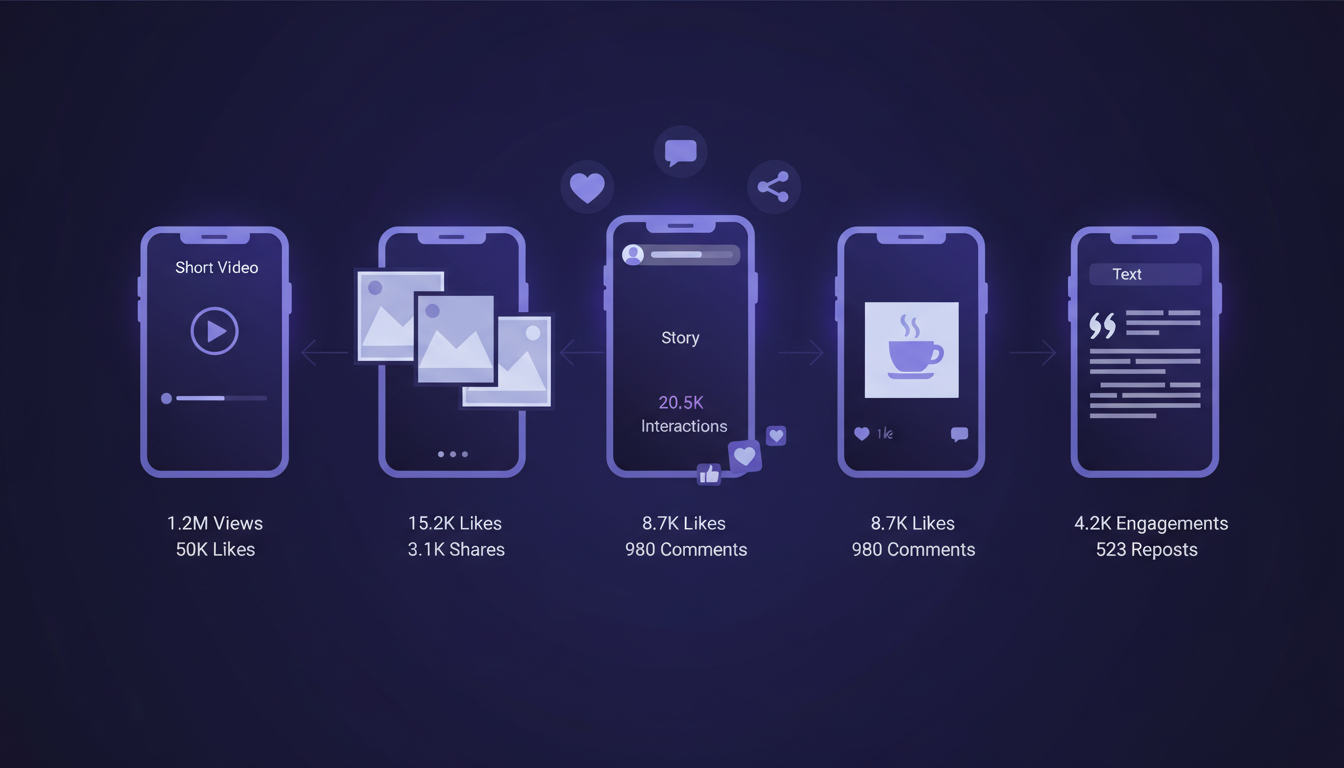
The platforms reward content that keeps people on the platform. That means writing captions that prompt replies, using interactive features like polls and question stickers, and ending posts with a specific call to action rather than a generic "Follow us for more."
Proven Organic Growth Tactics
- Engage before and after you post: Spend 10 minutes commenting on relevant accounts before publishing. This signals activity to the algorithm and puts your name in front of potential followers.
- Use niche hashtags: On Instagram, posts with 3-5 targeted niche hashtags outperform those with 30 generic ones (Sprout Social, 2026).
- Collaborate with complementary businesses: A local gym and a local nutritionist serving the same audience can cross-promote to each other's followers at zero cost.
- Reply to every comment in the first hour: Early engagement signals push the algorithm to show your post to a wider audience.
- Repurpose top-performing content: If a post performs well, turn it into a different format - a Reel becomes a LinkedIn carousel, a Twitter/X thread becomes a blog intro.
Should Small Businesses Run Paid Ads?
Paid social advertising can amplify organic content that is already working, but it rarely fixes content that is not connecting with your audience. Start organic, identify what resonates, and then allocate even a small daily budget - as little as $5 per day on Facebook and Instagram can reach hundreds of targeted local users. According to Wordstream, small businesses that run social ads alongside organic content see 27% higher conversion rates compared to organic-only approaches.
How Do You Measure Whether Your Strategy Is Working?
Track metrics that connect directly to your goals. If your goal is brand awareness, track reach and impressions. If your goal is lead generation, track link clicks, DM inquiries, and form submissions driven from social. Engagement rate is the most universally useful mid-funnel metric for small businesses.
A healthy engagement rate benchmark varies by platform and audience size. On Instagram, 1-3% engagement rate is considered average for business accounts with under 10,000 followers. On LinkedIn, 2-5% is considered strong. If you are consistently below these numbers, the problem is usually content relevance or posting frequency - not the platform itself.
Monthly Social Media Audit Checklist
- Review top three performing posts - identify what content type, topic, and format they share.
- Check follower growth rate and compare to the previous month.
- Measure traffic from social to your website using UTM parameters in Google Analytics.
- Tally direct inquiries or leads generated from social channels.
- Assess whether your posting frequency matched your planned schedule.
- Adjust the next month's content plan based on what the data shows, not intuition.
Tools like Brandlix make this process significantly easier for small teams - you can manage content planning, scheduling, and performance tracking for multiple platforms from one dashboard, which removes the manual data-pulling that eats up review time.
What Are the Most Common Social Media Mistakes Small Businesses Make?
The most common mistake is treating social media as a broadcast channel rather than a community space. Small businesses that only post promotional content - sales announcements, product launches, discount codes - see dramatically lower engagement than those who mix value-driven and personality-driven content into their feed.
A practical content mix to follow is the 70-20-10 rule: 70% educational or entertaining content, 20% curated or community-focused content, and 10% direct promotional content. This ratio keeps your feed useful without killing reach with constant sales posts.
Other Mistakes Worth Avoiding
- Ignoring comments and DMs: 40% of consumers expect a social media response within one hour (Sprout Social, 2026). Slow responses hurt trust and reduce the likelihood of future engagement.
- Using the same caption on every platform: LinkedIn audiences respond to professional, thoughtful writing. TikTok audiences respond to conversational, punchy hooks. Copy-pasting the same text across both platforms undermines both.
- Chasing trends that do not fit your brand: Participating in a trending audio clip or viral challenge makes sense only when it aligns with your brand voice. Forcing it looks awkward and can actually reduce credibility.
- Skipping the bio optimization: Your social bio is often the first thing a new follower reads. It should clearly state what you do, who you help, and what action you want them to take - with a link to a relevant landing page.
- Quitting too early: Most small business accounts that fail at social media stopped posting within the first three months. Organic growth takes time. Most accounts need 6-12 months of consistent effort before seeing meaningful traction.
Frequently Asked Questions
How many times per week should a small business post on social media?
Quality and consistency matter more than raw frequency. For most small businesses, posting 3-5 times per week on your primary platform and 2-3 times on secondary platforms is both sustainable and effective. Posting every day with low-quality content is worse than posting three times a week with high-quality, well-targeted content. Find a schedule you can maintain for six months without burning out - that consistency will outperform sporadic high-volume posting every time.
Do small businesses need to be on every social media platform?
No. Trying to maintain an active presence on every platform simultaneously is one of the fastest ways to produce mediocre content everywhere. Start with the two platforms where your target audience is most concentrated, build a strong and consistent presence there, and then expand only when you have the systems or team capacity to support additional channels without compromising quality on your existing ones.
How long does it take to see results from a social media strategy?
Expect three to six months of consistent execution before seeing meaningful organic growth and engagement improvements. Paid campaigns can produce faster short-term results, but organic brand building is a longer game. Set 90-day checkpoints to evaluate what is working, adjust your content mix accordingly, and give each major change at least four to six weeks before drawing conclusions about whether it is effective.
How much should a small business budget for social media?
Many small businesses successfully grow social media audiences with near-zero cash outlay by investing time rather than money in organic content. If you have a small ad budget, even $200-$400 per month on targeted social ads - focused on your best-performing organic content - can generate measurable results. As a rough benchmark, businesses with annual revenues under $500,000 typically allocate between 5-10% of their marketing budget to social media, which often works out to $300-$800 per month total including tools and any paid promotion.
Start Small, Stay Consistent, and Build From There
Building a social media strategy as a small business is less about having the biggest budget or the most polished content, and more about showing up consistently for the right audience on the right platforms. Pick two channels. Set one clear goal. Create content that genuinely helps or entertains your specific customers. Track what works, cut what does not, and give the strategy enough time to compound. That is the whole framework - and it works for businesses of every size and industry.
If you want to simplify the execution side - content scheduling, multi-platform publishing, and performance tracking in one place - take a look at what Brandlix can do for your workflow. The strategy still requires your expertise. The operational overhead does not have to.