User generated content strategies are one of the most effective levers in content marketing in 2026, because real customer voices build more trust than even the most polished brand campaign. Anyone who deliberately collects, curates, and distributes UGC across multiple platforms not only saves on production costs but also gains reach that keeps spreading organically. In this guide, we show you how to build a working UGC strategy, which mistakes to avoid, and which tools can automate the entire process.
- User generated content feels more credible than brand content, because it comes from real users instead of being produced by the brand itself.
- Successful UGC strategies rely on clear campaign hashtags, incentives, and a fixed approval process.
- Legal clarity is mandatory: without usage rights, you cannot simply repost someone else's content.
- UGC can be planned centrally with tools like Brandlix and published across up to 10 platforms.
- A mix of organic UGC, influencer collaborations, and community contests delivers the most stable results.
What is user generated content, and why does it work so well in 2026?
User generated content (UGC) refers to photos, videos, reviews, or posts created by customers or followers, not by the brand itself. It works so well because people trust recommendations from other people far more than they trust paid advertising.
Users rate reviews and experience reports from other buyers as more credible than classic ads. This holds even more true in 2026, because algorithms on platforms like Instagram, TikTok, and LinkedIn often favor authentic, unpolished content.
- UGC feels like a recommendation from friends, not like advertising.
- It reduces production costs, since the brand does not need to organize its own photo shoots.
- It delivers social proof right at the point of purchase decision, for example on product pages or in ads.
- It scales on its own when customers keep posting on their own initiative.
In short: user generated content is the cheapest form of trust a brand can build.
How do you build a user generated content strategy in 6 steps?
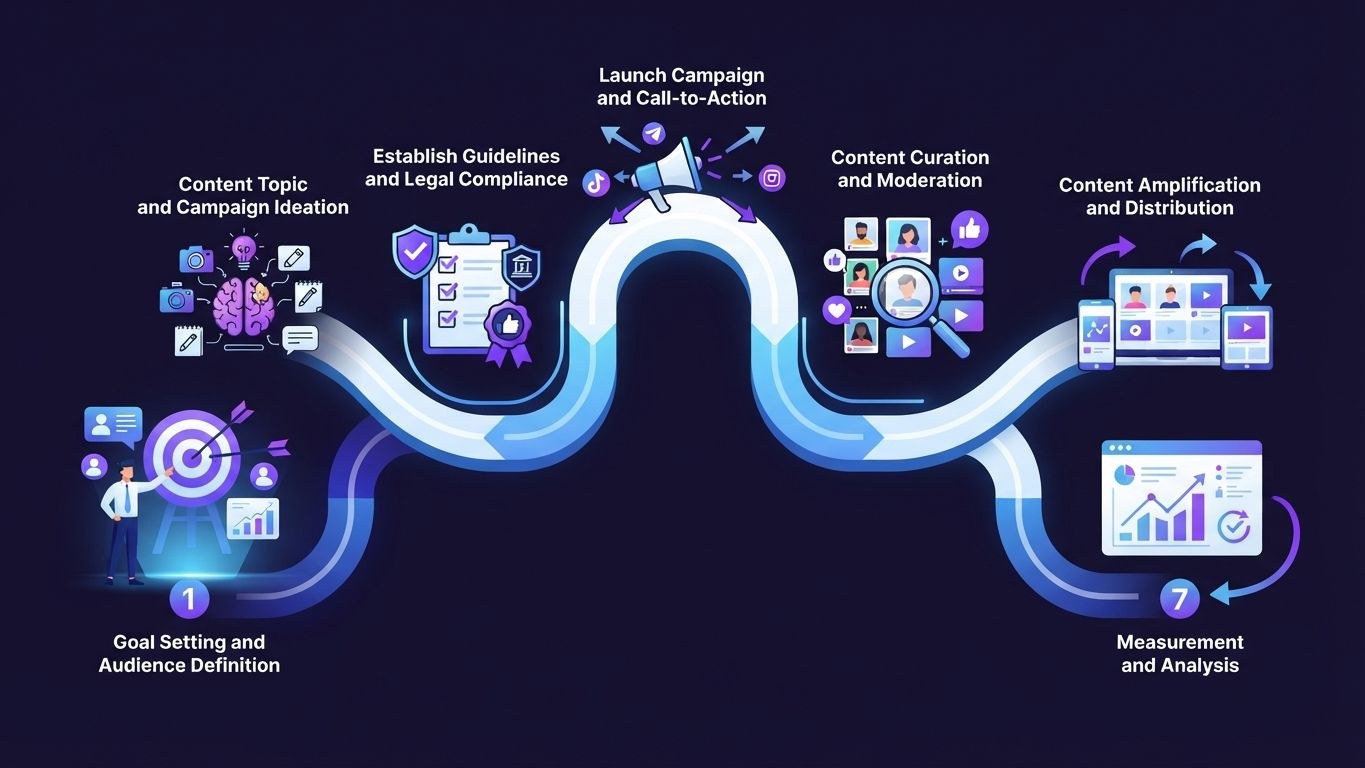
A working UGC strategy comes together in six clear steps: define a goal, choose a format, launch a hashtag or campaign, set incentives, secure rights, and curate and redistribute content. Without this framework, UGC stays a matter of chance instead of a system.
- Define a goal: Do you want to boost reach, trust, product reviews, or community loyalty? The goal determines which format you prioritize.
- Choose a format: Photo reviews, unboxing videos, TikTok challenges, or testimonials suit different goals and platforms.
- Launch a campaign or hashtag: A memorable, brand-specific hashtag makes content findable and trackable.
- Set incentives: Discounts, feature opportunities, or small giveaways significantly increase the participation rate.
- Secure rights: Actively ask for permission before you reshare content, ideally with written confirmation in a comment or DM.
- Curate and distribute: Pick the strongest posts and plan them across multiple channels instead of posting them just once.
Anyone who works through these steps consistently builds a steady stream of authentic content within a few months, content that can be systematically scheduled with a Content Calendar.
Which UGC formats work best on which platform?
Not every UGC format fits every platform. On Instagram and TikTok, visual formats like unboxings and Reels dominate, while on LinkedIn, experience reports and case studies work better. Choosing the right format often decides whether a post gets any organic reach at all.
| Platform | Best UGC format | Typical response rate |
|---|---|---|
| Photo reviews, Story reposts | High for Story formats | |
| TikTok | Unboxing, challenges, duets | Very high for viral trends |
| Testimonials, experience reports | Medium, but high B2B relevance | |
| Group posts, reviews | Medium, strong with older audiences | |
| User images showing product use | High traffic over the long term | |
| YouTube | Review videos, tutorials | High for purchase decisions |
Cross-platform distribution increases the chance that a single good piece of UGC generates reach multiple times over, instead of just gathering dust on one channel.
How do you find and collect UGC systematically instead of by chance?
Systematic UGC collection works through three channels at once: actively monitoring brand mentions, targeted calls to action in captions and Story stickers, and automated collection through forms or contests. Anyone who just waits for customers to post on their own is leaving potential on the table.
- Hashtag monitoring: Watch your brand hashtag and mentions regularly, ideally every day.
- Story stickers and polls: Actively encourage followers to share their experience through a sticker or comment.
- Contests with a clear entry rule: "Post a photo with hashtag X to win" delivers a predictable volume of content.
- Post-purchase emails: Specifically ask customers for a photo or a short review after they buy.
- Collaborations with micro-creators: Smaller creators with 5,000 to 50,000 followers often deliver more authentic content than large influencers.
A good hashtag is more than just decoration here. With a Hashtag Generator, you can quickly find matching variants that make your campaign visible and searchable at the same time.
How do you use UGC legally, without risking copyright trouble?
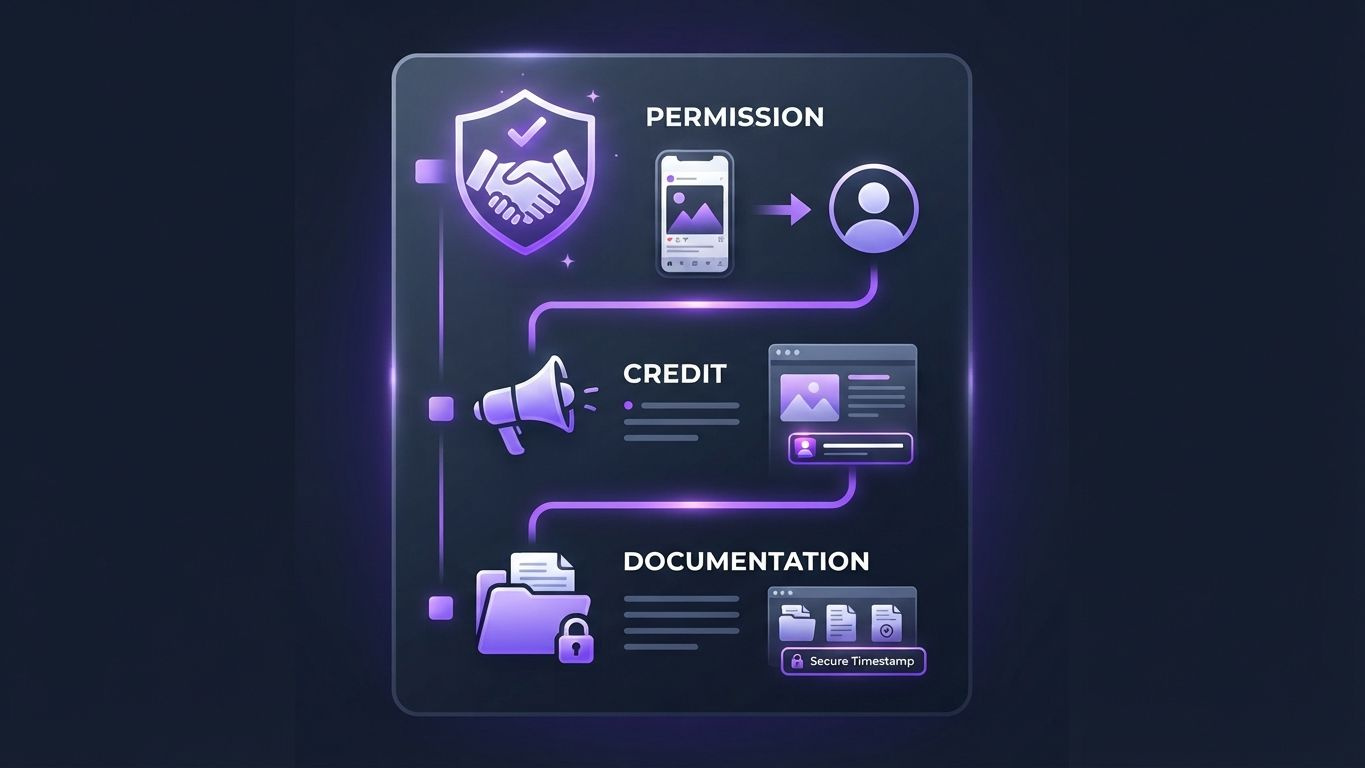
Using UGC legally means always actively asking for permission, documenting the approval in writing, and tagging the original creator in the repost. Reposting without consent can lead to legal consequences and a loss of trust within your community.
- Contact the creator via comment or DM and specifically ask for permission to reuse their content.
- Document the approval, ideally as a screenshot or in a small approval log.
- Visibly tag the original account in the repost, both in the caption and the image.
- For commercial use, such as in ads, clarify whether an additional written agreement is needed.
- Store all approvals centrally so they can be proven if a dispute arises.
Many brands build their own UGC rights templates for this, which they reuse for every campaign. This saves time and protects against legal warnings at the same time.
How do you measure the success of your user generated content strategy?
The success of UGC can be measured through engagement rate, reach growth, conversion rate, and the number of newly generated posts. Without clear metrics, UGC stays a gut feeling instead of a solid strategy.
- Engagement rate: Compare UGC posts with classic brand posts, UGC often achieves higher engagement rates.
- Hashtag usage: Count how many posts use your campaign hashtag per week or month.
- Conversion rate: Check whether product pages with UGC images achieve more purchases than pages without.
- Reach per UGC post: Compare the organic reach of UGC reposts with in-house produced content.
- Share of new customers from UGC campaigns: Track how many new buyers came through a specific UGC campaign.
With a Social Media Analytics solution, you can compare these values per platform instead of manually pulling numbers together from spreadsheets. If you also know when your audience is most active, you can schedule UGC reposts at the optimal time using a Best Time to Post calculator.
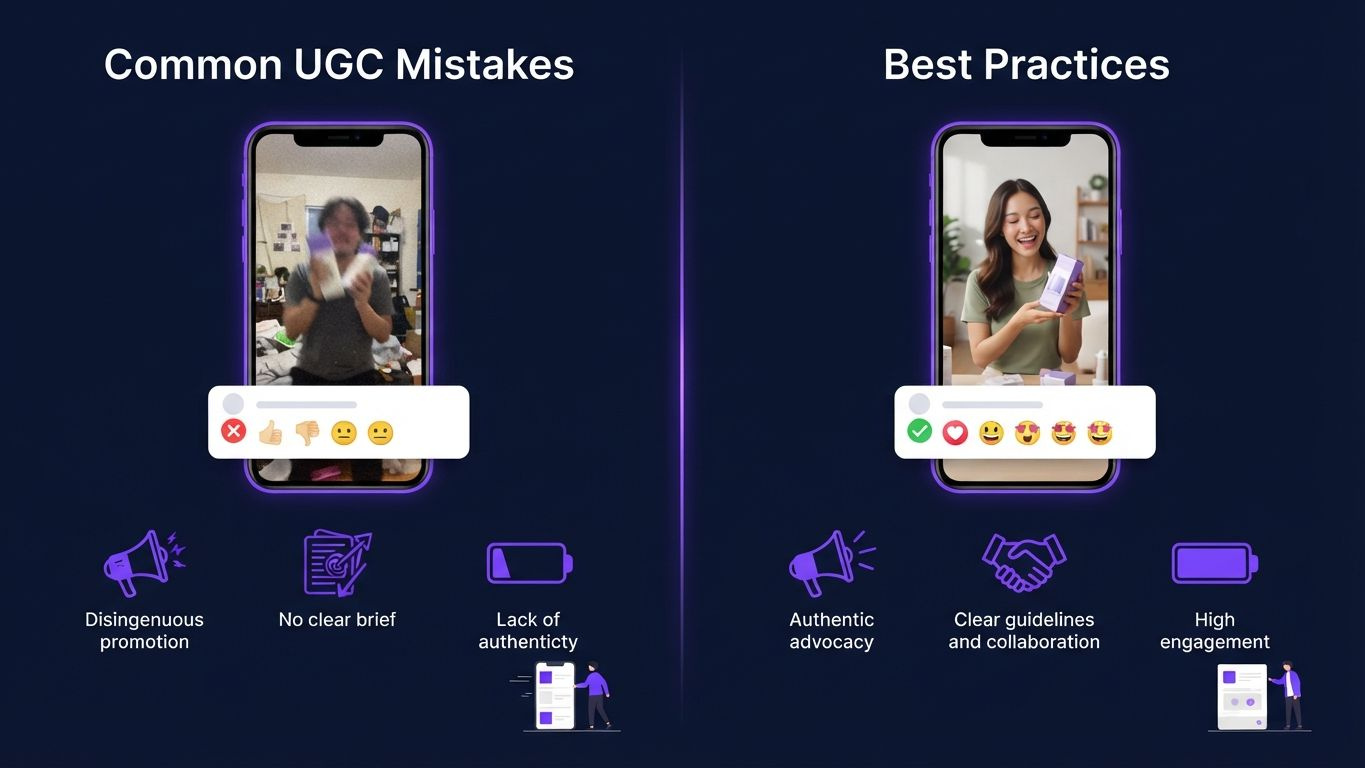
What mistakes should you avoid in user generated content strategies?
The most common mistakes in UGC strategies are unresolved rights, too little incentive to participate, inconsistent hashtag use, and the lack of a clear content pipeline for redistribution. Each of these points costs you reach and trust.
| Mistake | Impact | Solution |
|---|---|---|
| No clear hashtag | Content is hard to find | Set a short, memorable brand hashtag |
| No rights clearance | Legal risk, loss of trust | Always actively ask for permission and document it |
| No incentive | Low voluntary participation | Offer discounts, features, or giveaways |
| No content pipeline | Collected content sits unused | Integrate approved UGC posts into the editorial calendar |
| Only one platform used | Reach potential goes unused | Distribute UGC across multiple channels |
The last point in particular is often underestimated. A strong customer photo posted only once on Instagram wastes potential on Facebook, Pinterest, or the approach described under the Glossary term cross-posting.
How do you automate UGC curation and distribution with AI tools?
AI-powered tools automate UGC strategies by automatically detecting mentions, suggesting matching posts, and scheduling distribution across multiple platforms at once. This cuts the manual effort considerably.
Brandlix covers the publishing side: selected UGC posts get scheduled directly in the Content Calendar and published automatically across up to 10 platforms like Instagram, TikTok, LinkedIn, or Pinterest. Anyone who wants to go a step further uses the AI Social Media Agent to automatically generate matching captions and repost text for curated UGC content.
- Automatically capture UGC mentions through monitoring.
- Filter top posts by engagement potential.
- Create repost text and captions with AI support.
- Schedule publishing across multiple platforms at once.
- Evaluate results in the analytics dashboard and adjust your strategy.
This automation is especially well suited for teams working with the Social Media Autopilot, because UGC repost timing can be aligned directly with the rest of your content planning.

What numbers prove the impact of user generated content?
UGC can influence trust, engagement, and purchase decisions. Here is an overview of effects that keep showing up:
- Consumers trust reviews from other users far more than classic advertising, a trend consistently confirmed in consumer studies for years.
- Posts with real customer photos achieve higher engagement rates on many platforms than pure brand product photos.
- Brands with active UGC campaigns more often report rising repeat purchase rates, because community loyalty grows.
- Micro-creators with smaller but more engaged communities often achieve higher engagement rates per follower than large accounts.
- Product pages with customer images can keep visitors on the page longer than pages without UGC.
- Hashtag campaigns with a clear incentive generally generate significantly more participation than calls with no reward.
- Video UGC, such as unboxings, gets shared above average often on TikTok and Instagram Reels.
- Reusing UGC in ads often reduces production costs compared to fully new produced ad videos.
These effects show that user generated content is not a side note, it is a core building block of modern content strategies.
Frequently Asked Questions
What counts as user generated content?
This includes photos, videos, reviews, comments, experience reports, and social media posts created by customers or followers, not by the brand itself. Unboxing product videos or testimonials in Story format also count as UGC.
Do I always need written permission to repost UGC?
Yes, you should always actively ask for permission and document it before reusing someone else's content. This applies especially to commercial use, such as in ads or on your own website.
How do I motivate customers to create UGC?
Clear incentives like discounts, feature opportunities on the brand channel, or small giveaways significantly increase willingness to participate. A simple, well-communicated hashtag also helps make participation measurable.
Which tool is suitable for managing UGC across multiple platforms?
Tools like Brandlix let you automatically schedule approved UGC posts across up to 10 platforms like Instagram, TikTok, LinkedIn, or Pinterest. This saves time compared to manually reposting on every platform individually.
User generated content strategies are no longer an optional extra in 2026, they are a fixed part of any serious content plan. Anyone who collects systematically, clears rights properly, and automates distribution wins trust, reach, and time all at once. Start with a clear hashtag, a fair incentive, and a fixed process, and random customer photos turn into a reliable content source.