Content formats in 2026 look different than they did just two years ago. Algorithms favor native formats, users scroll faster, and attention spans per post often sit under three seconds. Stick with 2022-era formats, and you lose reach no matter how good the content itself is. This article shows you which formats actually perform right now, and why.
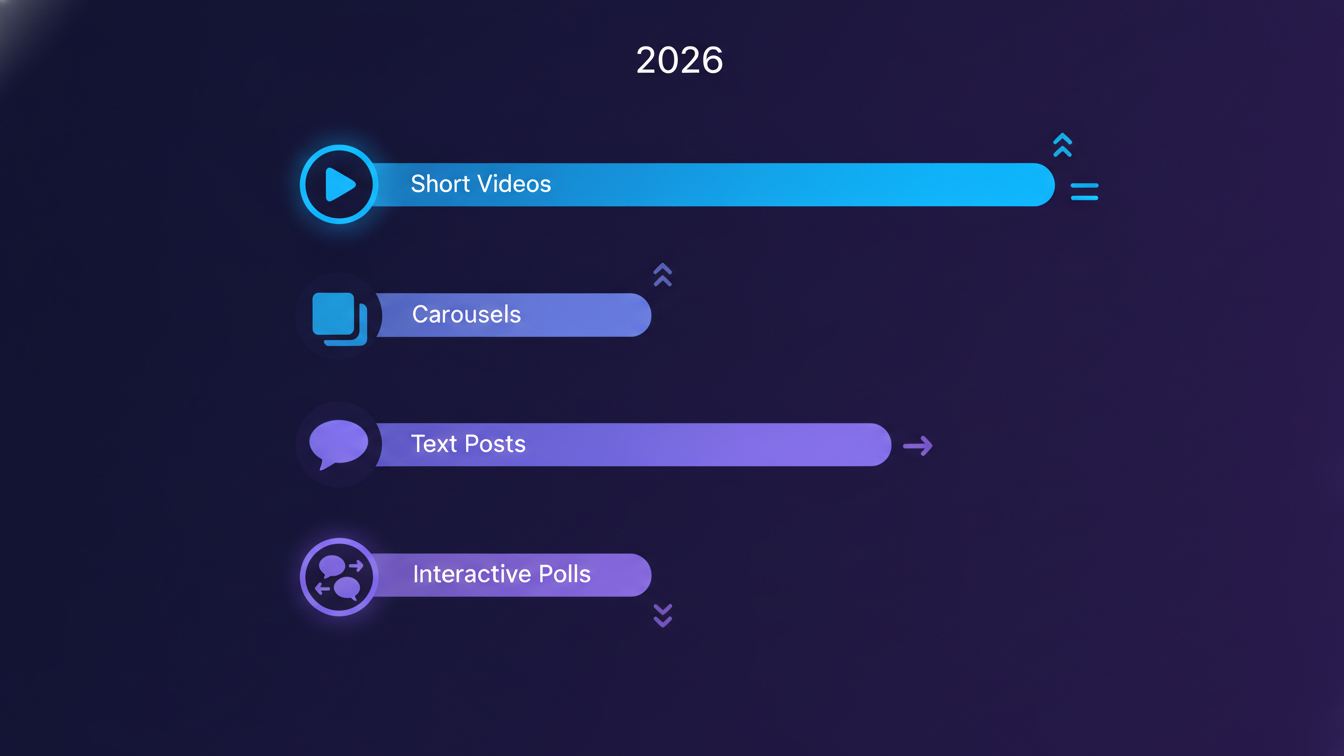
- Short videos under 30 seconds still achieve the highest average reach per follower on Instagram and TikTok.
- Carousel posts on LinkedIn and Instagram drive longer time spent and get rewarded by algorithms accordingly.
- Text-based formats like Threads posts and LinkedIn text posts are making a comeback in 2026 because they are cheaper to produce.
- Native, unpolished-looking videos perform better than glossy, highly produced ad clips.
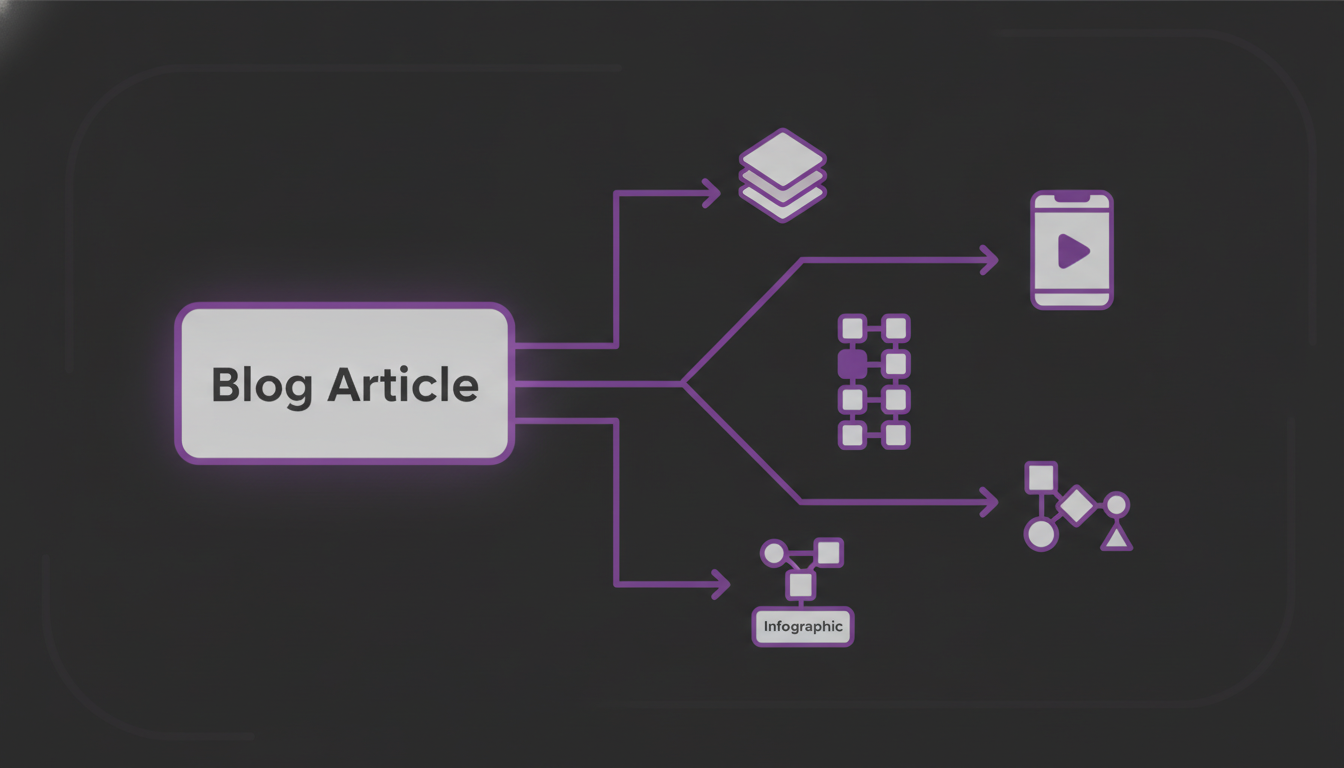
- Cross-format strategies that translate one core piece into 3-4 formats save time and increase total reach.
Which content formats work best in 2026?
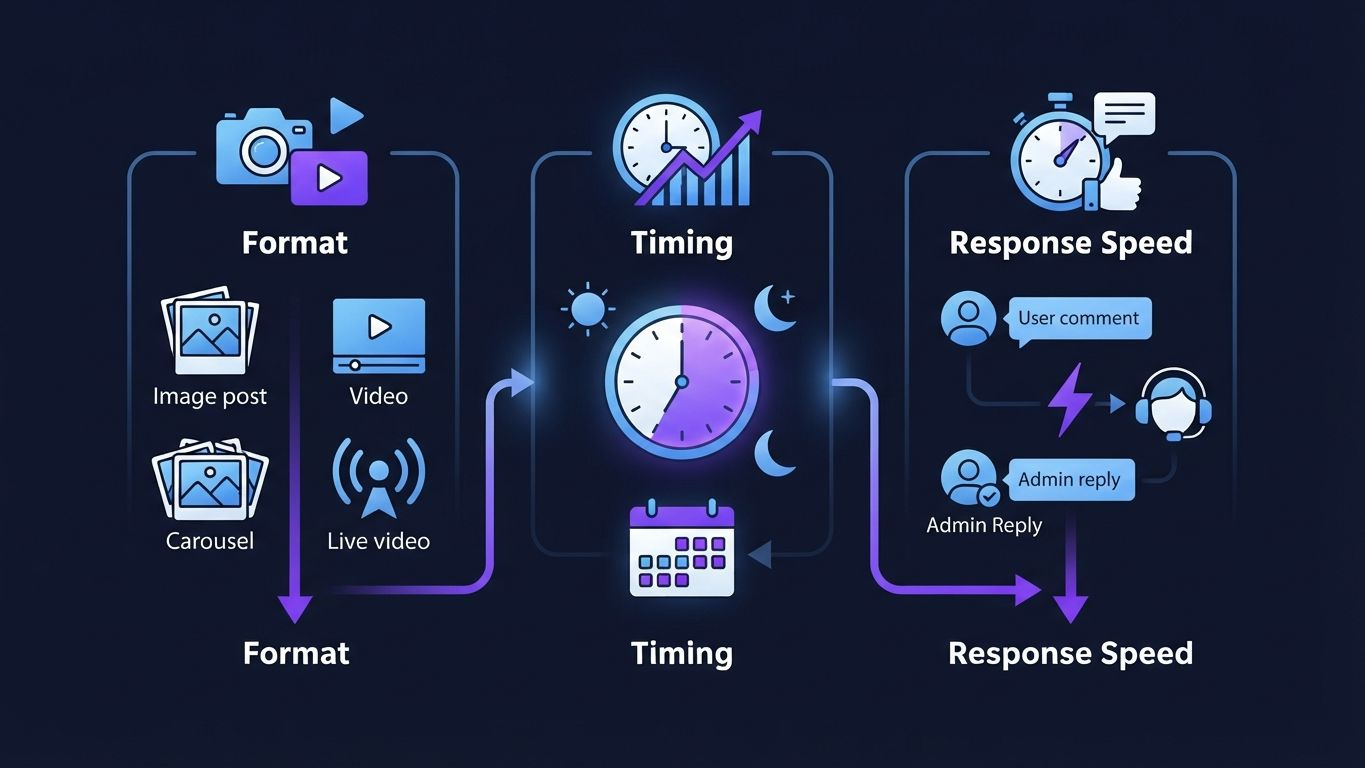
The best-performing formats in 2026 are short native videos, interactive carousels, and text-based posts with a personal voice. Platforms like TikTok, Instagram, and LinkedIn prioritize content that gets users to linger, comment, or share, not just passively scroll past.
Studies on user behavior have shown a clear trend for years: videos under 30 seconds have the highest completion rate, often over 70 percent, while videos over 60 seconds frequently fall below 40 percent completion rate. That does not mean long formats are dead, but they need a stronger hook in the first three seconds.
- Short videos (under 30 seconds) for fast reach and discovery
- Carousels for depth and saturation with an existing audience
- Text posts for trust and personal connection
- Live formats for real-time engagement and an algorithm boost
Planning your formats instead of posting spontaneously saves time and keeps you consistent. A good content calendar helps spread the right format mix across the week instead of repeating the same format every day.
Why do short videos still outperform long formats?
Short videos perform better because they have lower drop-off rates, and algorithms use completion rate as a strong ranking signal. A 20-second video watched to 80 percent completion signals more relevance than a 90-second video with 25 percent completion.
TikTok and Instagram Reels first test content with a small sample audience. If a video does well on watch time and shares in that group, it gets served to a larger pool. Short formats hit that threshold faster because the bar of "watching all the way through" is lower.
The Best Short-Video Types for 2026
- Behind-the-scenes clips from everyday work, 10-15 seconds
- Quick tips in a "3 things in 20 seconds" format
- Before-and-after transformations with a jump cut
- Reactions to trends or sounds, adapted to your own niche
- Mini tutorials with text overlay instead of voiceover
For teams producing short videos daily for multiple platforms, it is worth checking out the TikTok scheduler to automate publishing times while still keeping control over the feed.
Are carousel posts still relevant in 2026?
Yes, carousel posts are more relevant in 2026 than ever, especially on LinkedIn and Instagram. They create longer time spent per user because people have to swipe through multiple slides, which platforms treat as a strong engagement signal.
On LinkedIn, well-structured carousels with 6 to 10 slides often achieve a noticeably higher impression rate than plain text posts of the same length. The reason: each slide is its own micro-moment that invites another swipe, much like a cliffhanger in a TV series.
Structure of a High-Performing Carousel
- Slide 1: A strong hook, often phrased as a question or a surprising statement
- Slides 2-3: Build up the problem or context
- Slides 4-8: Solution, tips, or data in small bites
- Last slide: A clear call to action, for example comment or save
Visual consistency between slides matters so the post reads as one connected piece even while scrolling fast. If you plan carousels for Instagram and LinkedIn in parallel, an AI social media agent can automatically adapt the text blocks to each platform's format.
Are text-based posts making a comeback in 2026?
Yes, text-based formats are seeing a clear comeback in 2026, driven by platforms like Threads, Bluesky, and LinkedIn that actively promote plain text posts. Users are growing increasingly tired of overproduced video content and are looking for more authentic, faster-to-consume formats.
A well-written text post costs almost nothing to produce, yet it can go just as viral as an elaborate video. That makes text the most efficient format per hour invested, especially for small teams without video equipment.
Where Text Posts Perform Strongest
| Platform | Optimal Text Length | Strongest Impact From |
|---|---|---|
| 150-300 words | Personal lessons learned, numbers, storytelling | |
| Threads | 50-150 characters | Opinions, quick reactions, humor |
| Bluesky | 100-250 characters | Niche communities, expert discussions |
| Twitter/X | 70-140 characters | Controversial takes, threads with follow-ups |
| 40-80 words | Community questions, local updates |
The trick is writing the first sentence so it works without a "see more" click. The first 100 to 125 characters usually decide whether someone keeps reading or scrolls past.
How important is authenticity in video formats in 2026?
Authenticity is one of the most important success factors for video formats in 2026. Users spot staged ad content within seconds and scroll right past it, while raw-looking, phone-shot clips often achieve a higher interaction rate than studio productions.
That comes down to a psychological effect: content that feels like a message from a friend lowers people's mental resistance to advertising. Brands that adopt this "creator look," handheld, natural light, and slightly imperfect, build more trust.
Traits of High-Performing Videos in 2026
- A hook in the first 1-3 seconds, usually a question or a visual break
- Burned-in subtitles, since over half of users watch with the sound off
- Vertical 9:16 as the standard format, even for YouTube Shorts
- A visible face or person instead of pure product shots
- A clear close with a question or a prompt to comment
To find out which video formats actually work with your own audience, it is worth regularly checking social media analytics to compare watch time and drop-off points per format.
What format mix should an editorial calendar include in 2026?
A balanced editorial calendar in 2026 should include roughly 40 percent short video, 25 percent carousel, 20 percent text posts, and 15 percent live or interactive formats like polls. This mix covers both building reach and strengthening ties with existing followers.
The exact split depends on the platform. Video dominates on TikTok and Instagram, while text carries more weight on LinkedIn and Threads. If you plan for multiple platforms at once, do not copy formats 1:1, adapt them per channel instead.
- Monday: A short video kicking off the week or sharing a tip
- Wednesday: A carousel with deeper expert content
- Friday: A text post with a personal reflection or lessons learned
- Flexible weekly slot: A live session or poll for interaction
A clear plan keeps a team from defaulting to the same format out of convenience. A structured content calendar lets you visualize and adjust this format mix weeks in advance, before the deadline is looming.
How much time should you invest in content formats in 2026?
Realistically, small teams should budget around 3 to 5 hours a week for planning and producing content across every format, while larger teams posting daily often need 10 to 15 hours. The biggest time sink is usually not production itself, but adapting one piece of content to different format requirements per platform.
This is exactly where automation pays off. One core piece of content, say a 60-second video, can be split into a carousel with the key quotes, a text post with the core message, and a short teaser clip. That saves production time without lowering quality per format.
Step by Step: Efficiently Turning One Format into Three More
- Summarize the core message of the source content in one sentence
- Mark the three strongest statements or moments
- Build these three points into carousel slides with an image and short text
- Turn one of these points into a standalone text post with a personal touch
- Export a 10-15 second clip as a teaser video for discovery platforms
Tools like the social media autopilot can automate most of this process, so a piece of content goes live in multiple formats on schedule without having to manually recreate every single one. If you are still unsure when which format performs best, the free best time to post tool can help you find the optimal time windows per platform.
Which formats should you avoid in 2026?
In 2026, avoid overproduced ad clips with no real value, plain walls of text with no structure, and formats copied onto a platform without adapting them to native user behavior. These three mistakes cost the most reach for the least return.
Another common mistake is uploading a YouTube video 1:1 as an Instagram Reel, watermark from the original platform included. Algorithms frequently detect a foreign watermark and noticeably throttle the reach of that content.
| Format Mistake | Why It Hurts | Better Alternative |
|---|---|---|
| Cross-posting with a watermark | The algorithm detects the other platform and throttles reach | Re-export natively without a watermark |
| Overly long intros (10+ sec.) | High drop-off rate in the first seconds | A hook right at second 1 |
| Pure sales pitch with no context | Low interaction rate, feels like an ad | Lead with story or value before the offer |
| A wall of text with no paragraphs | Users stop reading | Short paragraphs, bullet points, questions |
Consistently avoiding these mistakes and relying on platform-native formats instead usually shows a measurable improvement in reach and interaction rate within 4 to 8 weeks.

Frequently Asked Questions
Which content format brings the fastest reach in 2026?
Short videos under 30 seconds with a strong hook in the first three seconds currently bring the fastest organic reach, especially on TikTok and Instagram Reels.
Do long videos still make sense in 2026?
Yes, long videos still work well for tutorials and deeper topics, especially on YouTube, where average watch time is weighted more heavily than raw click counts.
How often should I post per format each week?
A good baseline is 3 to 5 short videos, 1 to 2 carousels, and 2 to 3 text posts per week, adjusted to the platform and the production time you have available.
Is live content still worth it in 2026?
Yes, live formats continue to get favorable treatment from many algorithms because they generate real-time interaction, which counts as a strong engagement signal.
The content formats that work in 2026 all have one thing in common: they respect how people actually scroll, read, and watch, instead of repeating formats that used to work in the past. Test the format mix from this article over the next four weeks and compare the results in your analytics before adjusting your strategy again.