You post regularly, your reach looks good on paper, but the comments never show up. If you want to optimize your engagement rate, you need to understand that reach and real interaction are two completely different things. In this article, we show you which levers actually make a difference and how to control them with data instead of gut feeling.
- Engagement rate is usually calculated as (likes + comments + shares) divided by reach or followers, but the formula differs by platform.
- Comments and shares weigh significantly more than likes in most 2026 algorithms.
- Reply times under 60 minutes on comments can noticeably extend a post's visibility.
- Content formats with a direct question in the text often attract more comments than pure statement posts.
- Consistent posting times based on real analytics data almost always beat generic "best times to post" lists.
What is engagement rate, and why does it matter more than follower count?
Engagement rate measures how many people actively interact with your content relative to how many saw it. A high follower count paired with a low engagement rate is a warning sign for both algorithms and buyers, because it often points to purchased or inactive followers. In practice, brands with 5,000 highly engaged followers can generate more social media revenue than accounts with 50,000 passive followers.
There are two common calculation methods: engagement per follower and engagement per impression (reach). For comparisons across platforms, you should settle on one formula and use it consistently. Social Media Analytics tools usually calculate this automatically per channel, which saves you from manual spreadsheet chaos.
The most common formulas at a glance
- Engagement rate by reach: (interactions / reach) x 100
- Engagement rate by follower: (interactions / followers) x 100
- Engagement rate by impression: (interactions / impressions) x 100
- Daily engagement rate: (interactions per day / followers) x 100
How do you correctly calculate your current engagement rate?
You calculate it by adding up all the interactions on a post (likes, comments, shares, saves) and dividing by reach or followers, then multiplying by 100. It is important to always use the same formula when comparing over time, otherwise you distort the trend. Many marketers make the mistake of calculating sometimes by followers and sometimes by reach, which makes the numbers useless.
- Export the raw data for a period of at least 30 days from every platform.
- Add up likes, comments, shares, and saves per post.
- Divide the sum by reach or followers, depending on the formula you chose.
- Multiply the result by 100 to get the percentage.
- Average the value across all posts in the period to smooth out outliers.
- Compare the value monthly, not daily, to avoid seasonal fluctuations.
A Content Calendar with built-in performance data helps you avoid doing this analysis manually and instead see it automatically per post and channel.
What benchmarks count as a good engagement rate in 2026?
In 2026, what counts as a good engagement rate depends on the platform, with smaller accounts tending to achieve higher rates than brands with millions of followers. On Instagram, Reels often reach higher rates than feed posts. TikTok tends to run higher on average, because the platform is built heavily around interaction rather than pure consumption.
| Platform | Typical engagement rate | Most important interaction type |
|---|---|---|
| Instagram Feed | Moderate | Saves and comments |
| Instagram Reels | Often higher than feed posts | Shares and watch time |
| TikTok | Often among the highest | Comments and completion rate |
| Moderate | Comments and reposts | |
| Often lower | Shares and reactions | |
| Threads | Varies widely | Replies in threads |
| Moderate | Saves and clicks |
These are rough tendencies, not measured values, and vary significantly by niche. Use them as guidance, not as an absolute target, and compare yourself primarily against your own historical data.
Which content formats achieve the highest interaction?
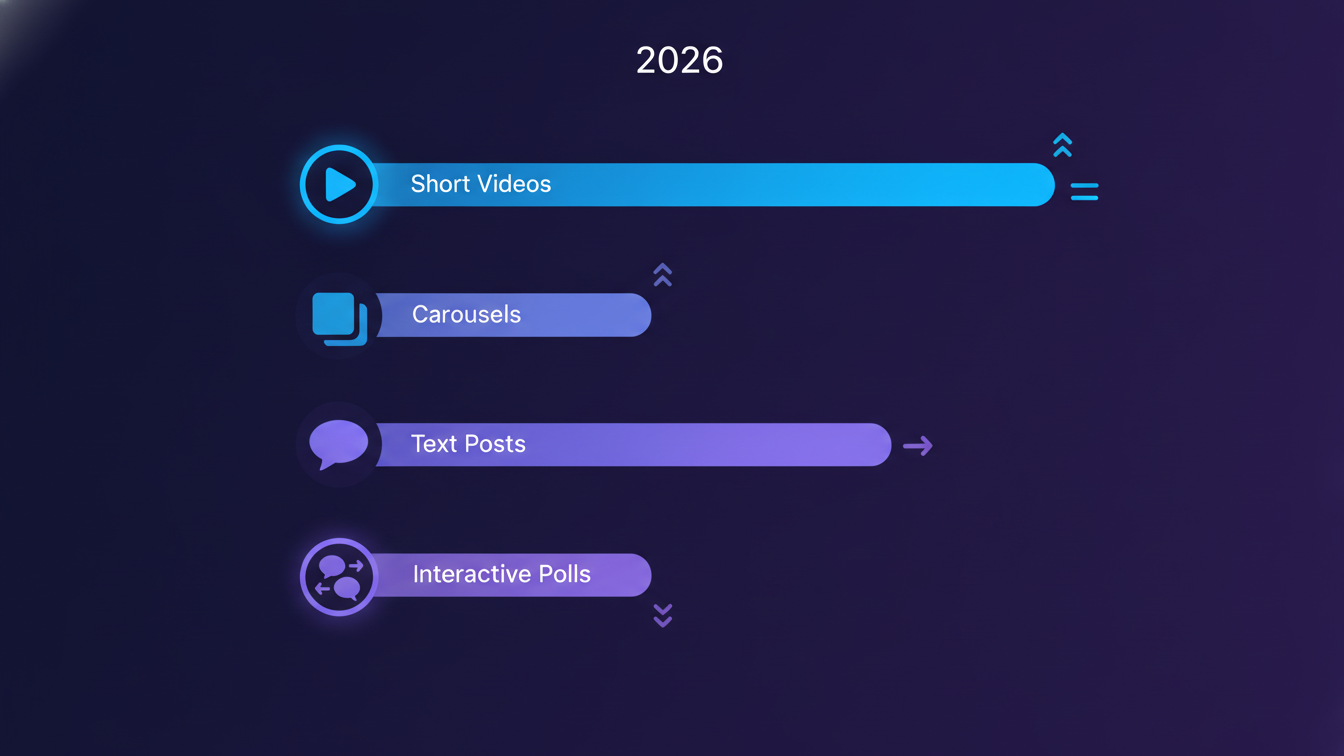
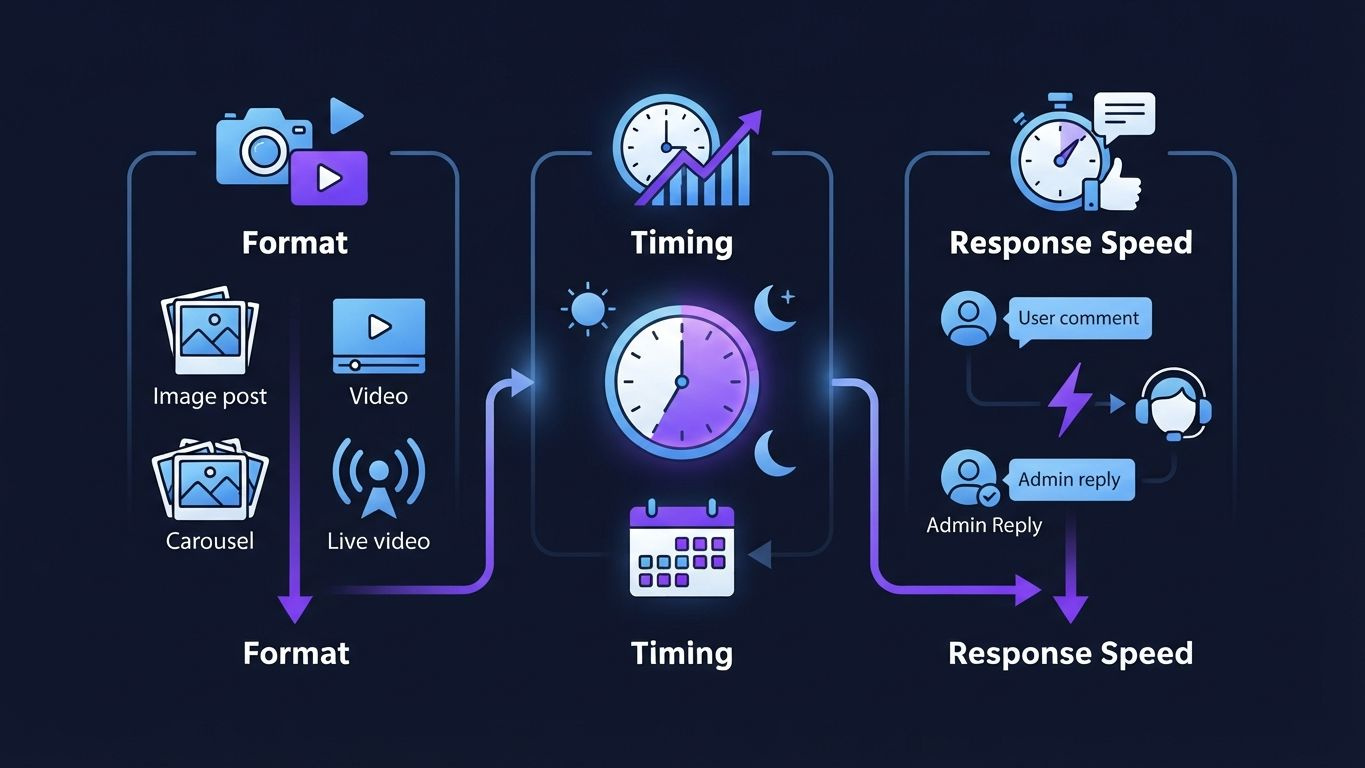
Short videos with a clear question or a cliffhanger in the first three seconds currently achieve the highest interaction rate across nearly every platform. Carousel posts on Instagram often perform better than single images, because users swipe through multiple slides and spend more time with the post as a result. Polls and open questions in Stories or Threads measurably generate more direct replies than pure information posts.
Formats with proven high impact
- Behind-the-scenes videos that show processes instead of just results
- Carousels with a clear before-and-after pattern
- Short how-to clips under 30 seconds with a text overlay
- User generated content that you reshare with permission
- Controversial but respectful opinion posts that invite discussion
If you are not sure which format fits your brand, take a look at your past top performers. A pattern usually emerges: certain topics or tones consistently perform better than others.
How important is your response time on comments for the algorithm?
Your response time on comments directly affects how long and how often a post gets shown, because algorithms treat active conversations as a quality signal. If you reply within the first hour, the post often stays visible in existing followers' feeds for longer. Many brands leave potential on the table here, because they only respond to comments after days, by which point the post has long since "cooled off" algorithmically.
- Set up notifications for new comments on all your important channels.
- Schedule fixed time slots in the morning and afternoon for community management.
- Answer questions thoroughly instead of with a single emoji.
- Ask a follow-up question in your reply to keep the dialogue going.
- Flag recurring questions and turn them into new content ideas.
An AI Social Media Agent can help you draft initial replies, so you can respond quickly even with a high volume of comments, without losing the personal touch.
How does posting time affect engagement rate?
Posting time affects how many of your followers are online when your content goes live, which directly determines the initial interactions and, with them, the algorithmic boost. Generic "best times" lists are a good starting point, but your own audience often has different habits. B2B accounts frequently see peaks on weekdays between 8 and 10 a.m. and between 12 and 1 p.m., while B2C accounts perform better in the evenings and on weekends.
Instead of guessing, you should analyze your own analytics data from the last three months. A free tool like the Best Time to Post Calculator gives you an initial reference point, which you then check against your real numbers.
Practical steps for timing optimization
- Analyze the last 90 days for the time of day and day of week with the highest interaction rates
- Test the same type of content at two different times over four weeks
- Account for time zones if a meaningful share of your followers is international
- Schedule important campaign posts in your historically strongest time window
What role do hashtags and keywords play in interaction?
Hashtags and keywords help your content get discovered by users who do not follow you yet, which increases your chances of new interactions. Too many generic hashtags like #love or #instagood barely help anymore, because they get buried in an overcrowded pool of content. Specific niche hashtags with medium reach (10,000 to 500,000 posts) often deliver better results than mega hashtags with millions of posts.
- Use 3 to 5 specific hashtags instead of 20 generic ones
- Combine niche hashtags with one or two industry hashtags
- Regularly check which hashtags appeared in your top posts
- Work relevant keywords directly into the caption, not only into hashtags
With a Hashtag Generator, you can quickly find matching combinations without hours of manual research. For a deeper understanding of the terminology, it is also worth checking the Glossary for topics like reach and impressions.
How can you scale engagement rate optimization across multiple platforms?
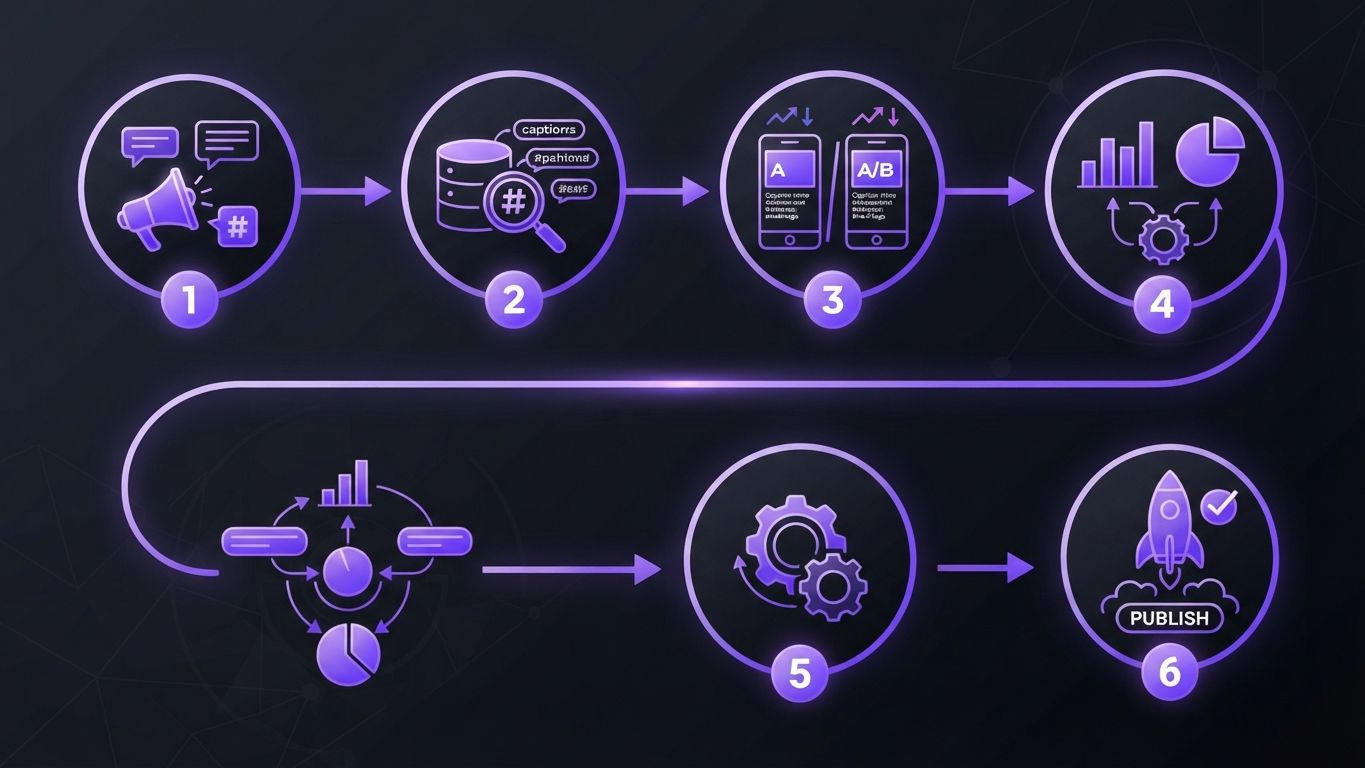
You scale engagement rate optimization by automating recurring processes, but without completely outsourcing personal interaction. Manual community management across 10 platforms at once is simply not feasible for most teams. That is why a combination of centralized planning, automated insights, and targeted manual follow-up on the most important comments pays off.
- Centralize planning and publishing through one platform instead of separate isolated tools.
- Use automated reports to identify your top and flop posts every week.
- Adapt formats per channel instead of recycling identical content everywhere.
- Manually respond to the 20 percent of comments with the greatest potential.
- Repeat successful patterns in new variations instead of running entirely new experiments.
With the Social Media Autopilot, this process becomes significantly simpler for many brands, because posting times, formats, and initial analysis run automatically while you focus on strategy and real conversations. Anyone looking to grow specifically on short-video platforms will find the right tools for consistent timing in the TikTok Scheduler and the Instagram Scheduler.
Which mistakes most often lower engagement rate?
The most common mistakes are posting irregularly, pure promotional messages with no real value, and ignoring comments for extended periods. Accounts that go quiet for weeks and then suddenly publish five posts in one day confuse both followers and algorithms. Buying followers or engagement also destroys credibility in the long run and measurably lowers your real rate.
- Irregular posting frequency with no recognizable rhythm
- Overly promotional language with no real value for your audience
- Ignoring negative or critical comments
- Identical content with no adaptation across all channels
- No clear call to action at the end of the post
If you want to grow on LinkedIn and Instagram at the same time, a central AI Social Media setup helps you adapt formats per platform instead of distributing copy-paste content.
Frequently Asked Questions
What is a realistic engagement rate for a small account?
Small accounts with under 5,000 followers often achieve a higher engagement rate than large accounts, because their community is more personal and active. As the follower count grows, the rate usually drops, even if the absolute number of interactions increases.
How often should I measure my engagement rate?
A weekly look at individual posts and a monthly look at the overall trend is enough for most brands. Daily measurements often lead to rushed strategy changes over normal fluctuations.
Do Story views count toward engagement rate?
Story views are usually counted separately as reach, while replies, reactions, and sticker interactions in Stories count as real engagement. The exact definition varies by analytics tool, so it is worth checking your reporting tool's methodology.
Can I buy or force engagement rate in the short term?
Purchased likes or comments boost the number in the short term, but they damage your credibility and often your algorithmic visibility in the long run. Sustainable growth comes from relevant content, fast replies, and consistent timing, not from shortcuts.
Optimizing your engagement rate is not a one-time project, it is an ongoing process of measuring, testing, and adjusting. Start with the basics: the right formula, honest benchmarks, fast replies, and formats that actually get your audience to respond. If you want to manage and automate this process centrally, take a look at Brandlix and see how much time you can save while getting better results at the same time.