Social media branding tips only matter if they lead to something people actually recognize. Scroll through any feed and you can usually tell which posts belong to a brand you follow before you even read the caption. That recognition doesn't happen by accident. It's built through deliberate, repeated choices about color, tone, and message across every platform you post on.
- Consistent branding across platforms can lift audience recognition significantly, and inconsistent presentation is one of the top reasons brands get overlooked in crowded feeds.
- A usable brand kit (colors, fonts, tone, logo variations) needs to exist before you touch a content calendar.
- Each platform needs its own visual adaptation of your brand, not a copy-pasted version of the same square image.
- Voice and tone guidelines prevent the "different person wrote this" feeling that confuses followers.
- Tools like Brandlix help you keep branding consistent while publishing to 10 platforms without redoing the work manually each time.
What is social media branding and why does it matter?
Social media branding is the consistent use of visual identity, voice, and messaging across every platform where your business shows up. It matters because people form an opinion about a brand within seconds of seeing a post, and inconsistency makes that opinion negative or forgettable.
Research on brand consistency across marketing channels has repeatedly shown that companies presenting themselves uniformly are far easier for audiences to recall than those who look and sound different depending on the platform. When your Instagram grid looks like a different company than your LinkedIn page, you're asking your audience to do extra work just to trust that it's really you.
Branding on social media isn't just a logo in the corner of a graphic. It includes:
- Visual identity: colors, fonts, imagery style, logo placement
- Voice and tone: how formal, funny, or direct your captions sound
- Messaging pillars: the 3-5 topics you consistently talk about
- Platform behavior: how you comment, reply, and show up in other people's content
Skip any one of these and your brand starts to feel patchy, even if each individual post looks fine on its own.
How do you build a social media brand kit from scratch?
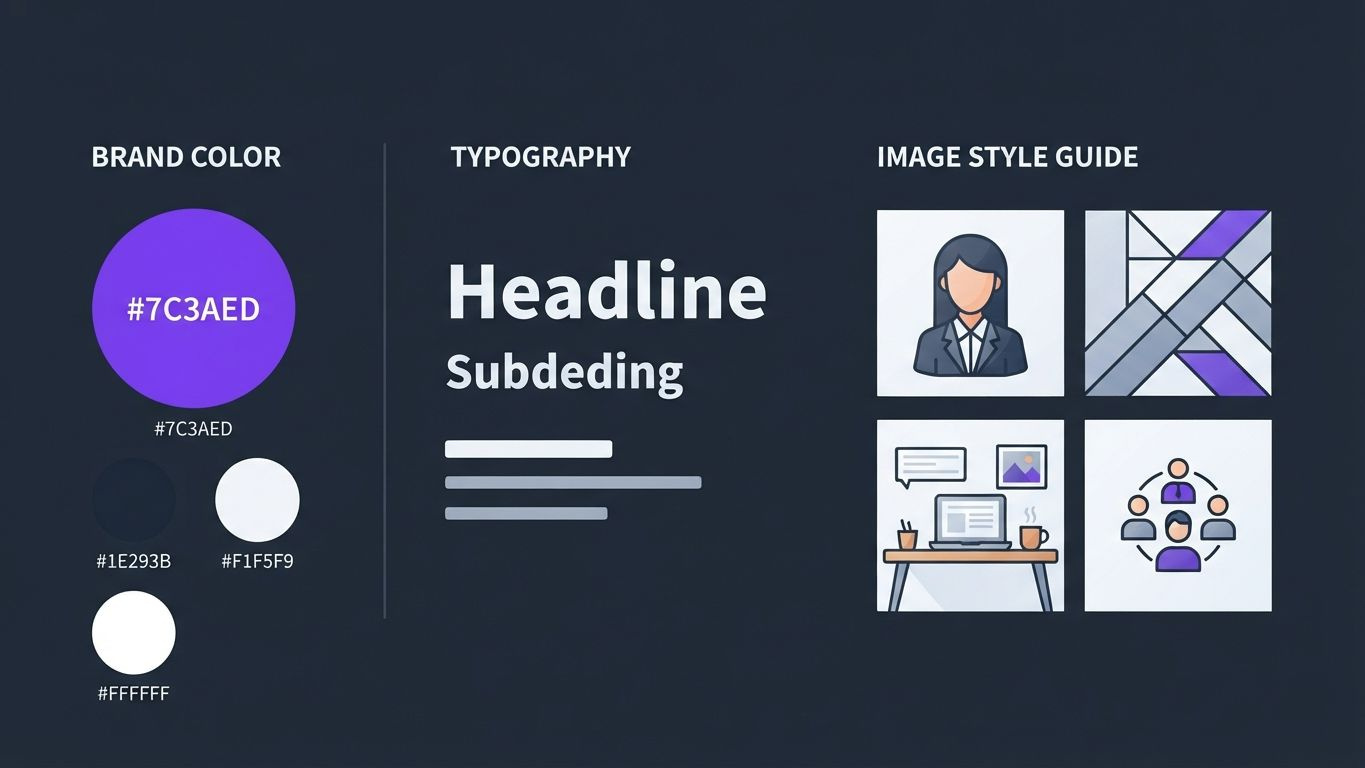
You build a brand kit by documenting your colors, typography, logo variations, imagery style, and tone of voice in one shared file before you create a single piece of content. This becomes the reference every team member or tool uses so nothing gets designed from memory.
Here's a practical process that works whether you're a solo creator or a team of ten:
- Pick 2-3 primary colors and 1-2 accent colors. Write down the exact hex codes. Avoid picking more than 5 colors total, or your feed will look chaotic.
- Choose 2 fonts maximum. One for headlines, one for body text. Stick to fonts available on Canva or your design tool so you're never stuck.
- Create 3 logo versions. Full logo, icon-only, and a monochrome version for dark or busy backgrounds.
- Define your imagery style. Bright and airy? Bold and high contrast? Real photos or illustrations? Pick one lane.
- Write a one-paragraph tone description. Example: "Direct, a little playful, no corporate jargon, always answers questions like a helpful friend, not a call center script."
- Build 3-5 caption templates. Opening hook styles, CTA phrasing, hashtag groups you rotate.
Once this exists, save it somewhere every contributor can access, whether that's a shared doc or built directly into your content tools. Teams that skip this step tend to notice branding drift within a few months, usually right when a new hire or freelancer joins and starts guessing instead of following a guide.
How should branding differ across platforms?
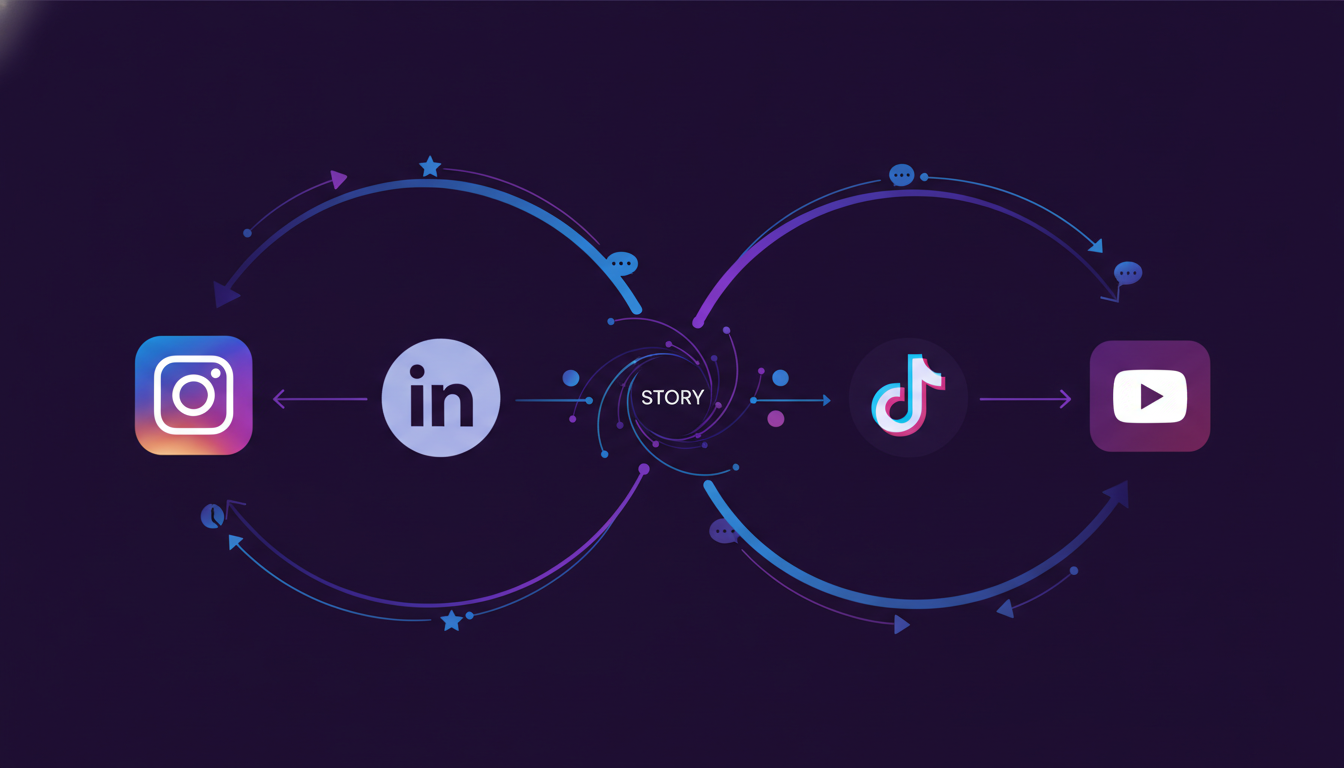
Branding should stay recognizable across platforms but adapt in format, pacing, and tone to match how each platform is actually used. Copying the exact same square image and caption everywhere is one of the fastest ways to look lazy or out of place.
Think of it like wearing the same personality to different events. You're still you, but you don't talk to your boss the way you talk to a close friend. The same logic applies to your brand voice on Instagram versus LinkedIn.
Platform-specific branding adjustments
| Platform | Visual format priority | Tone adjustment | Posting frequency (typical) |
|---|---|---|---|
| Square/vertical, cohesive grid aesthetic | Visual-first, concise captions | 4-6x per week | |
| Text-led with light graphics | Professional but personable | 3-5x per week | |
| TikTok | Vertical video, native-feeling edits | Casual, fast-paced, trend-aware | 4-7x per week |
| Mixed media, longer captions ok | Community-focused, warmer | 3-5x per week | |
| Vertical 2:3 graphics, keyword-rich | Instructional, aspirational | 3-7 pins per week | |
| Threads / X | Text-first, quick reactions | Conversational, opinionated | Daily |
Notice that the core brand colors and logo stay the same across every row. What changes is format and delivery, not identity. Managing that adaptation manually across 10 platforms is exactly the kind of repetitive work that a tool like the Brandlix AI social media agent is built to handle, since it can reformat and adjust tone per platform while keeping your brand kit locked in.
What role does voice and tone play in brand recognition?
Voice and tone are what make your captions sound like they came from one consistent brand personality, even when different people write them. A brand with a clear voice becomes predictable in a good way, meaning followers know what kind of experience they're getting before they even read the post.
Inconsistent voice is one of the most common branding mistakes among small teams. One week a caption sounds corporate, the next it's full of slang, and followers start feeling like they're talking to a different company entirely.
A few fixes that consistently work:
- Write 5-10 example captions in your target voice and keep them as reference material
- Ban specific words or phrases that clash with your tone (jargon, forced slang, excessive exclamation points)
- Assign one person as final review for tone before anything publishes, even in small teams
- Read captions out loud. If it doesn't sound like something your brand would actually say in conversation, rewrite it
Brand voice consistency compounds over time. Audiences who see the same tone repeated across dozens of posts start to associate that tone with trust, and trust is what eventually turns into clicks, follows, and purchases.

How do you keep branding consistent when posting to multiple platforms?
You keep branding consistent across platforms by centralizing your assets, templates, and calendar in one place instead of designing and scheduling separately for each network. Fragmented workflows are the number one reason branding falls apart as teams grow.
Here's what a consistent multi-platform branding workflow typically looks like:
- Store your brand kit (colors, fonts, logo files, tone guide) in one shared location
- Build content in templates that pull from that brand kit automatically, rather than starting from a blank canvas each time
- Plan all platforms in a single content calendar so you can spot tone or visual mismatches before they go live
- Adapt formats per platform (vertical video for TikTok, carousel for Instagram, text post for LinkedIn) while keeping colors and logo placement identical
- Review analytics monthly to see which branded formats perform best, then double down on those
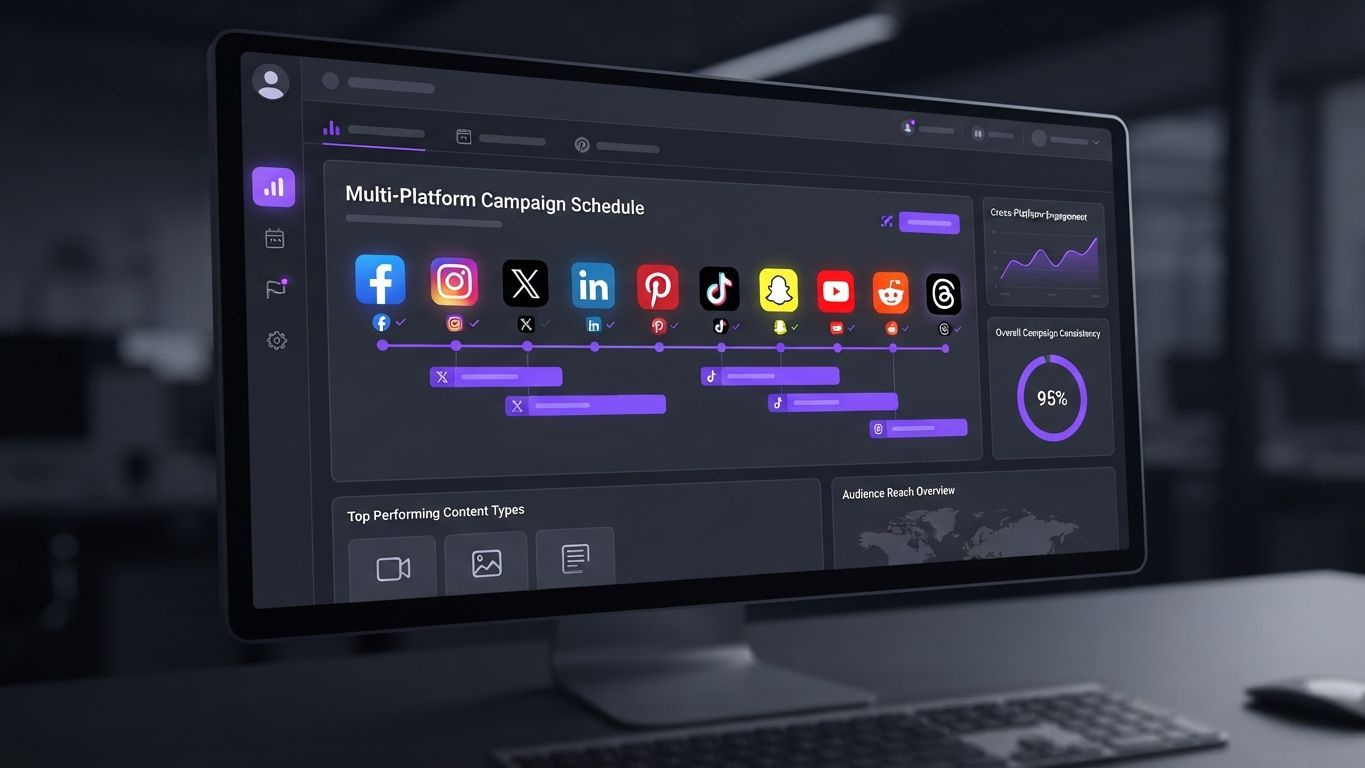
Teams managing 3+ platforms manually often lose 5-8 hours a week just resizing graphics and rewriting captions to match each network's quirks. That's exactly the gap platforms like Brandlix are designed to close, letting you plan once and publish a properly adapted version to Instagram, LinkedIn, TikTok, Facebook, X, Pinterest, YouTube, WordPress, Threads, and Bluesky from a single dashboard.
If you're specifically trying to nail consistency on visual-first platforms, tools built for those networks help a lot. An Instagram scheduler that supports grid previews lets you catch a color clash before it's live, and a LinkedIn scheduler keeps your professional tone separate from your more casual channels without extra manual work.
What are common social media branding mistakes to avoid?
The most damaging branding mistakes are inconsistent visuals, a shifting tone of voice, and neglecting smaller platforms where your brand still shows up but looks unfinished. Even one weak profile can undercut the trust you've built elsewhere.
Watch out for these specific issues:
- Mismatched profile photos and banners. Old logo on Twitter/X, new logo on Instagram. This alone can make people question if an account is legitimate.
- No bio consistency. Your value proposition should read similarly across all 10 platforms, not completely different each time.
- Ignoring dormant platforms. A Pinterest or YouTube account with content from three years ago looks abandoned, which reflects poorly on the whole brand.
- Overloading visuals with too many colors or fonts. More than 5 colors or 2 fonts usually signals no one is enforcing the brand kit.
- Copy-pasting the same post everywhere. Ignoring platform norms (like hashtags on Pinterest versus LinkedIn) makes content feel out of place rather than native.
A quick self-audit helps here. Open all your active profiles side by side once a month and ask: does this look like one company, or five different ones that happen to share a name?
How do you measure whether your branding is working?
You measure branding effectiveness by tracking recognition signals like direct traffic, branded search volume, follower growth quality, and engagement consistency across platforms, not just raw follower counts. Vanity metrics alone don't tell you if people actually remember your brand.
Metrics worth watching:
| Metric | What it tells you | Good signal |
|---|---|---|
| Branded search volume | People searching your name directly | Steady month-over-month growth |
| Direct/referral traffic from social | Recognition strong enough to visit your site | Increasing share of total traffic |
| Engagement rate consistency | Audience responds similarly across platforms | Less than 15-20% variance between platforms |
| Comment sentiment | How people perceive your tone/voice | Comments matching your intended personality |
| Follower-to-engagement ratio | Quality of audience, not just size | Stable or improving ratio over time |
Use your platform's native insights plus a centralized dashboard if you're active on multiple networks. Checking social media analytics across all your channels in one view makes it much easier to spot where branding is landing well and where it's falling flat, instead of jumping between five separate apps.
If you're unsure whether your posting cadence itself is hurting branding, a quick check against a best time to post tool can confirm whether inconsistent timing is quietly costing you reach on top of everything else.
How can AI tools support consistent branding at scale?
AI tools support consistent branding by applying your saved brand voice, colors, and formatting rules automatically across every piece of content, which removes the manual guesswork that usually causes drift. This matters most once you're posting daily across several platforms.
Specific ways AI-assisted workflows help:
- Generating on-brand caption drafts based on a saved tone profile, rather than starting from a blank page each time
- Reformatting a single piece of content into platform-native versions (Reels cut vs LinkedIn text post vs Pinterest pin) while keeping the same message
- Suggesting hashtags aligned with your niche using a hashtag generator instead of guessing or reusing stale tags
- Flagging inconsistent posting frequency before gaps become visible to followers
- Auto-scheduling across a social media autopilot workflow so branding stays consistent even during busy weeks
None of this replaces a real brand strategy. But once the strategy and voice guidelines exist, an AI social media workflow makes it dramatically easier to apply that strategy every single day, across every platform, without your team burning hours on repetitive formatting work.

Frequently Asked Questions
How often should I update my social media branding?
Review your visual identity and tone guide at least twice a year, and do a full audit whenever you rebrand, launch a new product line, or notice engagement dropping across multiple platforms. Small tweaks (seasonal colors, campaign graphics) can happen more often as long as they stay within your core brand kit.
Do I need different branding for each social media platform?
No, your core identity (colors, logo, voice) should stay the same everywhere. What changes is format and tone delivery, since a LinkedIn post naturally reads more professionally than a TikTok caption, even if both come from the same brand.
What's the biggest branding mistake small businesses make on social media?
Inconsistent visuals across profiles is the most common issue, closely followed by an inconsistent voice where captions sound like they're written by a different person each week. Both make a brand feel unpolished even when individual posts are well made.
Can AI tools hurt my brand voice instead of helping it?
AI tools only hurt your brand voice if you skip the setup step of feeding them a real tone guide and example content. When properly configured with your actual brand kit and voice samples, AI tools like those built into Brandlix tend to reinforce consistency rather than dilute it.
Strong social media branding isn't about one clever campaign. It's the accumulation of hundreds of small, consistent choices about color, tone, and format that add up to something people recognize instantly. Start with a documented brand kit, adapt it thoughtfully per platform, and use the right tools to apply it consistently without burning your whole week on manual formatting. Your audience will notice the difference faster than you'd expect.